Lithuania builds world’s biggest ultra-fast laser factory amid China tensions
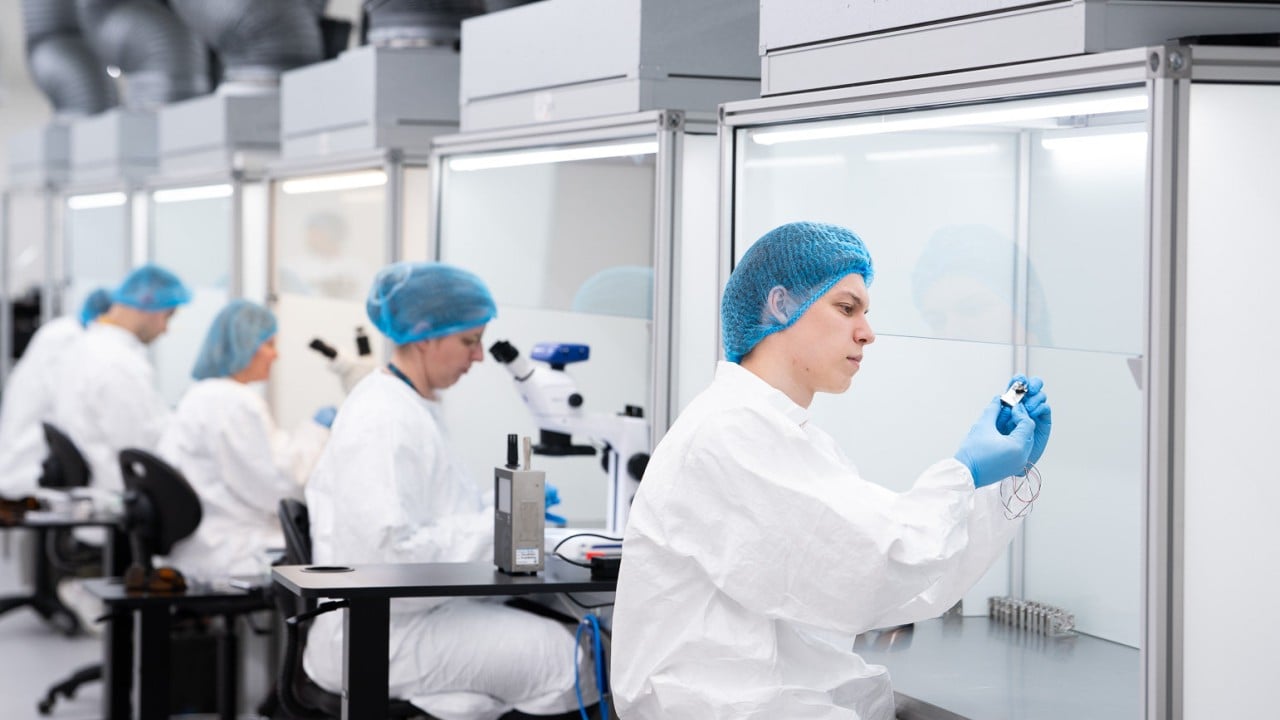
Amid tensions with China, a small European country is anchoring itself at the centre of the global semiconductor and artificial intelligence (AI) hardware supply chain as a laser powerhouse.
The latest sign of Lithuania’s growing footprint in the sector came last month, when laser maker Litilit launched a new factory in the capital, Vilnius. The company’s expansion unfolds as the Baltic nation of fewer than 3 million people navigates fraught ties with Beijing, which has targeted Lithuania with a slew of informal trade restrictions over its Taiwan stance.
In 2021, Lithuania emerged as a symbol of Taiwan’s expanding diplomatic ties in Europe by allowing the opening of a Taiwanese representative office in Vilnius, breaking the long-standing convention of using “Taipei” in the names of such offices.
Beijing responded sharply to the move, downgrading its diplomatic ties with Lithuania and imposing trade measures, including banning certain food and alcohol products from the country and blocking many Lithuanian exporters from the Chinese market.
Lithuania’s new government, which took office earlier this year, has pledged to normalise ties with Beijing, but frictions persist.
In June, Beijing said it hoped Lithuania would “take early and decisive action to correct its mistakes, return to the right track of adhering to the one-China principle and create conditions for the normalisation of China-Lithuania relations”.
One month later, the Chinese commerce ministry put Lithuanian laser manufacturer Ekspla on its European dual-use exports control list, alongside 13 other European Union entities.
Despite this setback, the Lithuanian laser industry continues to thrive. The new Litilit facility will be able to produce 3,000 femtosecond lasers per year at full capacity.
These advanced lasers can emit pulses of light so short that they can process materials, including glass, with high precision and minimal heat damage to surrounding structures. This ability has become crucial for chipmakers as they explore glass as a substrate for the next generation of AI infrastructure.
According to Litilit, the new factory boasts the world’s largest potential production capacity for this class of advanced laser. By comparison, global output stood at an estimated 9,600 units last year.
Litilit plans to produce an initial 1,000 units in its first year before scaling to full capacity, exporting most of its output to Europe, North America and Asia, according to the company.
Nikolajus Gavrilinas, Litilit’s co-founder and CEO, said the commercial reality of the supply chain often overrode political posturing.
“We are absolutely in line with Lithuanian official policies about US, Chinese, European and [other] political alignments,” Gavrilinas said.
“We are looking for strong partnerships with all three [regions]: Europe, the US and Asia. Together with our partners, we are ready to expand our capacity to tens of thousands of lasers per year.”
He said that while he had observed some tensions between European countries and China, if one side needed a technology and another needed a different technology, and they were part of each other’s global supply chain, they would not be easily stopped from doing business.
“Until it becomes a real resistance for each other, everything is very smooth,” he said.
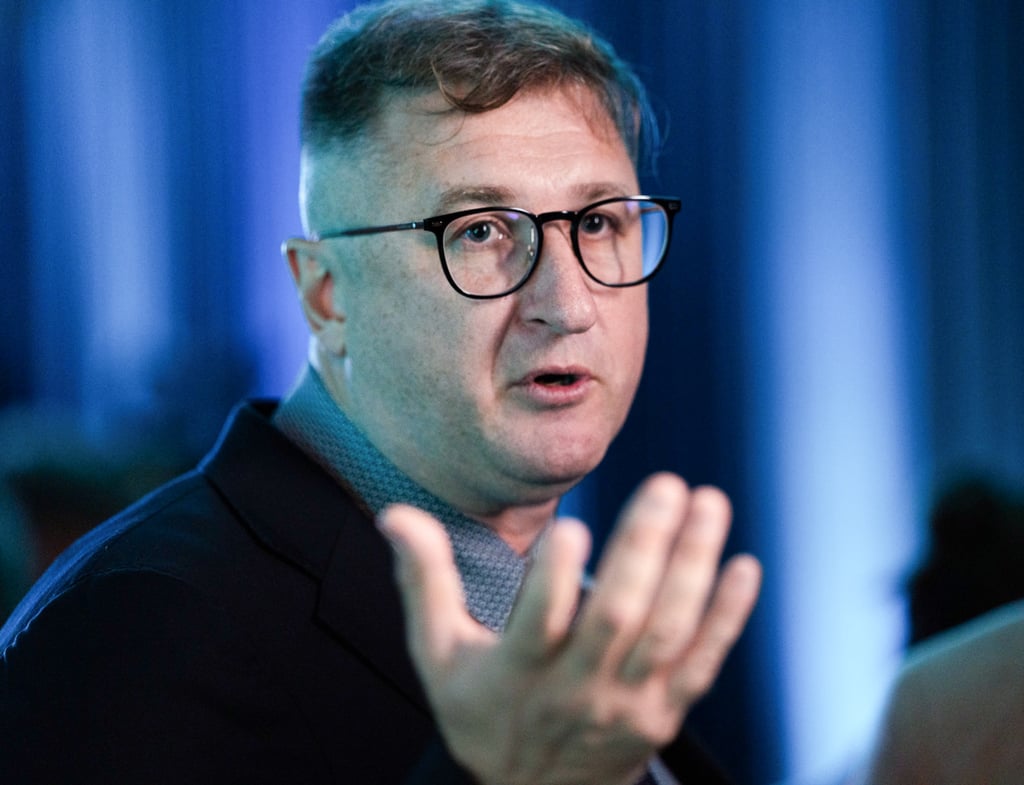
While public discussion of AI often focuses on software and algorithms, Gavrilinas said the growth of AI data centres was driving demand for the advanced manufacturing tools – including femtosecond lasers – needed to build their hardware.
As AI models require more processing power, data centres are changing how their chips are assembled. One emerging approach, known as advanced packaging, stacks multiple chips on a single board.
A glass interposer is a thin piece of glass connecting chiplets and memory to the package substrate. The thermal expansion properties of glass can be tuned to closely match that of silicon, making it a promising material for advanced semiconductor packaging.
However, light from conventional lasers passes through transparent materials, making processing difficult. Femtosecond lasers overcome this by focusing energy directly within the glass to form precise pathways and internal structures.
Gavrilinas noted that femtosecond lasers could be used to carve electrical paths inside glass in a method similar to 3D printing, adding that this application “opens a lot of possibilities”. He said this process could also be used on other transparent materials, such as polycrystalline diamond, an ultra-hard material for cutting tools and metalworking dies.
“Imagine … glass coming back to the main domain of everything, like as a base plate for electronics, chips and so on. This is a fabulous transformation,” he said.
“Our goal is to move the femtosecond laser from niche applications to the commodity market,” Gavrilinas said, comparing its present growth phase to earlier lasers that moved from labs to everyday tasks such as engraving names on cups.
While legacy laser manufacturers rely heavily on manual assembly, typically producing around one laser per worker each year on average, the Litilit facility has achieved around 85 per cent automation with a workforce of around 100 to 200 people.
“When we have this level of automation … we can scale it up in any country, in any region,” Gavrilinas said, adding that this helped limit the effects of “turbulence” in labour costs or politics.
The company is evaluating further expansion with potential production hubs in Singapore, Japan, the United States and Europe to meet surging demand, according to Gavrilinas.
When asked about the potential for even faster attosecond lasers, Gavrilinas said femtosecond technology would be the industry standard for the next 20 years.
“For the next two decades, we believe that it will be femtosecond. Maybe later [when] we broaden our experience and everything around it, it may be attosecond,” he said.
The Baltic nation’s laser industry traces back to 1962, when Lithuania was still part of the Soviet Union and three students were sent to Moscow to study laser physics and quantum electronics. By 1966, the country’s first laser was fired at Vilnius University.
Today, Lithuania has more than 60 laser and photonics companies and over 2,000 specialists across its research centres, and the country exports more than 90 per cent of its laser output, according to Vilnius University.
Undeterred by the threat of blacklists, the Lithuanian laser sector has sought to work with experts from Taiwan, a global semiconductor powerhouse.
According to the Research Council of Lithuania, which provides research and development funding, 60 researchers from Lithuania and Taiwan explored new partnership opportunities and exchanged knowledge last month at a three-day laser technology workshop in the European nation.
The event was organised as part of a 2023 agreement between the research council and Taiwan’s National Science and Technology Council to fund joint research projects in biotechnology, laser and materials science, engineering and computer information technology.
KioskNews shows a cleaned-up reading view extracted from the publisher’s page — the original always lives on their site, not ours.