Why Japan is looking to Ukraine’s front lines to overhaul its defences
Japan is increasingly tapping into Ukraine’s war experience against Russia as a valuable source of intelligence on military technologies that could strengthen its defensive and offensive capabilities.
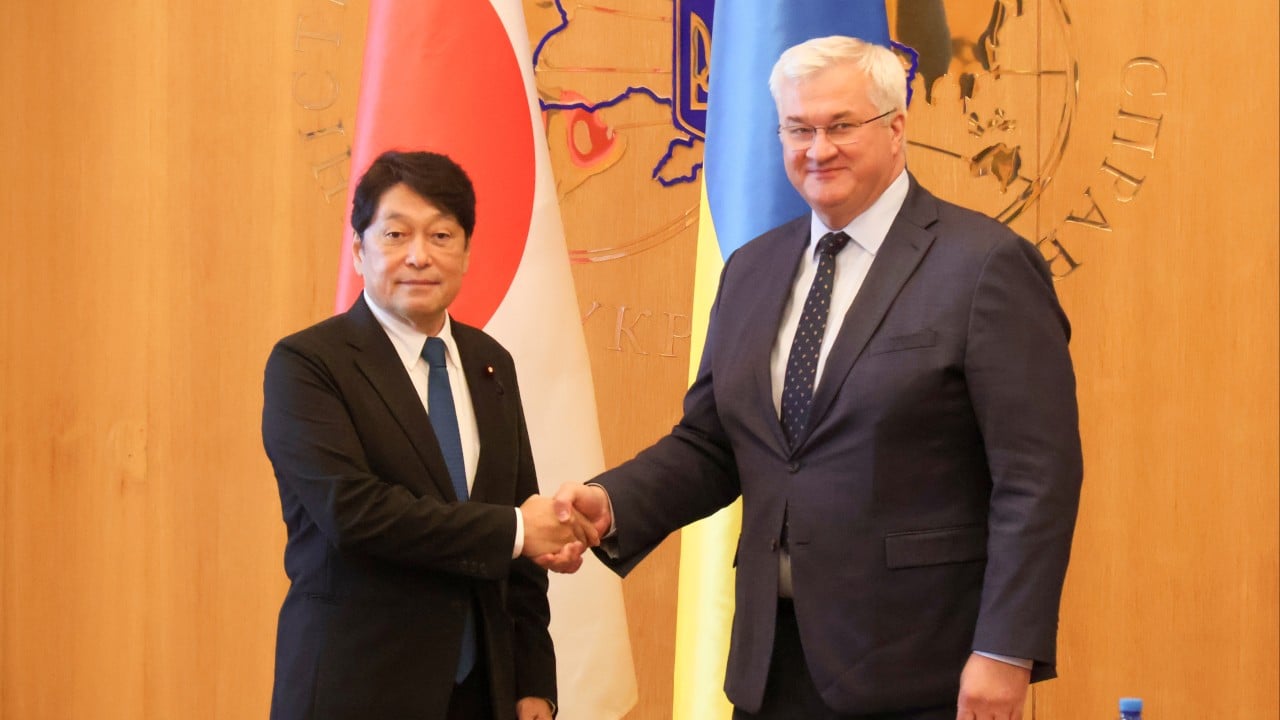
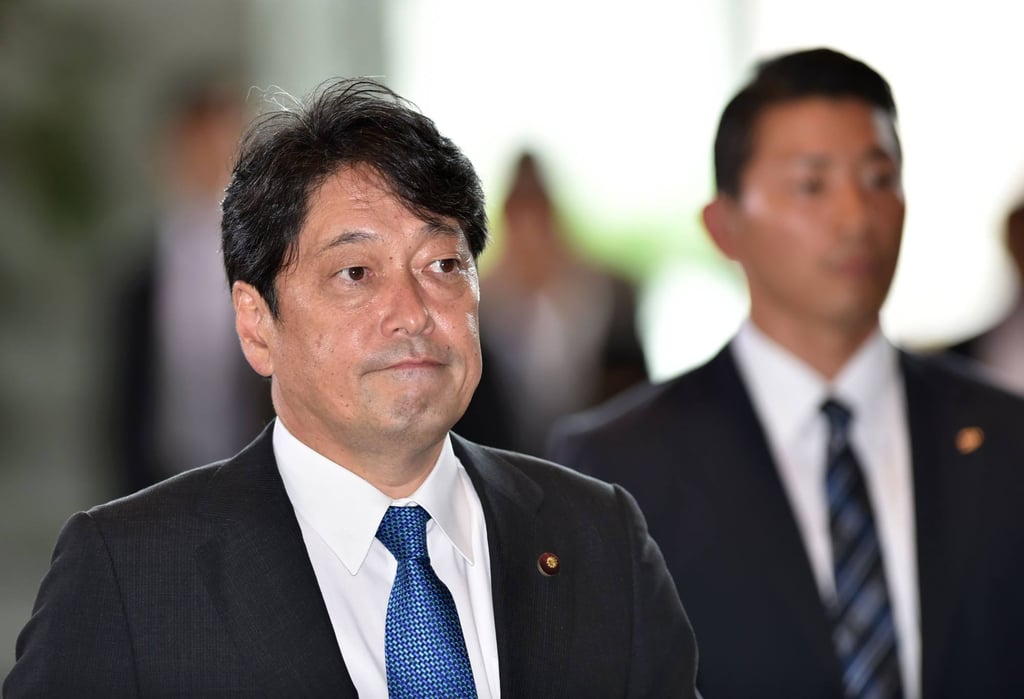
A visit to Kyiv this week by senior ruling Liberal Democratic Party lawmaker and former Japanese defence minister Itsunori Onodera demonstrates this interest, analysts say, against the backdrop of Tokyo’s mounting regional security concerns.
Onodera arrived in the Ukrainian capital on Wednesday to meet local officials, including Foreign Minister Andrii Sybiha, Ukraine’s Foreign Ministry said in a statement.
“Ukraine is ready to develop mutually beneficial cooperation with Japan, drawing on our experience and capabilities, and to identify areas in which our countries can strengthen each other’s security,” Sybiha said.
Beyond bilateral security cooperation, both sides agreed on the need to step up pressure on Moscow, including cracking down on sanctions evasion.
The trip by Onodera and a delegation of Japanese lawmakers was aimed at examining rapidly evolving drone technologies on the battlefield and assessing the extent of military cooperation between Russia and North Korea, according to a report by the Yomiuri newspaper on Sunday.
The delegation’s findings will feed into Tokyo’s efforts to strengthen Japan’s defence capabilities ahead of planned revisions to the country’s three key security documents – the National Security Strategy, the National Defence Strategy, and the Defence Buildup Programme – with formal updates expected by the end of the year.
Grant Newsham, a senior research fellow at the Japan Forum for Strategic Studies, said Ukraine’s experience was “very relevant” to Japan, particularly in terms of drones and unmanned aerial vehicles.
“Onodera’s visit is just an indication of how seriously Japan takes Ukraine,” Newsham said, adding that Tokyo was particularly interested in Kyiv’s combat-tested missile defences.
Although its current focus was mainly on surveillance and defence, Japan had also shown an interest in attack drones, Newsham said.
“Drones and other unmanned vehicles are going to be an important part of Japan’s defence,” he said, further noting that Ukraine had the most extensive real-world battlefield experience among Western nations.
Newsham said that Tokyo was also wary of a Taiwan contingency, especially if Japan itself “comes under attack”.
Beijing sees Taiwan as part of China to be reunited by force if necessary. Most countries, including the United States and Japan, do not recognise Taiwan as an independent state, but oppose any attempt to take the self-ruled island by force.
In addition to learning from afar, Japan was also cooperating with Ukrainian drone developers, Newsham said. In March, Japanese drone maker Terra Drone acquired majority stakes in two Ukrainian drone start-ups, Amazing Drones and WinnyLab, to co-develop combat interceptor drones.
Military ties between Russia and North Korea have grown in recent years, driven by Pyongyang exchanging munitions and troops for Russian military technology and economic aid under a formal mutual defence treaty signed in June 2024.
Newsham said that North Korea’s military capabilities had improved considerably over the last five years, particularly in naval, missile, cyber and electronic warfare.
“That alone is an increased threat to Japan,” he said, warning that the prospect of coordinated military operations between Moscow and Pyongyang posed real concerns for Japanese and US defence planners.
This would require Tokyo and Washington to amass more combat power and stockpiles, including long-range precision strike weapons, missile systems and improved surveillance networks, Newsham added.
“The ability to operate with a cooperative South Korea would be a major force-multiplier for Japanese and US forces,” he added.
The economics of modern warfare
Michito Tsuruoka, deputy director of Keio University’s Keio Centre for Strategy, said seeing how Ukraine countered drone and missile attacks was vital as Japan looked to establish new doctrines of warfare.
“One of the most significant elements of the new way of warfare is the need to decrease the cost of addressing attack drones,” Tsuruoka said. “It is too costly and therefore not sustainable for us to intercept cheap drones with expensive air defence missiles.”
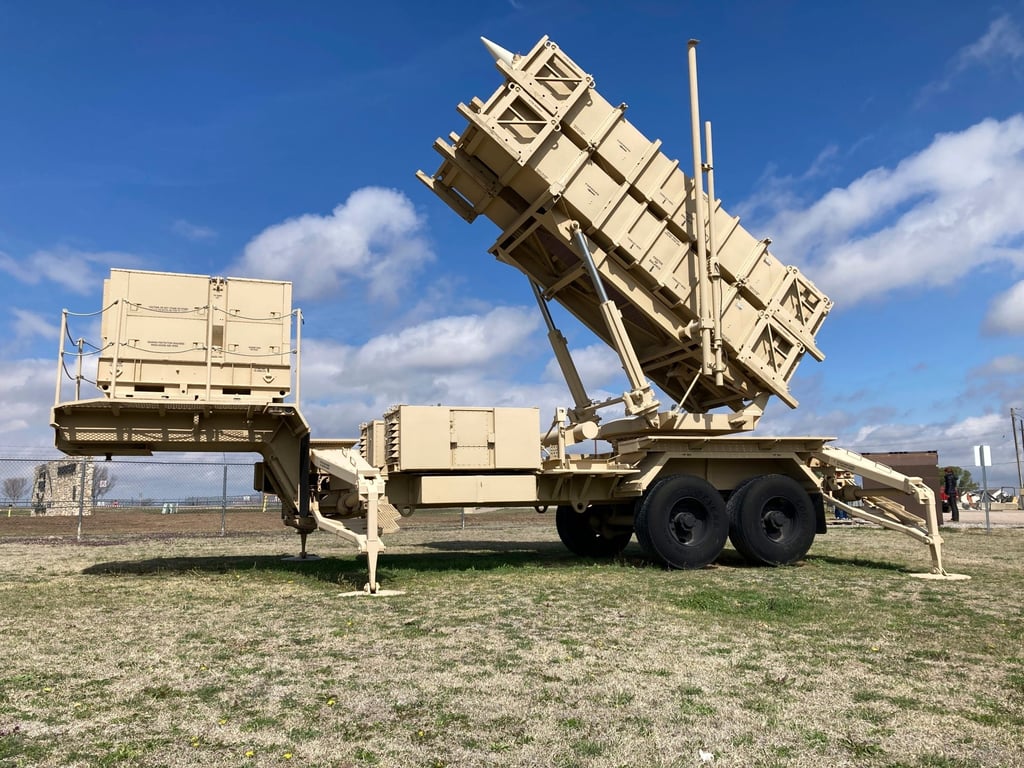
Using costly surface-to-air missile systems like the US-made Patriot to counter cheap kamikaze drones is economically unsustainable, Ukrainian officials and military experts have said, as doing so rapidly drains vital strategic reserves.
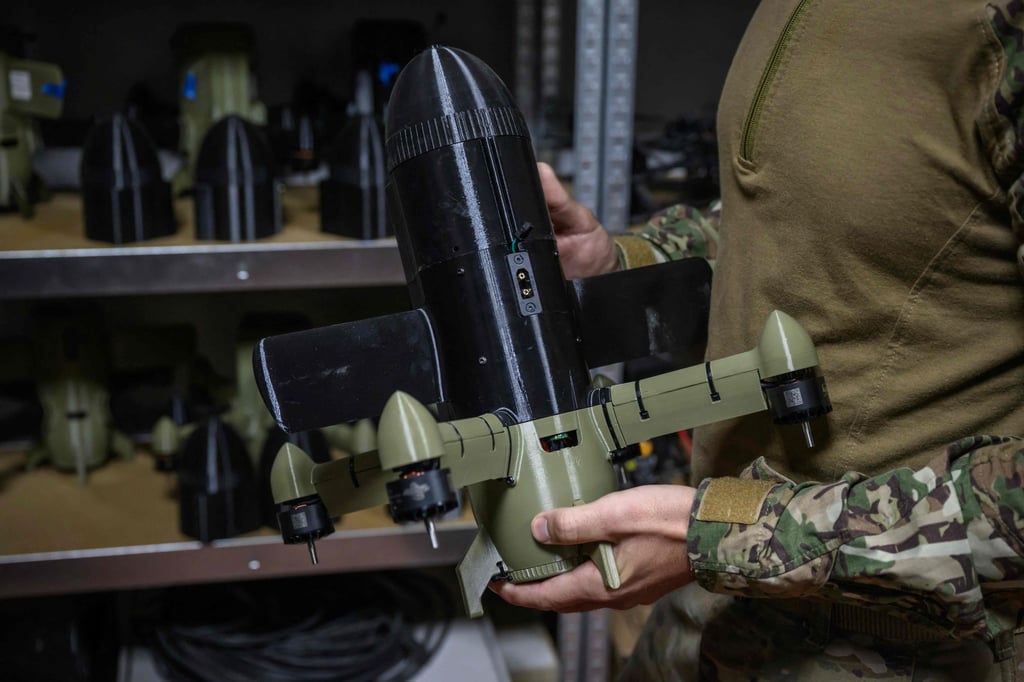
To correct this imbalance, Kyiv has turned to localised, low-cost solutions, including mass-producing interceptor drones at a fraction of the cost of traditional missiles and testing high-speed interceptor variants.
“Ukraine is leading the process of making air defence more affordable and thereby more sustainable,” Tsuruoka noted.
Masahiro Matsumura, a professor of international politics and national security at St. Andrew’s University in Osaka, said that as a two-time former minister of defence, Onodera was well-versed in the details of weapons procurement policy.
“He strongly endorses drone procurement,” Matsumura said, referring to Onodera’s push to integrate advanced drone technology into national defence policy.
In June, Onodera welcomed efforts by Ukrainian drone manufacturers to partner with Japanese defence firms, saying Tokyo urgently needed equipment “that is actually demonstrating effective power”.
He also led a parliamentary delegation to Israel in January to inspect its drone and missile defence networks, noting at the time that such technology would be critical for formulating Japan’s future security strategy.
Since Russia launched its full-scale invasion of Ukraine in February 2022, Japan has become one of Kyiv’s most important financial and humanitarian supporters in Asia, providing aid commitments exceeding US$20 billion.
KioskNews shows a cleaned-up reading view extracted from the publisher’s page — the original always lives on their site, not ours.