Mumbai Air 'Very Poor' At 322 As Delhi Records Best October 24 In A Decade
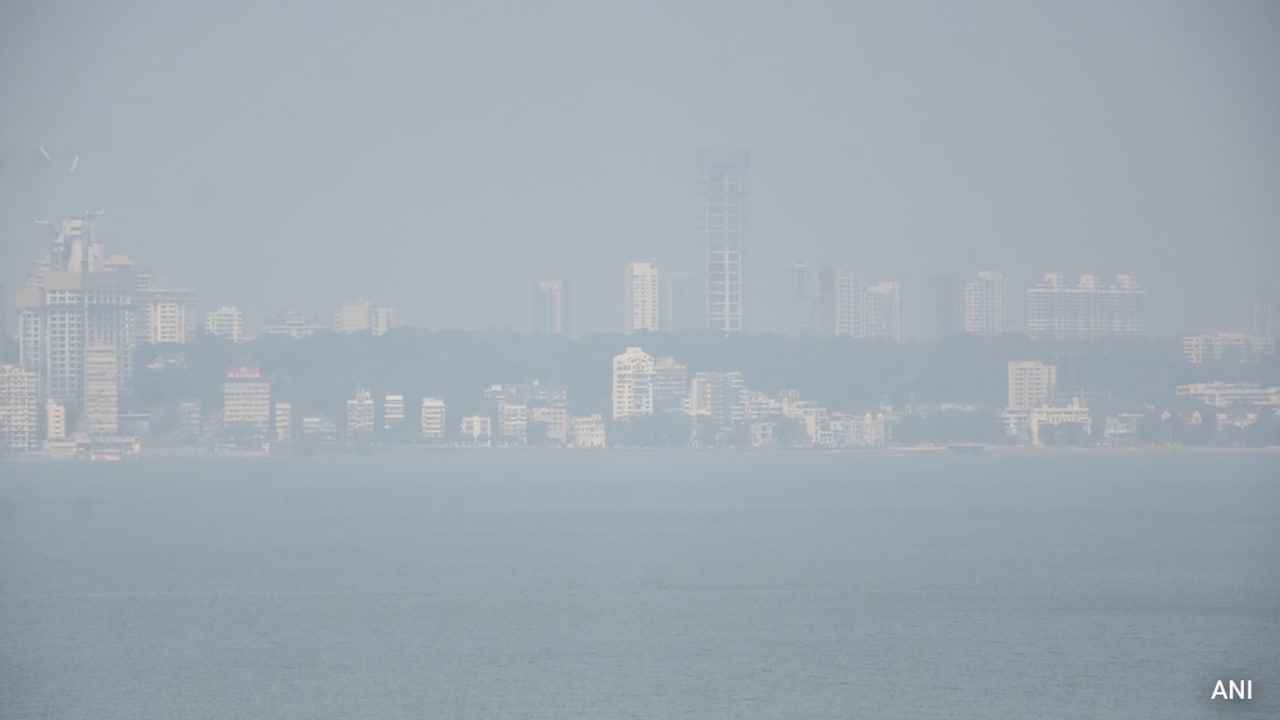
Mumbai's air quality deteriorated sharply on Saturday, with the Air Quality Index (AQI) touching 322 in the 'very poor' category, triggering widespread health complaints among residents.
In a rare contrast, Delhi recorded a moderate AQI of 176 -- its best reading for October 24 in the last ten years -- following aggressive anti-pollution measures.
According to air quality monitoring data, Mumbai's pollution levels were driven by a combination of construction dust, sluggish wind speed, garbage burning, emissions from crop fires in surrounding regions, and residual smoke from firecrackers.
The thick haze blanketing the city led to a rise in cases of headache, sore throat, and eye irritation, with doctors advising vulnerable groups, including children and the elderly, to limit outdoor exposure.
Civic officials in Mumbai acknowledged the sudden spike and said multiple factors had converged to push the air quality into the hazardous zone.
The Bombay High Court, taking note of the worsening situation, has declared an emergency and directed authorities to intensify enforcement against polluting activities.
Environmental activists and citizens have called for stricter monitoring of construction sites, a complete ban on open garbage burning, and better coordination to control regional emissions.
Meanwhile, Delhi presented a contrasting picture.
The national capital's AQI of 176 placed it in the moderate category, a significant improvement compared to previous years when early winter pollution usually begins to intensify around this date.
Officials attributed the cleaner air to sustained efforts launched in 'war mode', including continuous road sweeping, removal of construction and municipal waste, and extensive water sprinkling on roads and dust-prone areas.
Delhi's environment department said the coordinated action by civic agencies and the use of technology to identify pollution hotspots had helped keep particulate levels under control.
However, authorities cautioned that the situation could change with the onset of winter and farm stubble burning in neighbouring states.
Experts noted that while Delhi's temporary improvement offers a positive signal, Mumbai's sudden decline underscores the need for year-round pollution control strategies in coastal cities that traditionally enjoyed better air quality.
Both cities continue to face public pressure for stronger and more consistent enforcement of environmental norms.
(Except for the headline, this story has not been edited by NDTV staff and is published from a syndicated feed.)
KioskNews shows a cleaned-up reading view extracted from the publisher’s page — the original always lives on their site, not ours.