Australia’s card surcharge ban forces cafes, shops into price increases

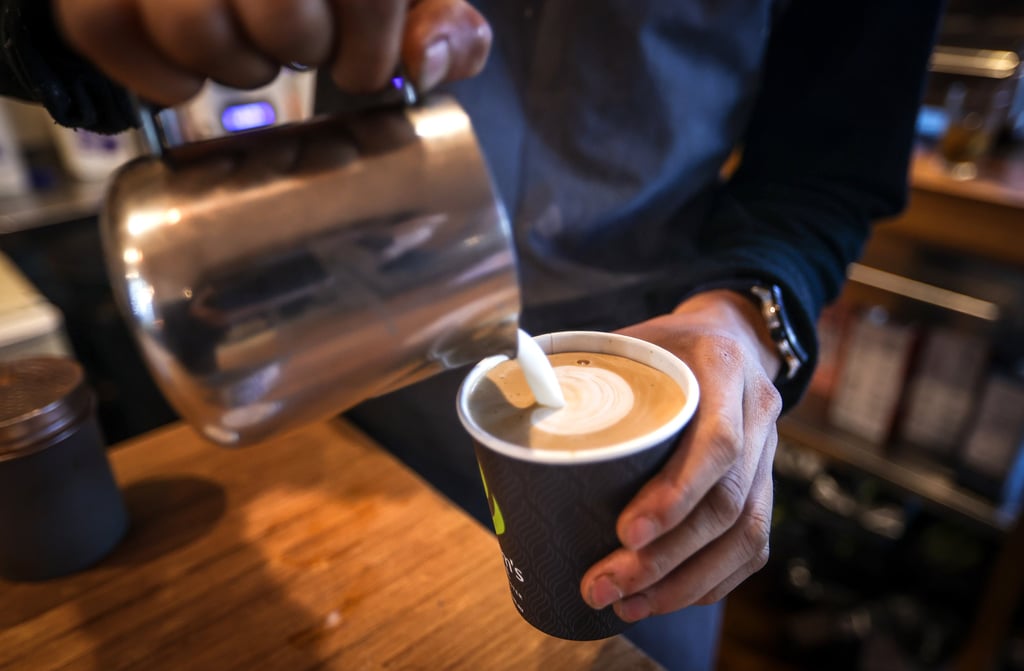
Ross Surace is preparing to raise the price of a coffee by 50 Australian cents and a panini by A$1 (US$0.70) when the country bans credit card surcharge fees starting on Thursday.
The co-owner of Lennox Street Deli in Melbourne’s Moonee Ponds neighbourhood said bank-imposed card fees already cost his business more than A$1,000 (US$690) a week, even after the cafe recoups some of the expense by adding a 1.9 per cent surcharge to customers’ card payments. Once that option disappears, Surace estimates the cafe could pay an additional A$1,200 to A$1,500 a week to process transactions.
The coffee and panini price increase “just covers the surcharge that we’re losing”, he said.
Thousands of smaller Australian businesses face a similar choice: absorb the cost of customers tapping their cards, squeezing already thin margins, or build it into prices and risk driving away cash-strapped consumers.
The change is one of the biggest shake-ups of the country’s payments system by the Reserve Bank of Australia (RBA) in decades, but comes at a difficult time for retailers and restaurants already grappling with higher wages, inflation and weak discretionary spending.
“Supply chain cost increases and other operating costs have risen, while customers are carefully watching what they spend,” said Glenn Fahey, chief economist at the Australian Retail Council. “Businesses have to weigh up those costs against the risk of raising prices in a highly competitive market.”
Merchants will no longer be able to impose surcharges on payments made with Visa, Mastercard and eftpos debit and credit cards. American Express and China’s UnionPay are also removing surcharges, while PayPal follows from October 5.
About 16 per cent of Australian businesses currently surcharge, according to the central bank, with consumers paying about A$1.6 billion (US$1.1 billion) annually in the fees.
The ban does not stop banks, card networks or payment providers from charging businesses to process transactions. Instead, merchants can no longer pass those costs directly to customers as a separate fee – meaning some of that A$1.6 billion could ultimately resurface in higher prices.
Australia’s new policy brings it in line with the UK and European Economic Area (EEA), where surcharges on most consumer debit and credit cards are banned. The changes unwind a system introduced more than two decades ago to steer shoppers towards cheaper payment methods. But with cash now accounting for only about 15 per cent of Australian transactions, that rationale has largely disappeared.
The central bank says the change should deliver greater transparency for consumers.
“The price that the consumer sees when they’re shopping for the good ends up being the price they pay when they tap their card,” Ellis Connolly, the RBA’s head of payments policy, said in an interview.
The impact will be particularly visible in Australia’s ubiquitous cafes and restaurants, where margins are thin. The average restaurant made a net profit of just 2.6 per cent last year, according to John Hart, national president of Restaurant & Catering Australia, which represents 57,000 eateries and caterers.
“What they’re concerned about is that in resetting menu prices, they’re going to push menu prices to a point where it will affect demand,” Hart said.
Large listed chains are relatively insulated because surcharging is already rare among them, while smaller businesses are more exposed. Retailers typically had profit margins of about 5 per cent to 10 per cent, said Craig Woolford, senior consumer discretionary and retail analyst at MST Financial.
“If you’re sitting at a 5 per cent margin and you’ve got to absorb an extra percentage point, then you have a 20 per cent hit to earnings,” he said. “We will see smaller businesses attempt to pass it on where they can.”
The RBA is trying to soften the blow by simultaneously lowering interchange fees, which merchants’ banks pay to cardholders’ banks on transactions. From Thursday, the maximum rate on domestic consumer credit card transactions will fall to 0.3 per cent, bringing Australia further in line with UK and EEA policy.
How much that offsets the surcharge ban would depend on how much payment providers pass through, the Retail Council’s Fahey said. “It’s critical that the fee savings reach retailers, especially smaller operators.”
The surcharge ban has already been factored into ticket prices at Arthurs Seat Eagle, a scenic gondola attraction on Victoria’s Mornington Peninsula that draws about 270,000 visitors a year. Chief executive officer Matthew Mulkearns said the changes were expected to cost the operator hundreds of thousands of dollars annually.
“We’re going to have a really good hard look at what the net cost to us is,” Mulkearns said. “Then we might, like all businesses, consider whether we need to introduce a service fee or an admin charge for our ticketing.”
KioskNews shows a cleaned-up reading view extracted from the publisher’s page — the original always lives on their site, not ours.