Netflix’s Most Divisive Thriller Officially Drew 813M Hours Despite Its Ending

Hannah covers horror, sci-fi, and games at Collider, where she writes news and features, reviews new releases, and interviews the people who make them. She’s helping build out Collider’s gaming coverage, with Pokémon as one of her specialties. If she isn’t writing about a monster, she’s probably watching one on a tape from her VHS collection.
By the time You reached its final season, it had already crossed a line most prestige television never does. It was no longer a show audiences watched because they loved its protagonist or believed in his redemption. It was something darker and more revealing: a cultural habit. You logged 813.2 million hours viewed globally across all five seasons in 2025, according to Netflix engagement figures compiled by FlixPatrol.
That total includes 671.7 million hours in the first half of the year and another 141.5 million in the second. The series added 106.5 million hours between January and June 2026, bringing Season 5 alone to 366.7 million hours since its release. Those numbers do not reflect universal approval or reveal how many viewers finished the series. They showed an audience that kept watching, even as debate over its ending grew louder and more polarized.
In its final stretch, You faced criticism from nearly every direction. Some viewers felt the ending was morally evasive, while others argued it undermined years of psychological groundwork. And yet, audiences still pressed play to follow Joe Goldberg’s (Penn Badgley) story to its conclusion. The success of You suggests something increasingly uncomfortable about modern streaming culture: viewers do not always need a “good” ending to stay invested. They need momentum, familiarity, and the promise of closure, even if that closure disappoints them.
‘You’ Became Appointment Viewing Without Appointments
From its earliest days, You was designed to exploit intimacy. Joe Goldberg narrates directly into the viewer’s head, weaponizing charm and self-justification to blur the line between observation and complicity. That structure made the series uniquely bingeable, especially within Netflix’s release model. Once a season dropped, there was no friction between curiosity and completion. As the seasons progressed, the show became less about suspense and more about inevitability.
Viewers were no longer watching to discover whether Joe would change. They were watching to see how far the show would let him go. That distinction matters. You transitioned from a thriller into a psychological endurance test, daring audiences to stay with a protagonist who grew more hollow, more performative, and more monstrous with each season. By the time the final season arrived, many viewers were openly critical of Joe’s arc, yet unwilling to disengage.
This is the paradox behind You’s staggering viewership. Hate-watching is still watching. Outrage still fuels engagement. In the streaming economy, emotional dissatisfaction does not equal failure. It can give audiences another reason to keep watching, because they want confirmation that their frustration leads somewhere, even if that destination disappoints them.
Joe Goldberg’s Ending Was Always Going to Be Divisive

Part of You’s controversy stems from how deeply the show invited viewers into Joe’s perspective. Portrayed with unsettling restraint by Badgley, Joe was never meant to be a hero, but the series consistently flirted with audience sympathy. That tension became increasingly volatile as cultural conversations around accountability, privilege, and narrative punishment intensified. The final season faced an impossible task. To punish Joe decisively risked flattening the psychological complexity that defined the show. To spare him risked validating the very behavior the series spent years critiquing.
Whatever choice the writers made was guaranteed to alienate a portion of the audience. What matters is not whether the ending satisfied everyone: it clearly did not. What matters is that viewers showed up anyway. They wanted resolution, not moral clarity. In a media landscape overflowing with half-finished arcs and canceled series, You offered something rare: a complete story, however uncomfortable its final statement might be.
Streaming Success No Longer Depends on Satisfaction
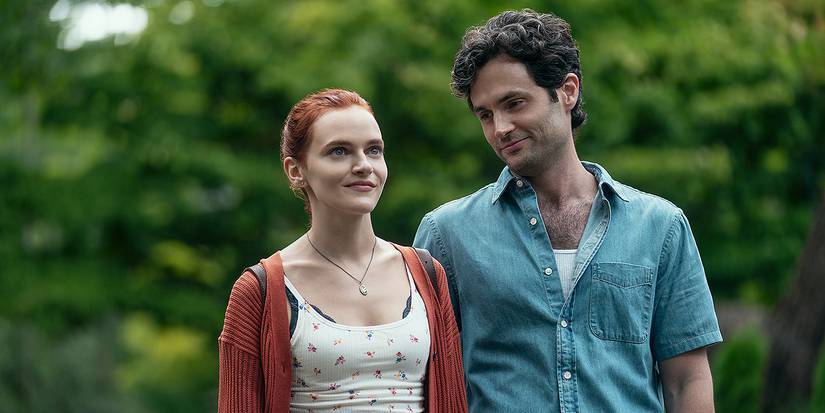
The 813.2 million hours logged by You in 2025 show why viewing and satisfaction are different measures of success. Streaming platforms do not rely on praise or long-term rewatchability alone; engagement matters, too. Viewing hours cannot tell us whether audiences finished the season, enjoyed the ending, or tuned in because of the backlash. But the continued viewing into 2026 shows that the finale did not end interest in the series. The discourse surrounding its conclusion may have given curious viewers another reason to press play. The ending became content, not a conclusion.
In that sense, dissatisfaction was not a liability. It was part of the show’s lifecycle. This is the uncomfortable truth You exposes. A divisive ending does not necessarily kill a streaming hit. It can leave a series provoking reaction, argument, and obsession long after its final episode. Being watched and being loved are not always the same thing. You ended the only way it realistically could: by refusing to give everyone what they wanted, while still giving Netflix exactly what it needed.

- Release Date
- 2018 - 2025-00-00
- Network
- Lifetime, Netflix
- Showrunner
- Sera Gamble, Greg Berlanti, Justin W. Lo
- Directors
- Marcos Siega, Lee Toland Krieger, Cherie Nowlan, DeMane Davis, Kellie Cyrus, Marta Cunningham, Martha Mitchell, Victoria Mahoney, Erin Feeley
- Writers
- Justin W. Lo
KioskNews shows a cleaned-up reading view extracted from the publisher’s page — the original always lives on their site, not ours.