FIRST READING: The most uncontroversial Canadian abortion restriction imaginable (is probably too controversial)
First Reading is a Canadian politics newsletter curated by the National Post’s own Tristin Hopper. To get an early version sent directly to your inbox, sign up here.
Sign In or Create an Account
For the first time in nearly a generation, a Canadian election campaign is featuring a suggestion that maybe there should be some kind of restriction on elective abortions.
It hasn’t come from any of the major parties; it is from OneBC, the right-wing spinoff from the B.C. Conservatives that had two sitting MLAs upon the legislature’s dissolution last month.
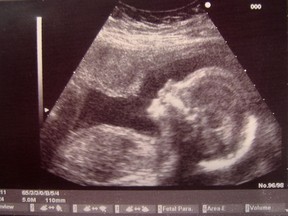
And it isn’t for anything particularly controversial. The OneBC proposal, released on Wednesday, is for provincial health funding to be denied to “elective third trimester abortions.” That is, an abortion sought after 27 weeks of pregnancy where there isn’t a fatal genetic abnormality in the fetus, or a complication that is life-threatening to the mother.

Columnist Jesse Kline keeps you up to date with what’s happening in Israel and the effects of antisemitism on life here in Canada. Friday mornings.
By signing up you consent to receive the above newsletter from Postmedia Network Inc.
A welcome email is on its way. If you don't see it, please check your junk folder.
The next issue of Channel Israel will soon be in your inbox.
We encountered an issue signing you up. Please try again
https://www.facebook.com/OneBCHQ/posts/onebc-announces-policy-to-end-provincial-funding-for-elective-third-trimester-ab/122204780774906365/
In most of Canada’s peer countries, the issue of funding for late-stage abortions is a moot issue, as elective abortions are already banned outright long before the third trimester. In Norway, they’re prohibited after the 18th week of pregnancy. In the U.K., it’s 24 weeks. In France, it’s 14 weeks.
And on the infrequent occasion that Canadians are polled on the issue, only about half ever endorse the idea of unrestricted abortion right into the third trimester. Last year, a survey by the B.C.-based pollster Research Co. found just 49 per cent backing the current regime of legal abortion “under any circumstances.”
But in a sign of just how untouchable abortion has become in Canadian political discourse, nothing like this has really happened since the 1980s.
The last time abortion was a headline issue in a B.C. election campaign was nearly 40 years ago.
Incumbent premier Bill Vander Zalm had attempted to deny all provincial health funding for abortion, declaring in a 1988 legislative speech that the “senseless termination of human life at the slightest whim … is simply removing yet another stone from the wall of an already crumbling society.”
It’s part of why Vander Zalm’s party not only lost the 1991 election to the NDP, but lost so thoroughly that the B.C. Social Credit Party never recovered.
Ever since, any mainstream discussion of abortion in B.C. has consisted almost entirely of candidates pledging to continue allowing unrestricted, publicly funded abortions.
In the last B.C. election, when a B.C. Conservative candidate casually mentioned that motherhood begins at “conception,” the party quickly clarified that its official policy was for abortion to “remain exactly as it is now. There will be no changes.”
As it stands, Canada has the world’s most liberal regime governing abortion.
Ever since the 1988 R v. Morgentaler decision, Canada has had no law whatsoever governing when and how abortions can be performed.
Health-care agencies will impose their own in-house restrictions, such as a refusal to perform sex-selective abortions, or elective abortions after the third trimester. On the official webpage for B.C.’s Interior Health agency, for instance, British Columbians are told they might have problems aborting a pregnancy more advanced than “24 weeks and 6 days.”
But what differentiates Canada from almost any other world jurisdiction is that there are no criminal consequences for going beyond these limits.
For comparison, California recently enshrined one of the most liberal abortion regimes in the United States by legalizing abortion right up to the point of fetal viability, the point at which a fetus could survive outside the womb.
But even then, California state health codes still prescribe fines and jail time for a clinician who performs an abortion on a “viable fetus.”
In Canada, such a sanction would be impossible simply because there are no laws or statutes mentioning abortion in any context.
“There is no Canadian law restricting abortion care at any gestation,” reads a 2025 article on third trimester abortions published in the Journal of Obstetrics and Gynaecology Canada.
The article added that there are “national clinical practice guidelines” on the procedural aspects of abortion, “but there are no standards on how the full scope of this care should be delivered, including when and how termination should be offered and necessary supports.”
At the federal level, any proposal to impose a standard has essentially been shut out from mainstream discourse.
Ever since its 2003 founding, the modern Conservative Party of Canada’s consistent stance on abortion has been that the party won’t touch it.
As leader Pierre Poilievre described it in the last federal election, “there will be no laws or other restrictions imposed on a woman’s right to decide to do with her body as she wishes.”
On the rare occasion that a proposed guardrail on abortion makes it onto the House of Commons agenda, it’s always a Conservative private member’s bill that is explicitly disavowed by Conservative leadership.
The most recent example was a 2021 bill by then Conservative MP Cathay Wagantall that proposed to impose criminal penalties on clinicians who knowingly performed an abortion that was “sought solely on the grounds of the child’s genetic sex.”
The bill was voted down on second reading, with one Liberal opponent calling it “just another example of Conservatives who just recently got together to strategize on how to create backdoor anti-abortion legislation.”
All the while, the largest federal party with any kind of platform proposing to restrict abortion would be the People’s Party of Canada, which hasn’t ever elected an MP under the PPC banner and scored a distant sixth place in the 2025 election with just 0.7 per cent of the popular vote.
And the PPC’s abortion program still isn’t any more radical than what would be found across much of the European Union: elective abortion in the first trimester, with later term abortions “prohibited except in exceptional circumstances.”
At the provincial level, abortion even remains a bridge too far for what is arguably Canada’s most conservative provincial government.
In recent years, the government of Alberta Premier Danielle Smith has been at the sharp end of challenging social policies that are still considered taboo in the rest of the country. This has included Canada’s first province-level rollback of MAID laws, as well as Canada’s first regulations barring trans-identified males from competing in women’s sports.
But throughout, Smith has explicitly vowed not to touch abortion. This is even after members of Smith’s United Conservative Party passed a resolution in 2025 that, like the OneBC pledge, proposed to strip provincial funding from elective third trimester abortions.

It was in April that Prime Minister Mark Carney inaugurated what he dubbed “Canada’s first national sovereign wealth fund.”
The pitch was that this was something like the Norwegian sovereign wealth fund, in that it was a place where surplus wealth could be invested and preserved for future generations.
In practice, however, it is mostly just a giant $25-billion pile of deficit-financed money to be put toward whatever the government feels like at any particular time. Which doesn’t make it all that different from any other government fund or initiative.
And now the Assembly of First Nations has proposed something similar, albeit with an Indigenous flavour.
It’s all contained in a new paper entitled Building Prosperity for All, according to a report by APTN. The general idea is that as Carney’s various “nation-building projects” come on line, industry would be required to pay into something called the National Benefit Sharing Framework and Sovereign Wealth Fund.
First Nations would control the fund, and they’d receive the money regardless of whether they had approved of a “nation-building project” or whether it was in their traditional territory.
It’s also specified that no First Nations money would be incorporated into the fund; it would all be industry contributions. Also, the contributions wouldn’t have any effect on Indigenous land claims or other compensation agreements.
The problem the fund is looking to address is that First Nations generally only benefit from development if it happens in their territory, and that they should ideally be receiving equal financial benefits from all development everywhere within the borders of Canada.
“Proximate First Nations can negotiate impact benefit agreements, while distant First Nations have no comparable route to the benefits Canada asserts are national,” it reads.
First Reading is a Canadian politics newsletter curated by the National Post’s own Tristin Hopper. To get an early version sent directly to your inbox, sign up here.
Join the Conversation
This website uses cookies to personalize your content (including ads), and allows us to analyze our traffic. Read more about cookies here. By continuing to use our site, you agree to our Terms of Use and Privacy Policy.
KioskNews shows a cleaned-up reading view extracted from the publisher’s page — the original always lives on their site, not ours.