‘It speaks very poorly of us as a society’: Lawrence Wright on his book on death row and redemption
It is “stunning”, the Pulitzer-winning reporter Lawrence Wright said, that Redemption, his new book about women on death row in Texas and the nuns who minister to them, turns out to be published at a time of intense focus on capital punishment.
Two cases dominate headlines: the Trump administration’s abandoned plan to livestream the firing squad execution of Nidal Hasan, who killed 13 at Fort Hood, Texas, in 2009, and Tennessee’s failure to kill the convicted murderer Christa Pike by lethal injection. Away from the headlines, in Texas and elsewhere, executions continue.
From his study in Austin, Wright said: “In Texas, capital punishment is too frequently a subject of discussion, so people are inured to it. I think we killed somebody a couple of days ago, and that I guess was not mentioned in the paper at all.
“On Nidal Hasan, to roll this guy in a wheelchair before a firing squad and televise it [would have been] al-Qaida’s dream, and I can speak with some authority on that.” Wright wrote The Looming Tower: al-Qaeda and the Road to 9/11, a Pulitzer winner in 2007, the basis for a hit TV drama. “A person would have to be totally ignorant of the nature of al-Qaida and Isis. The goal of martyrdom against the west is such a powerful inducement for so many people to join those organizations, and this is like a recruitment ad.”
In the case of Christa Pike, Wright said: “The evidence of the execution chamber is that occasionally something goes really badly wrong, and it’s very embarrassing and inhumane, and then everybody is awakened to it, especially when a woman’s involved.”
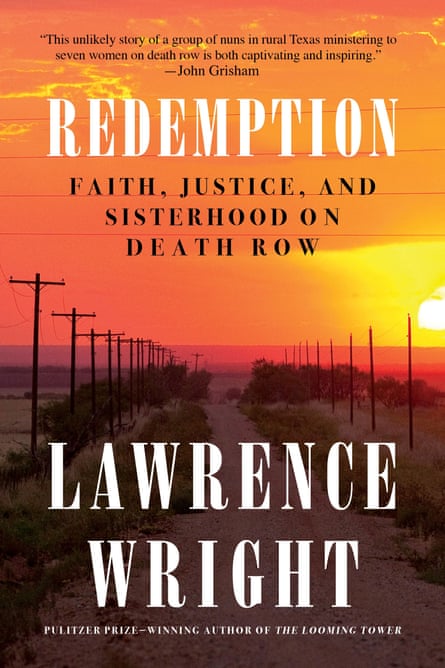
Redemption is about two groups of women: the seven who sit on death row in Texas and the Sisters of Mary Morning Star, a contemplative order in Waco. In 2014, a deacon, Ronnie Lastovica, asked the nuns to meet the prisoners. Wright, who first wrote about Lastovica and the sisters for the New Yorker, describes that remarkable first meeting, and how each group then changed the lives of the other. The result is a book as much about the spiritual life as the American way of death.
“I didn’t write it for it to be a book about capital punishment,” Wright said. “What I was interested in was the possibility of redemption. I wasn’t interested when I started about, you know, finding an innocent person and trying to free them. Although I’m now in that spot.”
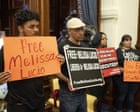
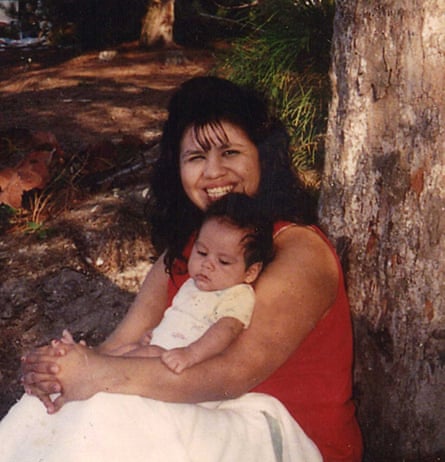
Melissa Lucio, from Harlingen in south Texas, was sentenced to die for beating her two-year-old daughter to death. Death row moves slow. The appeals process is torturous. Convicted in 2008, due to die in 2022, Lucio was granted a last-minute reprieve given evidence her daughter, Mariah, died from a fall and Lucio’s confession was coerced, a case the film-maker Sabrina Van Tassel made powerfully with The State of Texas vs Melissa. Lucio’s other children proclaim her innocence. In 2024, a judge pronounced Lucio “actually innocent”. But this is Texas. Last month, an appeals court said Lucio should be killed regardless.
After our interview, Wright has a meeting “to talk about Melissa’s case”. It has become personal, but so is his engagement with all the women on death row.
“I would just assume that all seven women on the row are guilty, and they did heinous things,” he said, of how he started work. “What I wanted to know is, could someone like that be redeemed? And if so, then what do we do with them? As a society, are we at a point where we’re killing people on principle, whether or not they are no longer the person that committed that crime 20, 30 years ago? Is it redemptive, is vengeance suitable when all the victim’s family have passed on, of old age? There is a creepiness about it. Aside from the absence of justification, it speaks very poorly of us as a society.”
Now 79, Wright has written 12 books of nonfiction, four novels, plays and screenplays. “My first book was about the Amish,” he said. “I’ve written about the Mormons and Scientology and Jonestown and Branch Davidians and Satanists. There’s some kind of mania going on there. Now I look back at it, I think what was happening to me was that I was so interested in religion but not being religious myself. I’m just interested in the fact that you can be political, and it won’t change your behavior at all … but if you’re intensely religious, it dictates every part of your life.”
In Redemption, other factors are in play: race and class. Wright examines the case of Walker Railey. A well-off white pastor, Railey was acquitted of killing his wife, left Texas to start anew in California. Wright knew him, has written about him, and is convinced of his guilt. But the main focus of Redemption is religion. As law professor Mark Osler puts it: “Without the support of Christians, we wouldn’t have the death penalty.”
Wright said: “As reporters, we rarely investigate people’s religious beliefs. In a way, speaking as a skeptic, you feel kind of sorry for anybody that is captive to these intense religious beliefs. On the other hand, it’s transformative, and I’ve seen it before I got into this project, in other prisons, with other individuals who had done horrible things, and yet when exposed to faith of one sort or another have had a chance to climb out of that personality that was so deformed by whatever life they might have had in the past, and turned into someone who seems to me totally redeemed.”
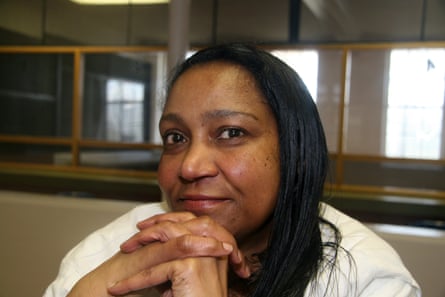
Some of the crimes described in Redemption might seem irredeemable. Brittany Holberg was convicted in 1998 for the brutal murder of AB Towery Sr, an 80-year-old man from Amarillo. Wright’s account of the killing is unsparing. Holberg, a sex worker and crack addict, claimed self-defense. A paid police informant said she confessed to enjoying the killing and said she would do it again. Holberg was sentenced to death.
Writing about “wildly incompetent homicides”, Wright knew he’d “be dealing with extreme violence” but “owed it to the families of the victims, I couldn’t write about this without looking at the damage that these women left behind them, and even as much as I oppose lethal injection and so on, it is a bitter death that they gave to their victims, and so I can understand the wrath of the families. But after 30 years or something like that, you know, when basically they’ve served a life sentence, It seems cruel and pointless to execute them. The arbitrariness of it is.”
Law enforcement malpractice is also common: brutal police railroading women into false confessions, ambitious prosecutors out to secure a conviction.
“I have to confess that this book has been very disillusioning in terms of our justice system,” Wright said. “It’s a small pool that I’m looking at, but you know you have the DA framing Brittany Holberg. He put a snitch in her jail cell, and wrote a script for her to testify to. And later, this woman recanted. But you know, [the DA] wanted not just a homicide conviction; he wanted capital murder. And so he made sure he would get it.”
Last year, Holberg was tried again. Her conviction was upheld. Other cases examined by Wright include that of Linda Carty, a British citizen convicted of murder despite a complete lack of forensic evidence and “whose defense attorney had lost more than 30 capital cases”. Kimberly Cargill was convicted of murdering her children’s babysitter, but the medical examiner could find no cause of death, and so it was described as ‘homicide of unknown cause’, and you wonder what that could even mean.
Redemption is 250 pages long but contains multitudes. The remarkable, in places dark story of the Sisters of Mary Morning Star, how they came to Texas from France, would make a book of its own. With Wright due to turn back to Melissa Lucio and attempts to stop her state killing her, a last question turned to present-day Texas headlines, to Democrats Gina Hinojosa and James Talarico challenging hard-right Republicans for the governorship and a Senate seat, election day two weeks from now. Many liberals hope Texas might yet turn from its hardline path. Does Wright think redemption is near?
“I guess what I should say about this is there’s cause for prayer,” he said, with a rueful laugh. “I don’t know what’s going to happen, but for 32 years we haven’t elected a Democratic candidate statewide. It’s like we’ve been living in an enchanted forest, and the witch controlling it has cursed us. So will the wicked witch be dead at the end of November? I don’t know. It’s a time of great promise, but we’ll see if that promise is kept.”
KioskNews shows a cleaned-up reading view extracted from the publisher’s page — the original always lives on their site, not ours.