Every Book in Brandon Sanderson's 'The Stormlight Archive' Series, Ranked

Sign in to your Collider account
The Stormlight Archive is an ongoing series by Brandon Sanderson, which exists in his shared literary universe known as the Cosmere. The premise of the Cosmere is that each series or stand-alone story takes place on its own planet within the same galaxy. Each planet has a complex magic system, though some stories take place on worlds that are completely non-magical. Over the years, The Stormlight Archive has proven to be one of the flagship entries in the universe, as well as the absolute longest in terms of word count.
Currently, the saga consists of five mainline novels, two novellas, and one stand-alone double feature that consists of two short stories, though the plan is to have 10 mainline novels. Each book is over 1,000 pages long, so it can be quite time-consuming to read, but it's totally worth it. Set on the barren, windswept world of Roshar, each book features flashback sequences from particular characters, which build on their history and establish why and how they first got to use their magic. While every entry is brilliant on its own, they definitely have a hierarchy when compared against each other.
8 'Rhythm of War' (2020)
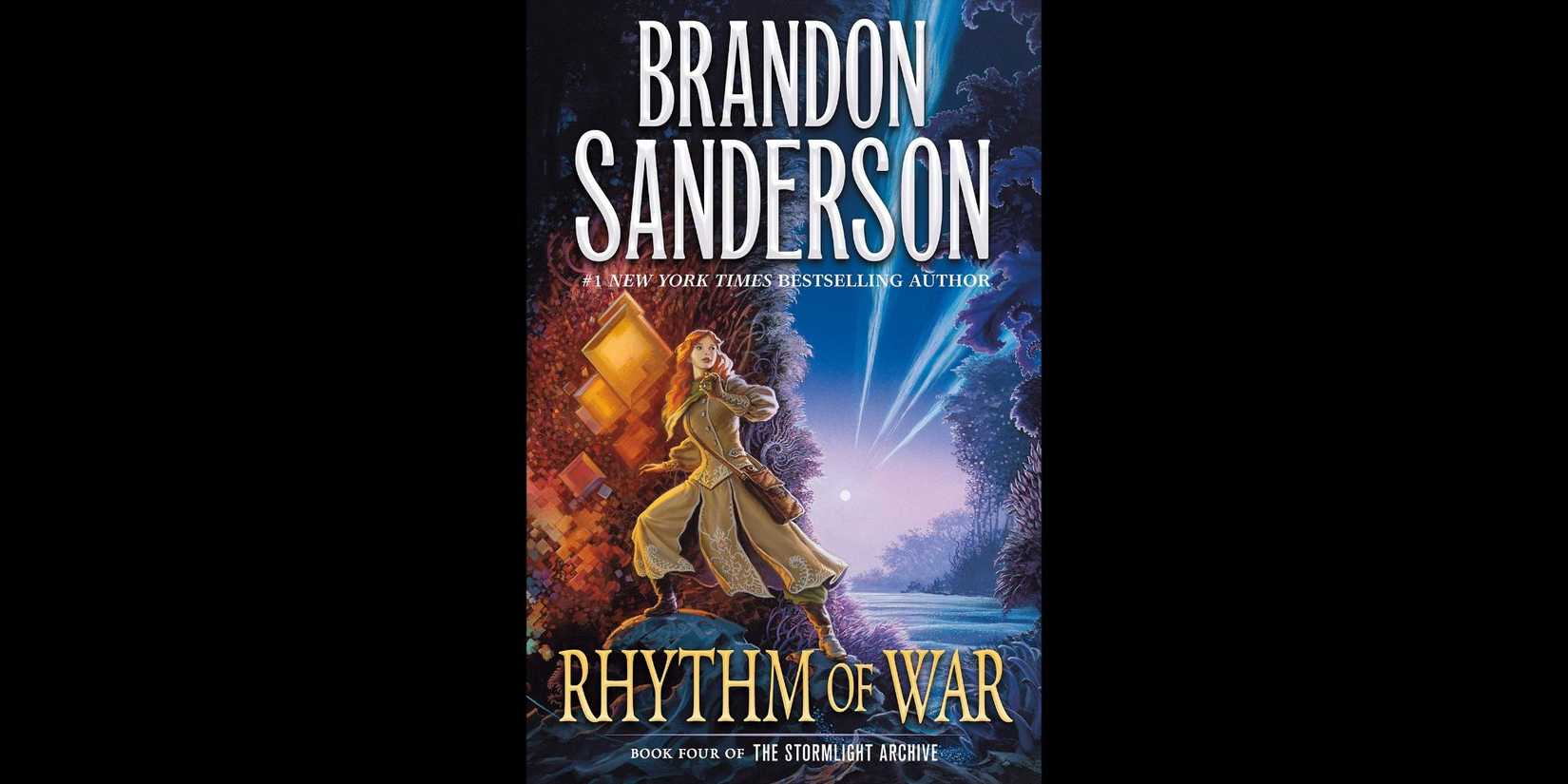
Rhythm of War is the fourth mainline novel of the series, and it's also arguably the worst. It gets off to a strong start, with a huge, climactic evacuation in an emotionally significant location, but it all kind of winds down from there. The flashbacks are a bit awkward and disjointed, split between Listener sisters Eshonai and Venli rather than just one character. Almost all of the main story is set in the city of Urithiru, with little opportunity for exploring the vastness of Roshar. The interludes don't allow for this either, as they generally focus on already-existing characters rather than following the pattern of featuring brief viewpoints of one-offs in distant lands.
By far the worst part of the story is how it just feels like one prolonged science lesson. So much of it is about how light works, how it is used in fabrials, how it can be manipulated, and the various properties of gemstones. It goes on and on and is incredibly overwhelming. Having a complex magic system isn't a problem, but the book tends to overload it a bit too much. Rhythm of War is not a bad book — in fact, it's a very good book — but it doesn't really hold up compared to the others.
7 'Dawnshard' (2020)
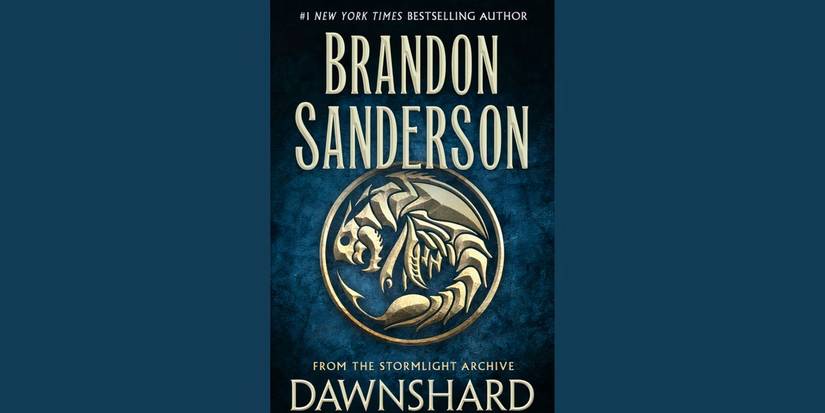
Dawnshard is the second novella, which takes place between books three and four. Released alongside Rhythm of War, it is a thrilling tale across the sea to the lost island of Aimia. The main character is Rysn Ftori, a Thaylen merchant who, until then, was strictly an interlude character. Now in the leading role, Rysn desperately seeks Aimia in order to heal her pet larkin, Chiri-Chiri, who originated from the island.
However, Aimia is obstructed by a permanent storm, so this will be no easy feat. Aided by comic relief characters Lopen and his cousin, Huio, this is a simple, linear adventure to the farthest reaches of Roshar, where the mysteries of Aimia are finally unravelled after three full novels of buildup. It's not a perfect book, especially since it's only a side story, but it's a fantastic adventure with a thrilling climax that only thickens the overarching narrative.
6 'Edgedancer' (2016)

Edgedancer is the first novella in the series, set between books two and three. The book opens with a prologue sequence that is a direct copy-and-paste of Lift's interlude from book two. This novella then continues the story, providing an exclusive look into the events that occurred afterwards. Lift takes the lead as she travels to the city of Yeddaw in Tashikk, where she hopes to try all 10 types of ceremonial pancakes made in the city. That might sound silly, but you must understand that Lift is kind of a chaos gremlin, so it's best to just go along with it.
Accompanied by Wyndle, her exhausted spren, Lift finds herself pursued by a vengeful Herald, the very same one she encountered in her interlude. The young rapscallion raises Hell in Yeddaw, ruining grain carts, befuddling guards, befriending orphans, and, as always, stealing food. It's a great, straightforward adventure into a fascinating location, with a hilarious buddy dynamic between Lift and her spren.
Collider Exclusive · 8 Questions · 2 Minutes What Fantasy World Do You Belong To? Middle-earth · Grand Line · The Continent · Camp Half-Blood
Pick your magic, your crew, where you want to wake up and who you would rather be fighting, and we will tell you which world you actually belong in. Four are open to you: an ancient kingdom living through its last good age, an endless sea full of pirates, a continent that pays people to kill monsters, and a summer camp where the Greek gods are extremely real and mostly a nuisance.
💍Middle-earth(Rings of Power)
👒Grand Line(One Piece)
🐺The Continent(The Witcher)
🔱Camp Half-Blood(Percy Jackson)
01
What kind of power do you want? Every one of these worlds runs on a completely different sort of magic.
02
Who is travelling with you? Nobody gets through any of these stories entirely on their own.
03
Where do you want to wake up tomorrow? The best fantasy is usually just somewhere you would genuinely like to live.
04
How are you making a living out there? Even in fantasy somebody has to pay for the horse.
05
There is something in the woods. What do you do about it? All four of these worlds keep something unpleasant out there in the dark.
06
Who is the villain of your story? The enemy tells you far more about a world than the hero ever does.
07
What do you actually believe in out there? Every world hands its heroes one rule and asks them to hold onto it.
08
A thousand years from now, how are you remembered? Eight questions in, this is the one that decides your world.
The Map Is Drawn Your World Is…
Four worlds and four completely different ideas of what a good life looks like. This is where you belong, what it would ask of you, and what you would get back in return.
Middle-earth
You belong somewhere old enough that the mountains have names and somebody can still tell you who gave them. Middle-earth is for people who think the right thing is worth doing even when it will not be finished in their lifetime.
- This is the only world on the list where doing good is understood as a very long defeat, fought anyway, by people who will never see how it ends.
- You are drawn to grandeur, to white cities and deep forges and the sense that almost everything you touch is older than your entire family line.
- The Rings of Power is set in the last good age before it all goes wrong, which gives every quiet scene in it a slightly unbearable weight.
- You would take the hard road, and you would take it on foot.
The Grand Line
You want the sea, a crew, and absolutely nobody telling you where you are allowed to go. The Grand Line is the world for people whose main ambition in life is finding out what is over there.
- One Piece has run for decades on one very simple engine, which is a group of people who each want something impossible and have decided to go and get it together.
- You collect people. Your ideal crew is a set of misfits who were each written off somewhere else before you turned up and offered them a better idea.
- The world is enormous and deliberately ridiculous, and the emotional gut punches land harder because of that rather than in spite of it.
- You would set sail knowing the map runs out, which is more or less the entire point of it.
The Continent
You would rather be feared and useful than liked and useless. The Continent is a world where the monsters are the straightforward part of the job and the people are where it all gets complicated.
- Witchers get paid to do what nobody else will and resented for existing at all, which is a trade most people would refuse and you would probably accept.
- You have no real illusions about which side is the good one, largely because on the Continent that question tends to have a disappointing answer.
- The best of these stories are not about the fighting. They are about somebody with a rigid code being repeatedly cornered into caring about people.
- You would take the coin, finish the job properly, and be out of town before the story got told wrong.
Camp Half-Blood
You want the myths to be real and loose in the actual world, and you want to find out at about thirteen that you were never anywhere near as ordinary as everybody kept telling you.
- Percy Jackson takes the oldest stories we have and drops them into car parks and diners, which makes the gods considerably funnier and a great deal worse.
- You would be the kid every school gave up on, who turns out to have been built for something nobody thought to test for.
- The series is genuinely about friendship rather than destiny, and it says so out loud every time a prophecy tries to get in the way.
- Camp Half-Blood is the real fantasy here: a place where the thing that made you difficult everywhere else is the thing that makes you belong.
5 'Wind and Truth' (2024)

Wind and Truth is the fifth book in the series, and the concluding novel of the first arc. Since it marks the halfway point of the series overall, it's best not to expect a happy ending with this one. This book wasn't received quite so well by fans, mainly because it took a lot of departures from the Stormlight formula. Namely, it doesn't feature five distinct parts — instead, it features ten shorter parts, which correspond to one day. This means part one is day one, part two is day two, and so forth.
Wind and Truth is also the longest novel in the series, coming in at a whopping 1,300+ pages. The ending is tragic but fitting, and presents a beacon of hope while also spreading a blanket of darkness over the world. The flashbacks focus on the Assassin in White, Szeth-son-son-Vallano, and his time in Shinovar, which is an utterly fascinating backstory. Though many fans felt this book had a lot of shortcomings, it is absolutely action-packed, full of great character moments, and serves as a satisfying ending and new beginning all at once.
4 'King Lopen the First of Alethkar / Elsecaller' (2025)

King Lopen the First of Alethkar / Elsecaller is a specially released double feature consisting of two short stories occurring concurrently, around the end of the second novel. They don't really add anything important to the overall narrative, but they do answer some burning questions that fans had. King Lopen the First of Alethkar occurs when Lopen is temporarily made king by the real king, Elhokar, as a means of creating a decoy so Elhokar can stay in hiding. Lopen is a comic relief character who, armed with a sock puppet, goes on numerous ridiculous misadventures. It's honestly the best story of the two, because it's genuinely hilarious.
Elsecaller follows what happens to Jasnah Kholin, who is missing in action for most of the book. This story isn't particularly funny; it's just Jasnah's adventure across the parallel dimension of Shadesmar as she seeks to find a way back to the Physical Realm. However, she does meet some interesting people who come from planets not yet revealed, which adds to the mystery of the Cosmere. This book might not add much to the story, but it is incredibly fun and quick to read.
3 'The Way of Kings' (2010)
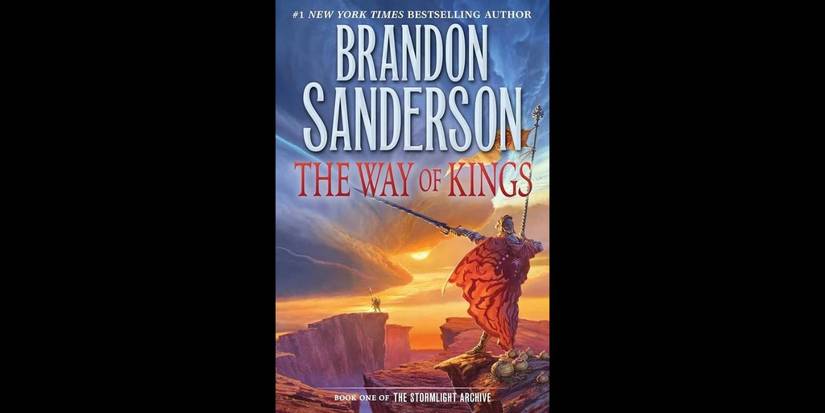
The Way of Kings is the very first book in the series, which is nothing short of mind-blowing. It's where readers are first introduced to the world of Roshar, along with its strangeness, size, and variety. The flashbacks centre on Kaladin, a soldier-turned-slave, who is used as arrow fodder in the war between the Listeners and the Alethi. Meanwhile, Dalinar Kholin, uncle of Alethkar's king, begins experiencing strange visions and becomes convinced he needs to unite the 10 Alethi highprinces in their efforts to defeat their enemies, rather than constantly maneuvering against each other in court.
In the distant city of Kharbranth, a young student named Shallan Davar hopes to study with Jasnah Kholin, Elhokar's sister and Dalinar's niece, and one of the brightest scholars in Roshar. This might be the shortest mainline novel in the series (though it is still roughly 1,000 pages long), but it is an absolute masterpiece, not only in its worldbuilding, but in its inspirational moments and action-packed climax. The Way of Kings is one of Sanderson's finest works and is still recommended as an entry point to the Cosmere by many fans.
2 'Words of Radiance' (2014)
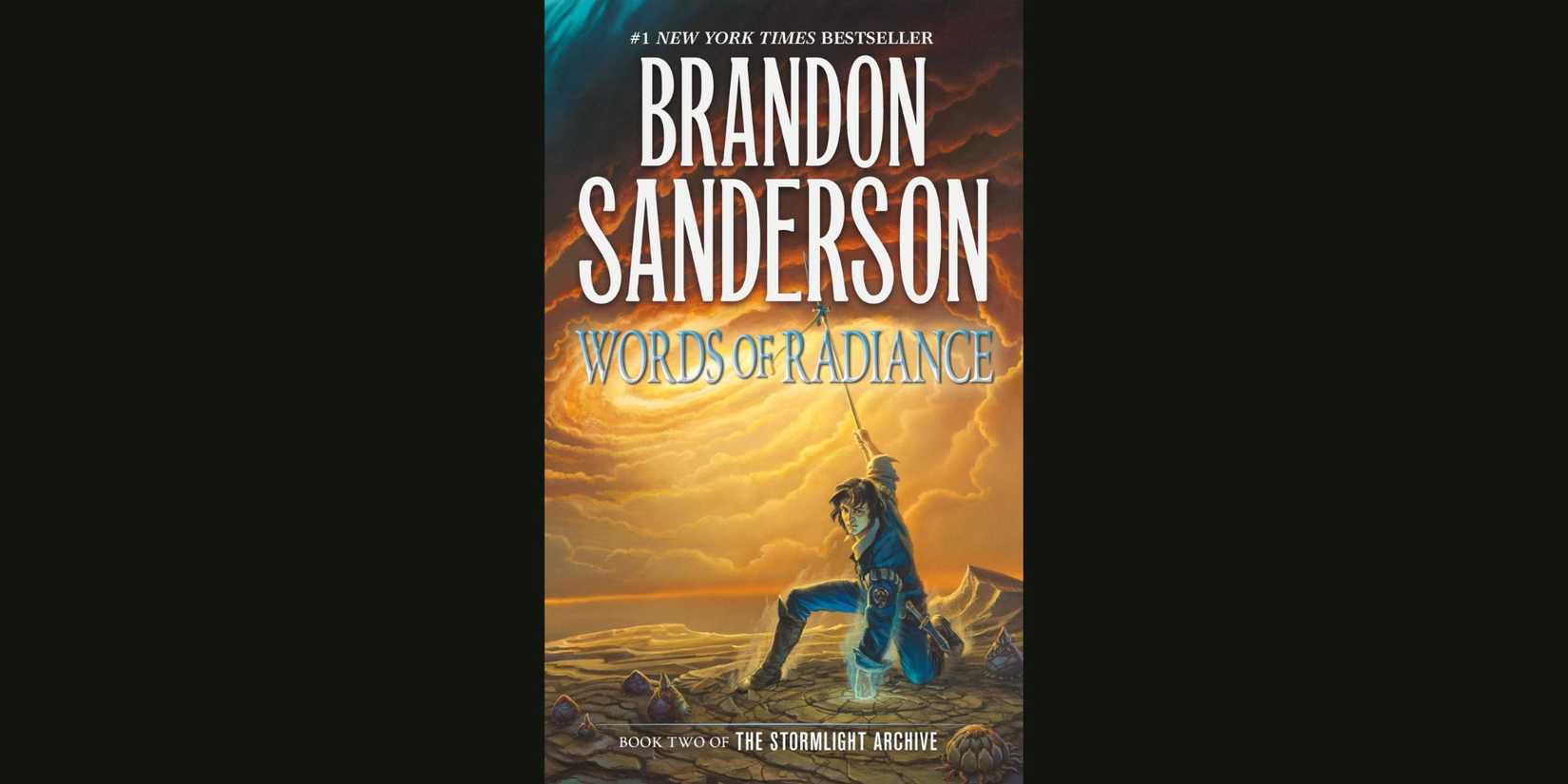
Words of Radiance is the second mainline novel in the series, picking up immediately where The Way of Kings leaves off. Instead of featuring Kaladin's flashbacks, the book sets its sights on Shallan Davar's past and her childhood growing up in rural Jah Keved. Words of Radiance is commonly cited as the absolute best of the series, with a lot of fans deeming it their favorite, and it's really not hard to see why.
The climax is absolutely unbelievable, genuinely filling the reader with anxiety, dread, sorrow, joy, and relief all at once. There are so many quotable moments in this book, from the fight scene in the arena to Szeth's first encounter with a Herald. A lot changes, yet a lot stays the same, all while the stakes are raised higher than ever before. This book is a solid 10 out of 10. It doesn't waste a single word, and is consistently exciting, even when little is happening.
1 'Oathbringer' (2017)

Oathbringer takes the crown as being the absolute best of the entire saga (so far, anyway). The flashbacks are about Dalinar Kholin and his life as a terrifying combatant. Since much of Dalinar's history is marked by constant civil war and political upheavals, most of his flashbacks are chock-full of violence, with a few major and minor battles scattered in between. Outside of the flashbacks, the story is brilliant, too.
There are numerous large-scale battles that take place throughout the narrative, including the Siege of Kholinar and the climactic Battle of Thaylen Field. There are even more quotable moments in this book, and some utterly devastating death scenes, too. There's so much going on in this novel, yet it's never hard to keep track of things. Oathbringer is honestly one of the greatest fantasy novels ever written, and that's really saying something.
KioskNews shows a cleaned-up reading view extracted from the publisher’s page — the original always lives on their site, not ours.