For second year in a row, central Mexico’s reservoirs are above 95% full
The Cutzamala System, which supplies one in every five liters of drinking water to the Valley of Mexico, has reached one of its best storage levels in the last decade, bolstered by seasonal rainfall and runoff.
According to the National Water Commission’s (Conagua) latest report on reservoir storage levels, the Cutzamala System reached a storage volume of 750.286 million cubic meters of water, equivalent to 95.88% of its capacity.
This figure exceeded the level recorded at the end of October, when reserves totaled 749.336 million cubic meters, representing 95.76% of capacity.
Conagua also reported that as of Nov. 9, the three reservoirs that make up the system were nearing full capacity: Villa Victoria stood at 87.44%, with 162.3 million cubic meters; Valle de Bravo at 99.14%, holding 390.9 million cubic meters; and El Bosque at 97.29%, with 196.9 million cubic meters.
The system’s current status contrasts greatly with the 2024 water crisis, when reserves in the Cutzamala system fell to around 26% of their capacity mid-year, largely due to extreme drought. Compared to 2025 at this time, however, the Cutzamala’s water volume is slightly lower.
Threats to the Cutzamala system
Despite the reservoirs’ staggering recovery over the past two years, a report by the news outlet Excélsior revealed that water supply remains threatened by illegal activities and pollution.
In the Valle de Bravo region, more than 27 unauthorized private dams have been identified, in addition to clandestine wells used for water extraction.

Furthermore, Excélsior revealed in June 2024 that, according to satellite imagery, the number of illegally constructed bodies of water increased from 400 to 600 between 2017 and 2024 in the Valle de Bravo-Amanalco area in México state.
According to the news outlet, this infrastructure serves as a supplementary irrigation source for corn or oat crops. However, it said the vast majority are intended for ornamental or landscaping purposes, for the enjoyment of the ranch owners.
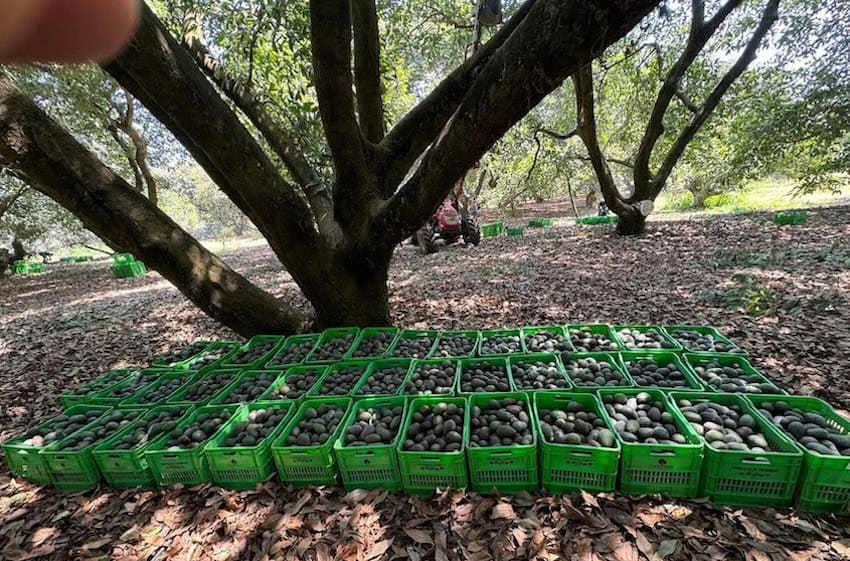
Meanwhile, on the Michoacán side — within the Cutzamala River sub-basin — thousands of clandestine water extraction points have been detected, used for large-scale crop irrigation, including avocados and guavas.
Beyond clandestine wells, the system faces another threat: the pollution of the Valle de Bravo reservoir caused by the discharge of untreated wastewater, which is exacerbated by deficiencies in sanitation infrastructure.
KioskNews shows a cleaned-up reading view extracted from the publisher’s page — the original always lives on their site, not ours.