Singapore challenges US tariff logic as free trade pact faces 20% levy
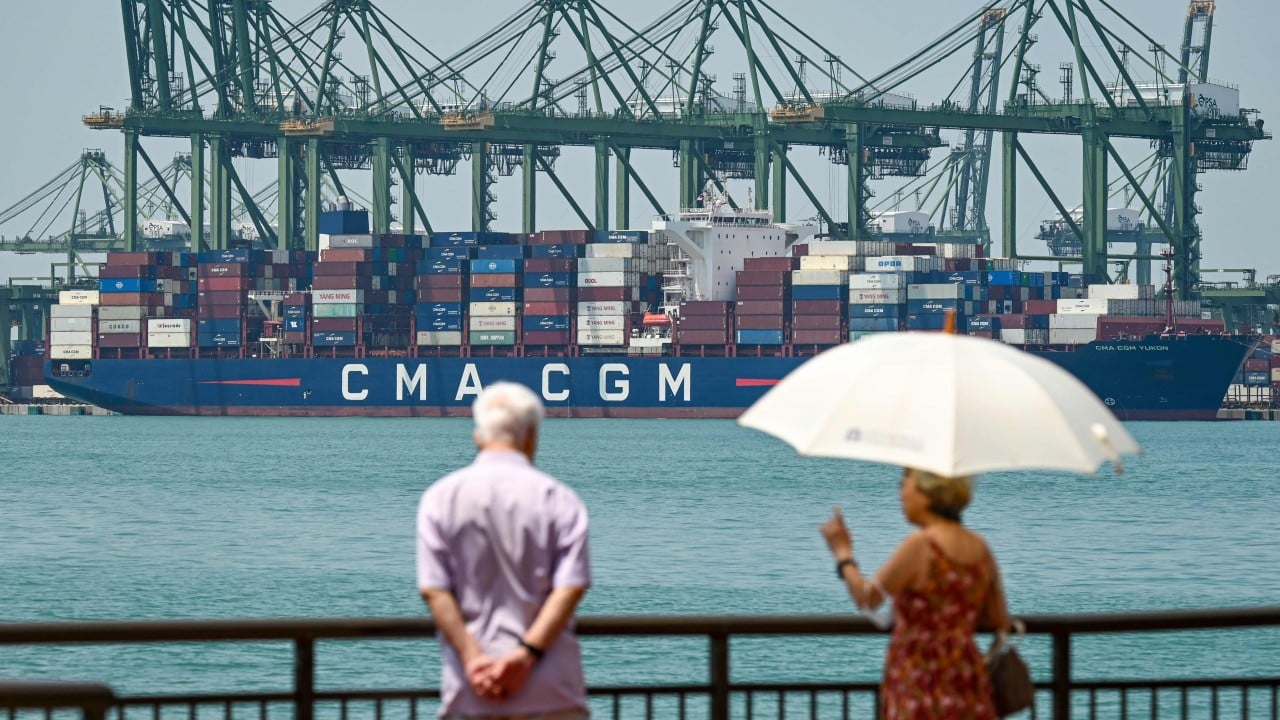
Singapore has hit back at the United States over proposed tariffs of up to 20 per cent, saying it is “very disappointed” with the latest economic salvo from the Donald Trump administration.
The Office of the United States Trade Representative (USTR) on Wednesday floated potential levies on Singapore, along with 13 other trading partners, after investigations found the city state’s policies detrimental to Washington’s economy.
“Singapore disagrees with the USTR’s findings and we are very disappointed with the proposed actions against Singapore,” Singapore’s trade ministry said on Thursday.
The report’s findings failed to account for the structure of Singapore’s economy, the ministry argued, noting that its trade surplus reflected its “outward and market-oriented economy” and status as a business and trading hub.
“Singapore’s economic policies do not protect our domestic market or subsidise manufacturing for export,” the statement read. “Our free trade agreements seek to lower barriers to trade and investments, and are fully compliant with World Trade Organization rules.”
The US has “enjoyed a consistent trade surplus” with Singapore for more than 20 years, the ministry added. According to officials, Washington’s overall trade surplus with Singapore rose from US$27 billion in 2024 to US$33 billion last year.
Singapore would continue to urge Washington to reconsider the proposed tariffs and explore ways to reduce the levy, the ministry said on Thursday, adding that it had engaged Washington actively and “thoroughly addressed” queries and concerns.
“We will be submitting further comments during the upcoming public consultation period to address the issues raised in the report,” it said. The USTR’s proposal is subject to a comment and hearing process through January.
On Wednesday, US Trade Representative Jamieson Greer further proposed considering lowering the tariff rate to 10 per cent to account for commitments should Singapore reach an Agreement on Reciprocal Trade with Washington, or “conclude other negotiations that are responsive to the determinations in this investigation into the acts, policies and practices of Singapore”.
In March, the USTR announced it had launched investigations under Section 301 of the Trade Act of 1974 into 16 economies, including Singapore.
The USTR investigation report published this month concluded that Singapore’s industrial policies linked to structural excess capacity and production were “unreasonable” and “burdened or restricted US commerce”.
Even as the US runs a sizeable goods trade surplus with Singapore, the city state’s trade deficit with Washington did not outweigh the “negative effects of Singapore’s outsized manufacturing sector and comparatively low consumption”, the report said.
The USTR stated that the US would be able to export more goods to Singapore beyond current levels without measures driving excess manufacturing capacity.
Those measures include financial support to the manufacturing sector and firms in the electronics and semiconductors, health and petrochemicals industries.
“Moreover, Singapore’s trade surplus with key trading partners captures potential market share from US exporters in other markets,” the USTR report said.
Singapore also failed to address global excess capacity and production linked to imports and foreign direct investment from non-market economies, harming the US economy as a result, the USTR stated.
The report said Singapore’s reliance on inputs from China exposed both itself and the US to economic security risks of supply chain disruption and “possible coercion”.
Singapore was among 14 trading partners – including China, the European Union, Indonesia, Malaysia, Thailand and Cambodia – accused by Washington of producing more goods than they would under market-oriented conditions.
In April last year, Singaporean Prime Minister Lawrence Wong criticised the US’ imposition of tariffs as “not actions one does to a friend”, after Washington imposed a 10 per cent tariff on all global imports.
Wong noted that Singapore and the US had an existing free trade agreement, adding: “If the tariffs were truly reciprocal, and if they were meant to target only those with trade surpluses, then the tariff for Singapore should be zero.”
KioskNews shows a cleaned-up reading view extracted from the publisher’s page — the original always lives on their site, not ours.