Why Indonesia’s death penalty lives on, even with executions halted

Indonesia has not executed anyone in over a decade, with its new Criminal Code designed to make capital punishment a “last resort”. Yet the number of prisoners on death row continues to climb.
A new report on the persistent use of capital punishment in Indonesia’s courts has raised questions about the rulings despite an unofficial moratorium on executions.
There were 639 people on death row in Indonesia as of April, an increase from 596 as of August 2025, according to a report by the Indonesian Commission for the Disappeared and Victims of Violence (KontraS) published in October.
Titled “Capital Punishment Policy Has Changed, Yet the State Has Not Reformed”, the report shows that the number of criminals facing death sentences more than doubled as of April compared with 2019.
Indonesia has not executed anyone since July 2016, when three Nigerian nationals and one Indonesian were killed by firing squad for drug-related offences.
Under Indonesia’s new Criminal Code, which was passed into law in 2023 and came into force in January this year, the death penalty is classified as a “special punishment” to be used as a “last resort”.
The legislation provides for a 10-year probation period for those sentenced to death, after which their sentences can be commuted to life imprisonment if they have shown good conduct and commitment to change while incarcerated.
Legal experts have regarded the provisions as a compromise in place of complete abolition.
Usman Hamid, the director of Amnesty International Indonesia, said many judges, particularly in courts of first instance, were still inclined to interpret the law conservatively, rather than embracing the concept of rehabilitation.
Despite the new Criminal Code, there was “only a partial shift” in the thinking of judges, Hamid said.
“Judges maintain a conservative perspective regarding the specific types of crimes that warrant a capital sentence. While there has been a shift in practice, it has not yet succeeded in halting the imposition of death sentences.”
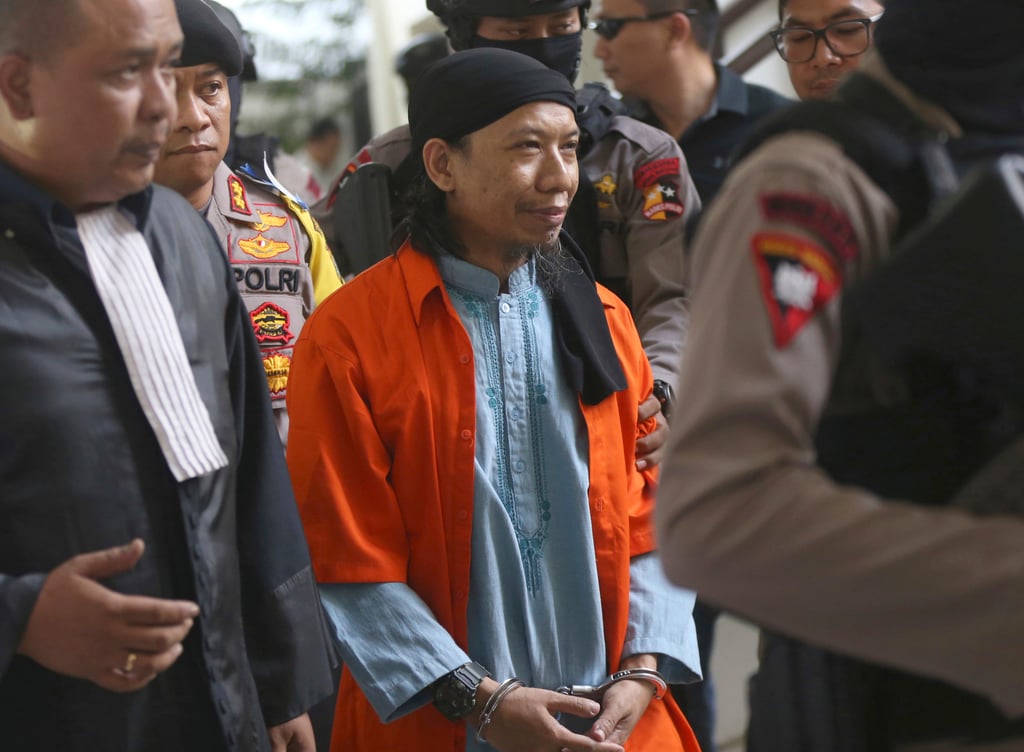
Motivations for ‘ultimate penalty’
Under Indonesian law, the death penalty can be imposed for serious crimes including premeditated murder, terrorism, drug trafficking, gross human rights violations such as genocide and treason.
Judicial motivations for continuing to impose the death penalty vary, and one of them is that the death penalty is the most favourable outcome for such offences, according to legal experts.
“In certain situations, securing a death sentence is even viewed as an achievement. It can bring media attention to the prosecutors or judges involved, who are then perceived as having succeeded by imposing the ultimate penalty,” said Albert Wirya, director of the Legal Aid Institute for the People.
What was concerning was that the number of death sentences remained high in 2024 and 2025, Wirya said. He pointed out that the possibility for a death sentence to be commuted might have swayed judges into favouring capital punishment.
Under Indonesian law, the final decision of whether to grant or deny the commutation of a death sentence to life imprisonment after 10 years lies with the sitting president.
As such, judges may feel that the eventual outcome of a case is not for them to decide, according to Wirya.
“This suggests that judicial motivation to impose the death penalty will persist,” he said. “Therefore, the complete abolition of the death penalty remains essential in Indonesia.”
02:41
Indonesia arrests three top police officers for allegedly tapping president’s phone
Indonesia, however, has yet to introduce procedures to allow inmates on death row to apply for their sentences to be commuted.
Without such procedures, these inmates’ suffering would be prolonged due to the uncertainty, Wirya said.
“Unfortunately, the fate of those on death row remains unaltered. More than 100 individuals sentenced to death have already served over 10 years in prison. Yet they are unable to apply for a commutation of their sentences because the necessary implementing regulations have not yet been established.”
Beyond Indonesia, the legal approach to capital punishment varies considerably across other parts of Southeast Asia.
In the Philippines, Cambodia and East Timor, capital punishment is prohibited.
Brunei and Laos retain the death penalty for certain offences but have not executed a convict for decades, while Thailand has not done so since 2018.
Malaysia has removed the mandatory death penalty for certain offences and gives its courts sentencing discretion in such cases.
Myanmar resumed executions in 2022 after more than three decades.

Singapore continues to carry out executions, with Amnesty International recording 19 in the first nine months of 2026, all for drug-related offences, compared with 17 in 2025.
Abdul Fickar Hadjar, an expert in Indonesian criminal law, said the evolution of the Criminal Code was a reflection of changing societal norms.
“This is not a matter of public or political pressure but, rather, it reflects the aspirations prevalent within Indonesian society at the time the Criminal Code was being drafted in 2023,” he said.
An inmate whose death sentence has been commuted to life imprisonment could also potentially have the sentence further modified to a jail term of up to 20 years.
“These provisions illustrate that the application of the law is intended to evolve in tandem with the prisoner’s personal improvement, reflecting the core purpose of the penal system, [which is] the rehabilitation and restoration of the individual’s humanity,” Hadjar said.
Human rights lawyer Ranto Sibarani said Indonesian judges had “failed to grasp the spirit behind the abolition of the death penalty as part of a global trend that underpins the new Indonesian Criminal Code”, focusing instead on imposing punitive sentences.
“Sadly, nothing will change as long as courts remain focused solely on maximising punishment, rather than focusing on education and rehabilitation.”
KioskNews shows a cleaned-up reading view extracted from the publisher’s page — the original always lives on their site, not ours.