Pioneer soldier cleared WWII undersea mines and led Hotel New World rescue efforts
SINGAPORE - For years, Winston Wong’s family only knew him as a former captain in the army who was calm and reserved.
Until his retirement in 2018, Wong, now 79, kept his roles as a pioneering member of the SAF’s bomb disposal and naval diving units relatively hush.
His was an illustrious career, from sweeping war relics and explosives to leading a mission to dispose of a heavy, active bomb in Bangladesh.
After graduating from the Singapore Armed Forces Training Institute (SAFTI) in 1968 and bomb disposal and mine clearance diving courses in the UK in 1970, the combat engineer’s first missions involved neutralising hidden sea-mines and bombs from World War II.
“When Singapore developed with a lot of excavation and building of houses, they discovered a lot (of unexploded devices). There were sea-mines also laid during the war. Some were not very active, but still very dangerous because we have international sea lanes,” added Wong.
In the 1970s, remnants of sea-mines were uncovered across the sea channel to the Keppel Harbour area, he said.
Wong spoke to The Straits Times on Sept 11, two days before he was to speak to the public about a critical Bangladesh mission that he led in 1978 to safely get rid of an unexploded bomb near an industrial estate in Joydebpur, north of Dhaka.
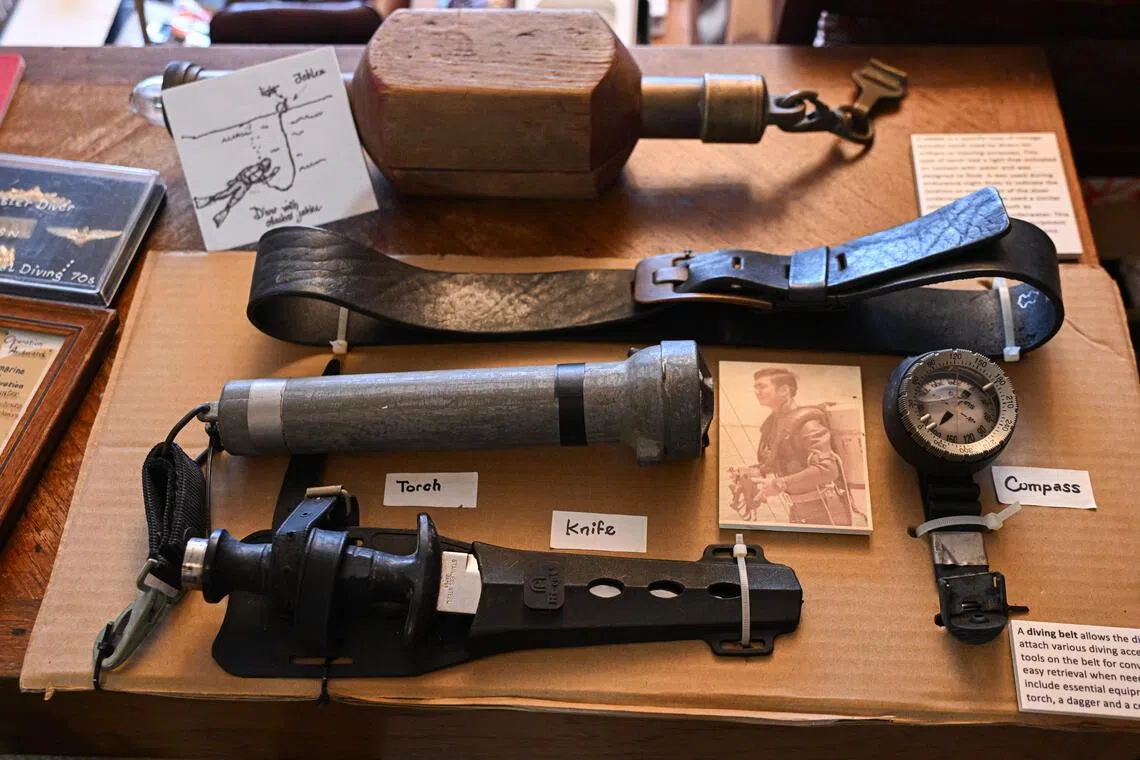
Winston Wong’s diving belt (top, in black), among other tools he used when he was in the naval diving unit.
ST PHOTO: AZMI ATHNI
On Sept 13, the military veteran will present on one of the SAF’s earliest overseas missions at the Military Hobby Fest in SAFRA Toa Payoh.
In April 1978, the Bangladesh government wrote to Singapore’s Ministry of Defence – seeking assistance to remove a 272kg aerial bomb.
The explosive was probably dropped during the Indo-Pakistan war, but it did not detonate, said Wong.
The following month, Wong, already a captain, led a team of four to neutralise the bomb over a gruelling three days.
“For some reason, there was maybe a dent somewhere which caused the explosive chain to not align, so the firing process was not complete. But it could still be dangerous because any jarring movement could align it back,” he explained.
The explosive was buried inside a 2m deep crater that was submerged in water because of monsoon rains.
Three weeks before the Singapore team arrived, protective sandbag walls were set up to shield a factory from the bomb, while water was pumped out before a tent was set up over the bomb to prevent further flooding.
Akin to performing a surgery, the explosive was X-rayed during the mission to find out why it had malfunctioned.
A hardening liquid was then injected into the pistol’s cavity to block its mechanism, making it safe to unscrew the pistol. The detonator was then extracted. The bomb, which was powerful enough to flatten half of the factory, was defused.
Recounting this mission from his home using neatly filed photos and detailed sketches, Wong said the operation was as close to a war setting as he had ever experienced.
“This was like a soldier going to war. My mission was to make bombs safe... We hadn’t fought any war, so we didn’t know how good the soldiers were. This was a direct test,” he said.
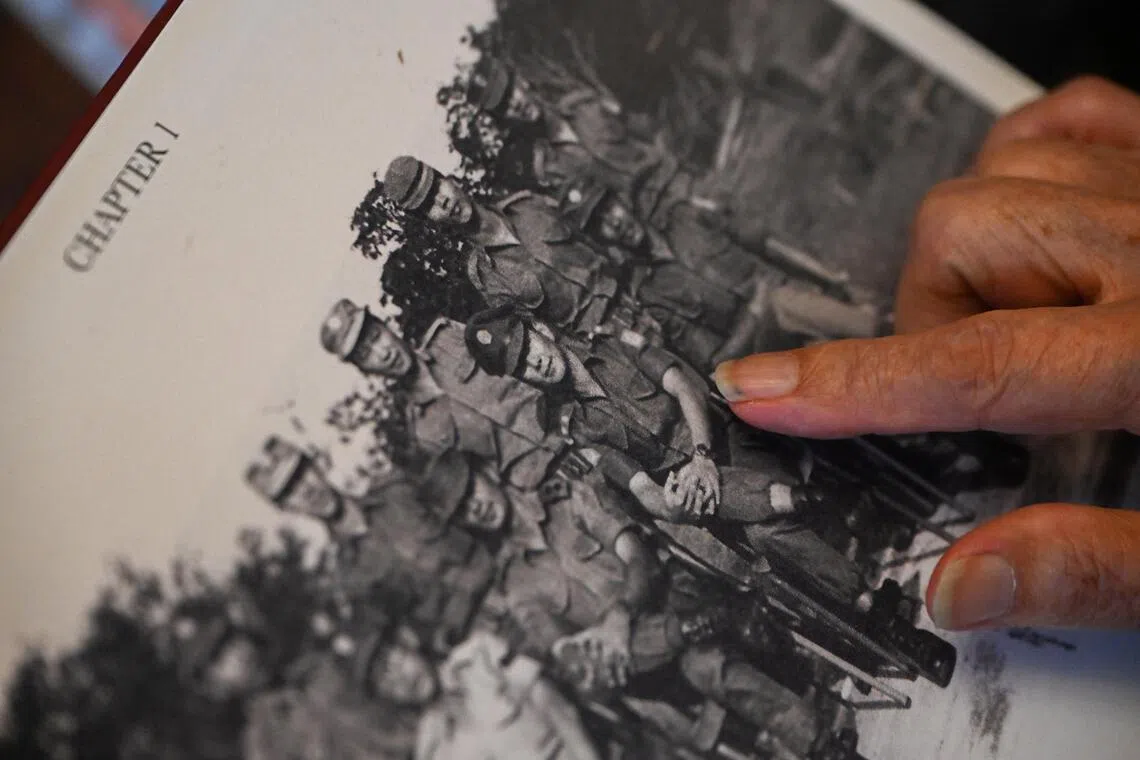
Wong pointing to a younger picture of himself.
ST PHOTO: AZMI ATHNI
But just a few years later, he did not expect to be in the middle of a disaster zone back home in Singapore.
It was March 15, 1986, and Wong – who had been seconded to the Singapore Civil Defence Force – received a phone call from a colleague. Hotel New World had collapsed, and Wong was called upon to help in the rescue efforts.
The six-storey building crumbled to the ground in less than a minute, killing 33 people. Seventeen people were eventually rescued.
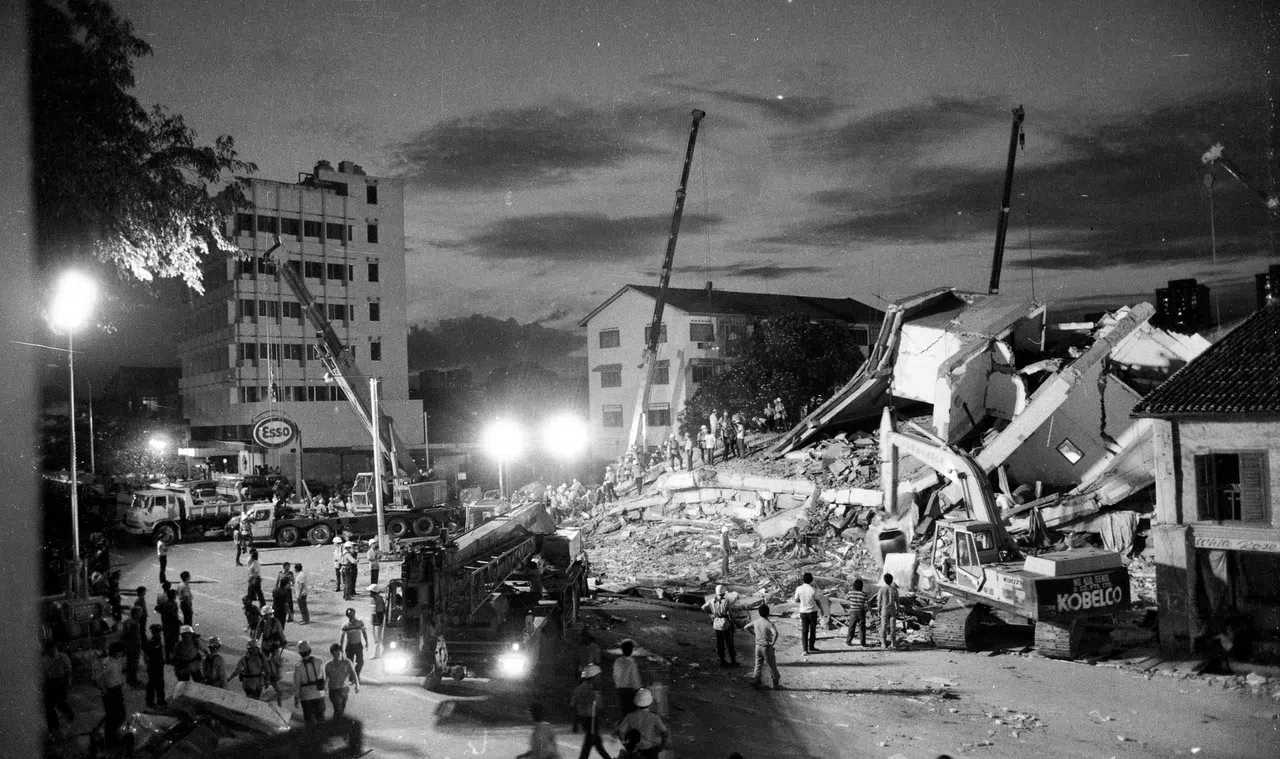
Hotel New World crumbled to the ground in less than a minute, killing 33 people. Seventeen people were eventually rescued.
PHOTO: LIANHE ZAOBAO FILE
“Your mission is to go into the tunnel and evacuate people trapped. Around the perimeters, you see relatives in distress... praying for their (loved ones’) survival,” he said.
The rubble-ridden site had to go silent at times so that seismic detectors could pick up tapping sounds from survivors.
“All they could do was use a stone and tap... (It was a) very difficult situation because some were trapped, bleeding. (We used) whatever methods to go in and make contact to talk to them, to keep them alive.”
The rescue operations lasted about a week.
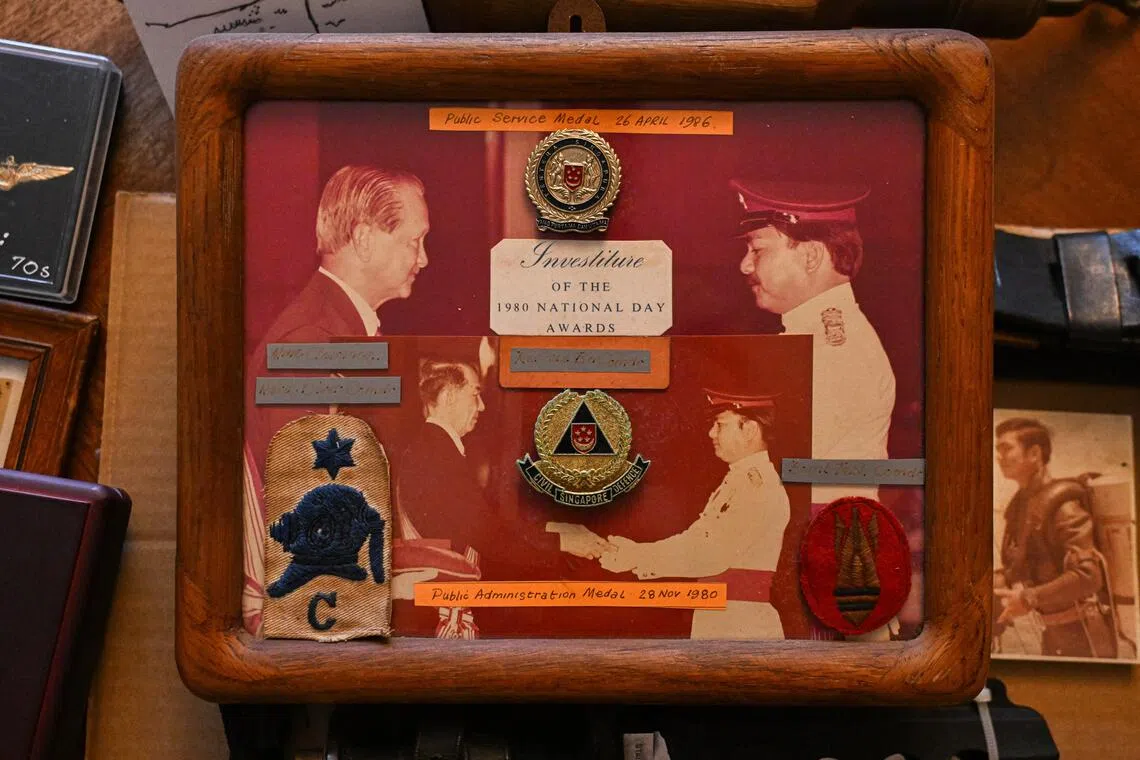
Wong received the Public Service Medal in 1986, after leading rescue efforts at Hotel New World, and also received the 1980 Public Administration Medal.
ST PHOTO: AZMI ATHNI
MINDEF’s homegrown bomb disposal expertise developed from Wong’s batch, and after the 9/11 terrorist attack in the US, the Singapore Police Force wanted a trainer to develop its Bomb and Explosive Investigation Division under the Criminal Investigation Department.
Wong was approached to lead the training as the domain expert on explosives. One of his important lessons was on conducting post-blast investigations – a post-mortem of sorts to identify the cause of the blast, identify the weapons used and residue left behind, and find the culprits.
Simulations were carried out at the Home Team Academy.
Wong was later transferred to the Ministry of Home Affairs to expand the training to more Home Team agencies until he retired in 2018.
These days, he volunteers as a heritage storyteller at The Barracks Hotel Sentosa, sharing with visitors what his old office looked like when the island was known as Pulau Blakang Mati.
He was among the first batch of officer trainees at the School of Field Engineers on the island. The bomb disposal and naval diving units were set up at Fort Siloso.
An avid collector for decades, he also helps his younger daughter Rebecca Wong run a vintage store in Commonwealth, near their home.
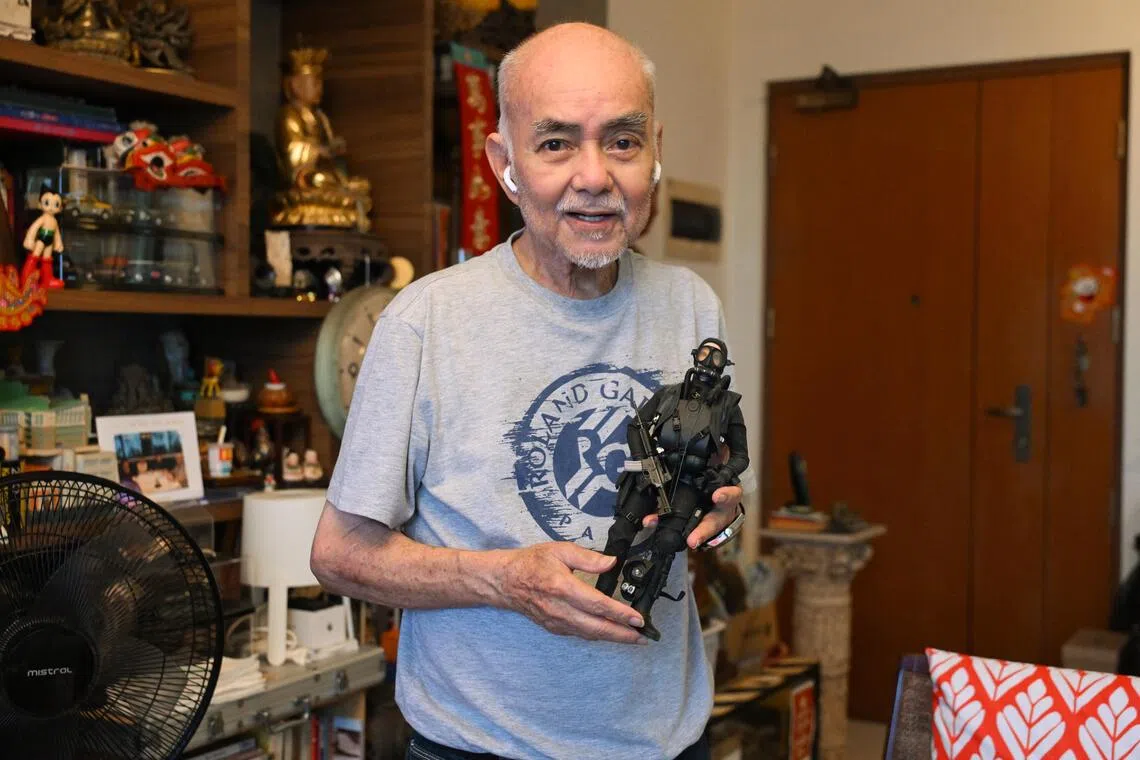
Wong with a figurine of a naval diver. An avid collector for decades, Wong helps his younger daughter run a vintage store.
ST PHOTO: AZMI ATHNI
Rebecca Wong, who is in her late 40s, said the Pioneer Generation like her father would consider their nation-building roles as just a job.
She added: “To them, it’s not really a big thing... Our army is now so powerful, and we are a rich country. We can afford weapons and the latest technology. But we all started with nothing.”
KioskNews shows a cleaned-up reading view extracted from the publisher’s page — the original always lives on their site, not ours.