Chinese team sets world record with swarm of 116 underwater drones
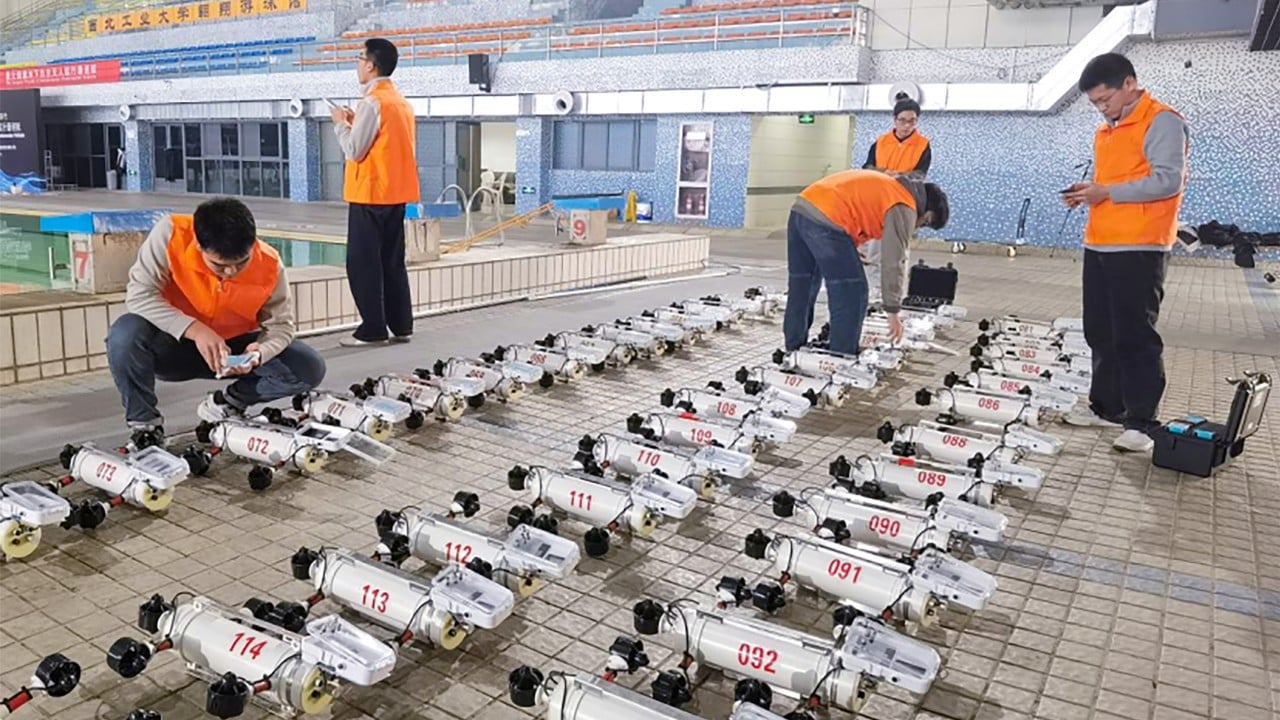
A Chinese team has set a world record for the most autonomous underwater drones operating at the same time, deploying more than a hundred of the small robots in a swimming pool test.
The Guinness World Record for “most autonomous underwater vehicles operating simultaneously” was set by a team from Northwestern Polytechnical University in collaboration with Xian Tianhe Maritime Technologies.
The trial involved a swarm of 116 autonomous underwater vehicles – called TH-618s, the university said in a statement on September 24.
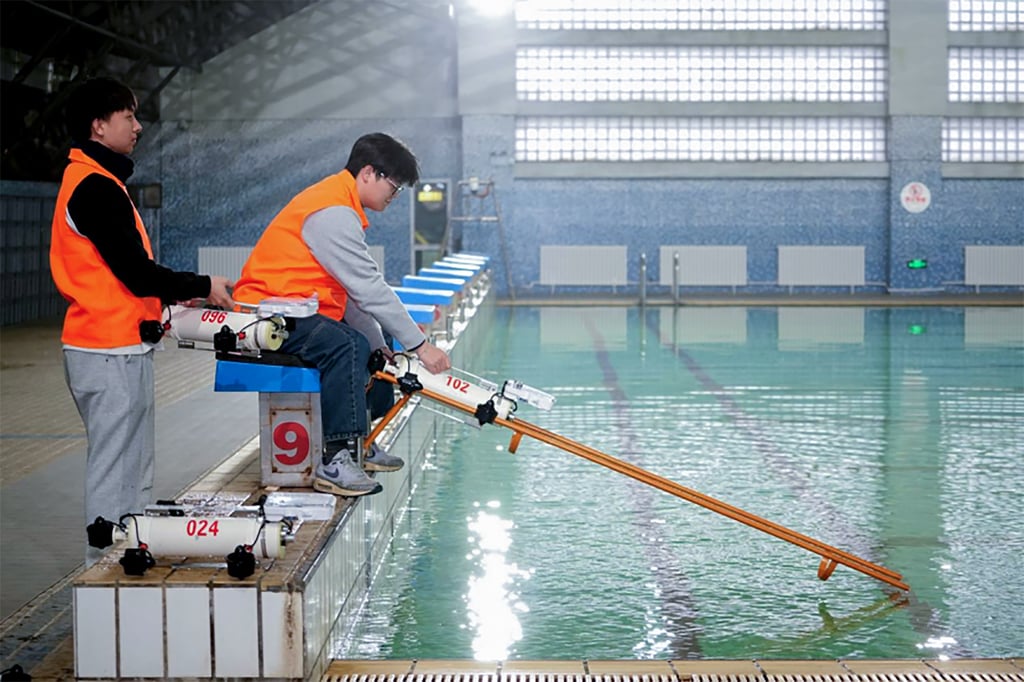
It took place on August 29 in a pool measuring 50 metres (164 feet) long and 20 metres (65 feet) wide under the supervision of Guinness World Records officials, who have since certified and posted the record on their website.
The vehicles were deployed in sequence and executed autonomous underwater formation navigation with no human intervention for 34 minutes over 500 metres, relying on real-time data to follow their preset route.
“Enabling dozens or even hundreds of underwater vehicles to achieve fully autonomous, long-duration, and stable coordinated navigation in such an environment has always been a core challenge in the global field of underwater intelligent equipment,” the university said in the statement.
“This time, the stable navigation of a cluster of hundreds of vehicles represents a breakthrough in the large-scale coordinated navigation of underwater unmanned systems.”
China has been rapidly advancing its autonomous vehicle technologies, including trying to master drone swarms across land, air and sea as global combat shifts away from traditional manned platforms towards uncrewed systems.
Ukraine in December said it had carried out the first underwater drone hit on a submarine, striking a Russian sub docked in Novorossiysk, a port city in the Black Sea.
In July, researchers from Dalian Maritime University and the China Coast Guard Academy published a proposal which envisioned contested islands in the South China Sea being defended by coordinated machine swarms.
Their paper, published in the Chinese-language journal Command Control & Simulation – supervised by the state-run China Shipbuilding Industry Corporation – included the use of underwater drones to help defend detection blind spots.
Underwater drone swarms have also been tested elsewhere in the world, including the European Union-funded Collective Cognitive Robotics project with a swarm of 41 autonomous robots, according to the European Commission.
Northwestern Polytechnical University said the TH-618 vehicles used in the trial were 61.5cm (24.2 inches) long and 20cm (7.8 inches) wide.
It said the drones weighed 5.14kg (11.33 pounds), had a maximum range of 30km (18.6 miles) and could operate continuously for more than eight hours.
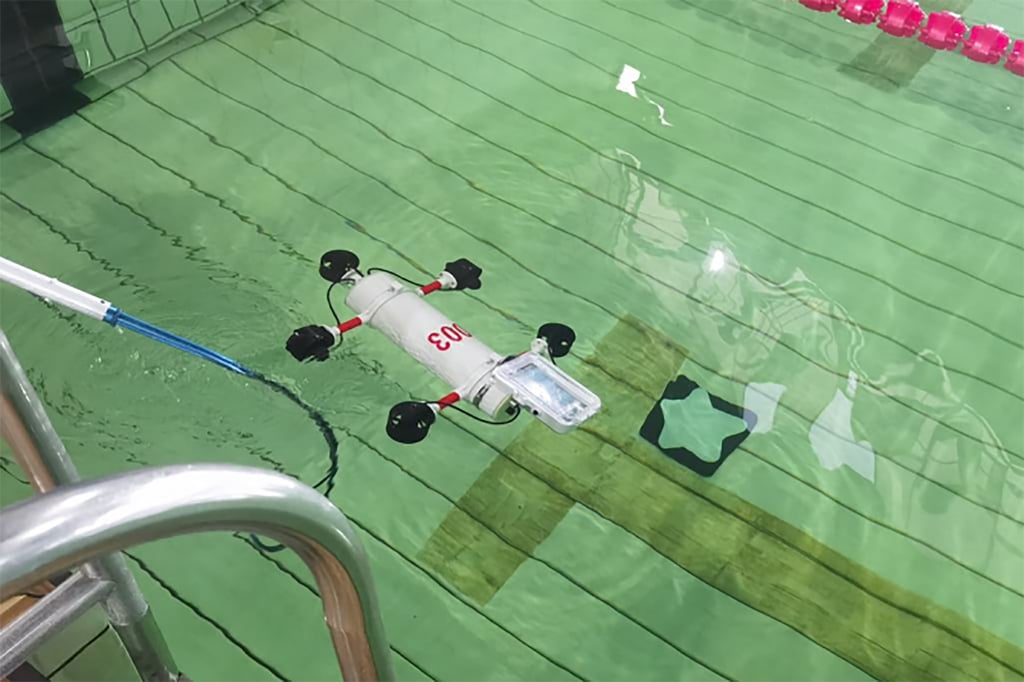
The vehicles use a mobile phone vision camera system to navigate and can adapt to disturbances to their preset route to make corrections and adjustments.
The university also pointed out the complexity of underwater navigation, including the difficulty of real-time communication as well as environmental challenges.
It said the record was made possible through more than two decades of research in underwater target sensing, information sensing, acoustic communication and visual perception.
The Chinese university’s partner, Xian Tianhe Maritime Technologies, is a marine equipment and vehicle supplier and a subsidiary of private defence contractor Xian Tianhe Defence Technology.
The supplier said autonomous underwater vehicles were being used for more tasks as they developed, including research and infrastructure projects like detailed sea floor mapping and oil and gas pipeline inspection.
KioskNews shows a cleaned-up reading view extracted from the publisher’s page — the original always lives on their site, not ours.