Australia considering Iron Dome's Tamir interceptor for missile defense
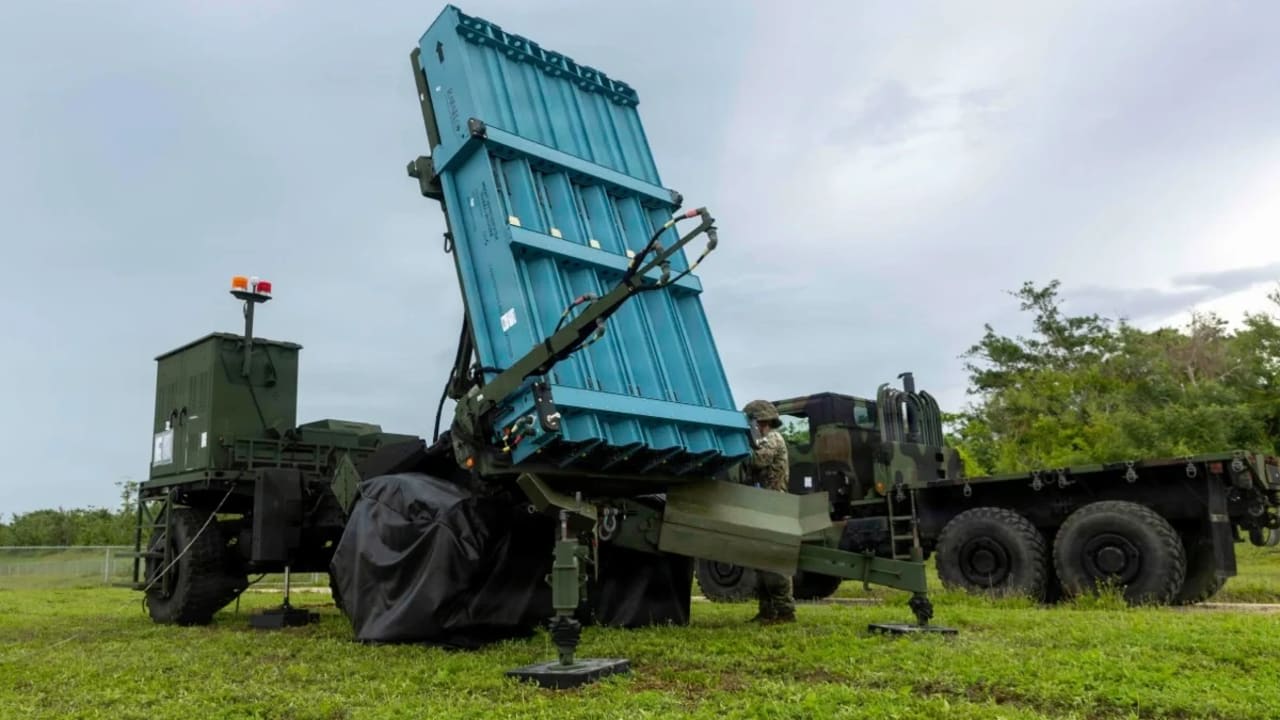
Australia is considering looking at Israel’s Iron Dome missile defense system as it works to build its first land-based ballistic missile shield.
According to local media, Australia’s Defense Ministry has approached Washington regarding cost and delivery timelines for the US Marine Corps’ Medium Range Intercept Capability, which uses the SkyHunter, a US-built version of the Iron Dome’s Tamir interceptors.
It is also looking at the Patriot and Aegis missile defense systems. Bids from Norway’s Kongsberg and South Korea’s Hanwha are also expected.
Canberra is looking for a medium-range missile defense system as Australian Defense Minister Richard Marles has called the current geopolitical situation “The most complex and threatening strategic circumstances” since World War II.

The Australian reported that a tender issued by the country’s Defense Ministry in mid-October wants a “proven” off-the-shelf system selected by the end of next year, followed by a live-firing during Exercise Talisman Sabre by 2029. According to the report, the planned system will not be fully operational until the middle of the 2030s.
Highly critical of Israel
Australia has been heavily critical of Israel’s war in Gaza. Canberra does not supply weapons to Israel, and its purchase of Israeli defence products continues to come under political scrutiny.
But while Australian Prime Minister Anthony Albanese has insisted that the country does “not sell arms to Israel,” Defense Industry Minister Pat Conroy has defended the country’s use of Israeli military systems.
“We make no apology for getting the best possible equipment for the Australian Defence Force,” he said at the Indo-Pacific Maritime Exposition last year.
Environment Minister Murray Watt has also supported the decision to look at Israeli technology, telling the committee on Thursday that "the government will always seek to deliver the most suitable military technology.”
Integral part of Israel’s missile defense array
Initially designed to shoot down short-range rockets, the Iron Dome has become an integral component of Israel's multi-layered defense array over the last 15 years.
The system’s modular architecture enables seamless integration with additional defense layers, and it can operate independently or as part of Israel’s broader air defense network that includes the Arrow (Arrow 2 and Arrow 3) system, which intercepts ballistic missiles outside of the Earth’s atmosphere, and the David’s Sling missile defense system, which is designed to intercept tactical ballistic missiles, medium- to long-range rockets, and cruise missiles fired at ranges between 40 and 300 kilometers.
Iron Dome took part in a long series of conflicts and operations, from Operation Protective Edge, Operation Guardian of the Walls, Operation Breaking Dawn, Operation Shield and Arrow, Operation Swords of Iron, and Operations Rising and Roaring Lion, where it served alongside the Arrow and David’s Sling as a central pillar in the protection of Israel’s home front.
Each round of fighting was followed by a new wave of software updates, radar refinements, and interceptor improvements.
The system’s radar has been upgraded to track more targets simultaneously, its algorithms have become faster and more selective, and its interceptors were refined to handle longer ranges and more demanding engagement profiles.
Yet, despite its successes, the Iron Dome is not infallible.
Israeli officials have consistently noted that no air‑defense system can guarantee complete protection. Some rockets inevitably penetrate the system’s defenses, underscoring the importance of measures such as early warning sirens and reinforced shelters.
Nevertheless, the system’s high interception rate has significantly reduced casualties and property damage during periods of conflict, altering both military calculations and civilian life in Israel.
KioskNews shows a cleaned-up reading view extracted from the publisher’s page — the original always lives on their site, not ours.