DOE: No March-like fuel price spikes, but no pre-war levels either
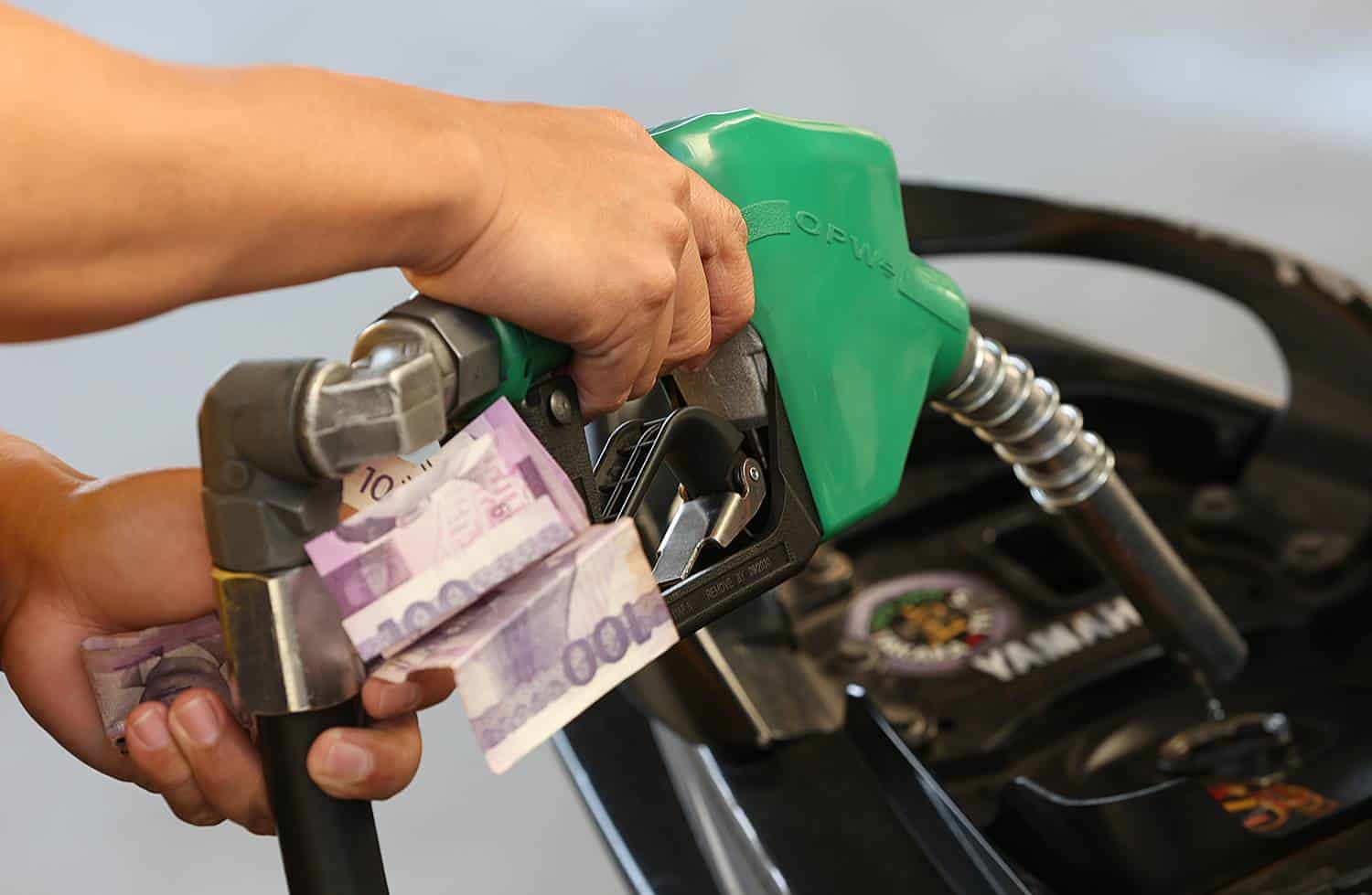
MANILA, Philippines — While they are not expecting fuel price spikes similar to what happened last March 2026, when the war between the United States (US) and Iran started, the Department of Energy (DOE) does not expect fuel costs to go down to pre-war levels even by the end of the year.
In an ambush interview at the Batasang Pambansa on Monday, Energy Secretary Sharon Garin was asked about the looming fuel price hikes which will see gasoline costs rising by over P4 per liter, diesel by over P8 per liter, and kerosene by at least P6 per liter.
Garin said the country cannot do anything about the oil prices, especially since the market is volatile due to renewed tensions over the Middle East. However, they do not expect prices to rise significantly, or by around P20 per liter.
Article continues after this advertisement
“So it’s big compared to the recent weeks, but […] unfortunately it’s not within our control because even Saudi (Arabia), all the other countries are involved now in the war and then there’s other assets, oil assets are being bombarded na, so it’s affecting the industry, so the international market is very volatile,” Garin said.
FEATURED STORIES
NEWSINFO
NEWSINFO
NEWSINFO
READ: Shell Pilipinas staggers hikes; diesel surges over P8/liter
“As I said last week in our briefing, we will not see the oil price hike jump by P20 every week, similar to when we started in March, April, we had fuel price increases by P20, P30, or P40. So now, we don’t expect that,” she added.
But Garin also clarified that prices may remain high, or even higher than pre-war levels, even by Christmas.
“But we also don’t expect it to slow down pa, na bababa at bababa na siya. The actions of the countries involved in the conflict don’t seem to reflect stability in the market, so ngayon po, may impact ’yan, increase nang increase […] and also the dollar is also very expensive, bumibili tayo (in) dollars eh,” she explained.
Article continues after this advertisement
(But we also don’t expect it to slow down pa, that it will go down gradually. The actions of the countries involved in the conflict don’t seem to reflect stability in the market, so now, there’s an impact, there’s an increase after another increase […], and also the dollar is also very expensive, we buy (in) dollars eh.)
“So with the currency exchange, with the situation in the Middle East, we expect that within the year hindi pa siya bababa sa level na pre-war […] Hanggang Pasko probably the situation will stay elevated unless the parties really come to an agreement, a peaceful agreement among the parties involved in the Middle East,” she added.
Article continues after this advertisement
(So with the currency exchange, with the situation in the Middle East, we expect that within the year it will not go back to pre-war levels. […] This may be the situation until Christmas; probably the situation will stay elevated unless the parties really come to an agreement, a peaceful agreement among the parties involved in the Middle East.)
Last September 15, the DOE certified that Dubai crude oil prices have exceeded the $80-per-barrel threshold, which may be considered as a trigger for the suspension of excise taxes on kerosene and liquefied petroleum gas (LPG) again.
READ: DOE backs DOF move to revive kerosene, LPG tax relief
However, President Marcos has not yet declared a suspension of excise taxes on kerosene and LPG.
Asked whether they can prod the President to issue a directive suspending the excise taxes, Garin said it is not within DOE’s powers. Garin, however, noted that she thinks the President already has an idea of the situation and any measure’s impact.
“That’s not within our powers because we only certify; the ones that will do the assessment, economic evaluation, will be the DEPDev (Department of Economy, Planning, and Development), DBCC (Development Budget Coordination Committee), economic managers ‘no, DOF (Department of Finance); they all meet to assess matters,” Garin said.
“But I think the President, with UPLIFT committee, already has an idea of what the impact of the current crisis is on us, especially on the transport sector,” she added.
Last April, diesel prices went as high as P160 per liter, and gasoline, at over P100 per liter, due to the fallout of the US-Iran War.
During that time, Malacañang was called out for its allegedly slow response, which the Palace disputed, noting that Marcos has been exploring every possible solution to address the fuel price spikes. Then on March 25, Marcos also signed into law a bill that will allow him to suspend the collection of excise taxes on fuel.
However, Marcos was called out in April as his order only mandated a suspension for the excise taxes collected from LPG and kerosene—leading to questions from lawmakers as to why gasoline and fuel, which are used by motorists and public transport vehicles, were not included.
Several lawmakers also called out the executive branch during the oil price crisis. Murang Kuryente party-list Rep. Arthur Yap disputed claims that the government is powerless in terms of addressing high fuel prices, saying that former President Gloria Macapagal-Arroyo was able to place a temporary measure through an executive order in 2009.
Yap was referring to Arroyo’s Executive Order (EO) No. 839, which directed oil industry players to “maintain” the prices of petroleum products after twin typhoons in late 2009.
Your subscription could not be saved. Please try again.
Your subscription has been successful.
Yap, who held various posts in Arroyo’s cabinet, said that EO No. 839 shows that it is inaccurate to claim that the government cannot arrest the fuel spikes caused by the Middle East conflict. /cb
KioskNews shows a cleaned-up reading view extracted from the publisher’s page — the original always lives on their site, not ours.