Sunken Silk Road city reveals Central Asia's lost history
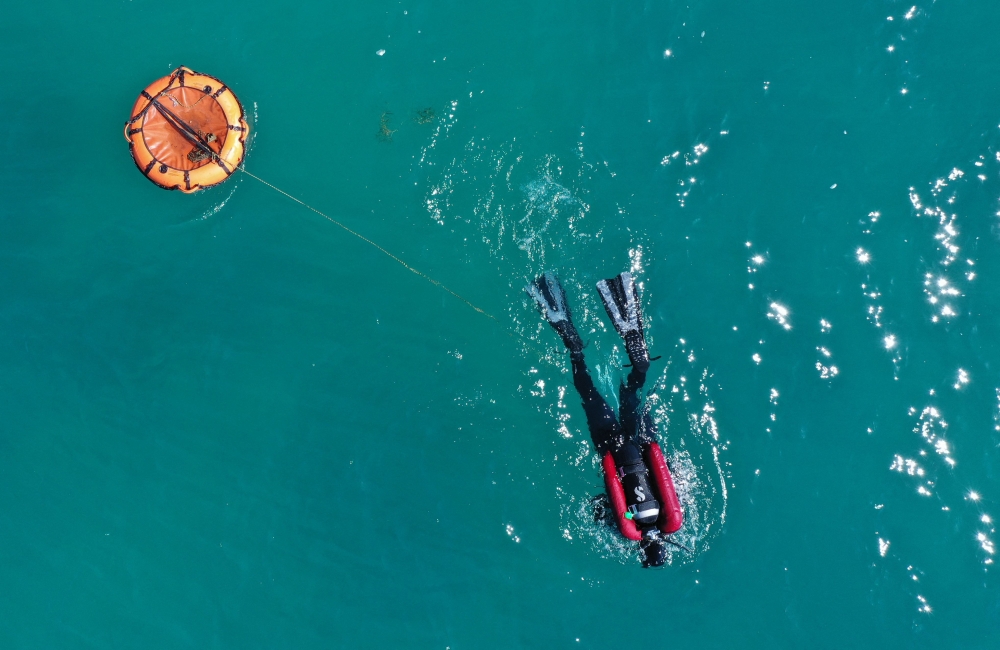

An expedition diver plunges into the waters of Lake Issyk-Kul to explore the underwater site of what is identified by researchers as a submerged medieval city in the settlement of Toru-Aygyr in Kyrgyzstan on September 22, 2026. Situated on an ancient trading route between China and Europe, little is known about the history of the settlement under Kyrgyzstan's largest lake or how it came to be flooded an estimated 800 years ago. The settlement is located at the heart of what was once the Silk Road, a trading route that linked China to the Mediterranean from the 2nd century BC until the mid-15th century. — AFP pic
First Published: Tuesday, 06 Oct 2026 7:00 AM MYT
TORU-AYGYR (Kyrgyzstan), Oct 6 — The sun had barely risen, but diving volunteer Elizaveta Bodrova was already raring to plunge into the cold waters of Lake Issyk-Kul, where the ruins of a once-thriving city have lain submerged for centuries.
Situated on an ancient trading route between China and Europe, little is known about the history of the settlement under Kyrgyzstan’s largest lake or how it came to be flooded an estimated 800 years ago.
Together with a team of around 20 scientists, Bodrova is helping uncover its past, findings that could shape our understanding of the history of Central Asia and beyond.
“The visibility isn’t very good today, but I hope we’ll still be able to find the boundary of the settlement,” the 42-year-old told AFP with a smile, before hopping off a motorboat into the depths below.
The project, which began in 2024 and is funded by the Russian Academy of Sciences, is the first major exploration of the site since it was rediscovered in the 19th century.
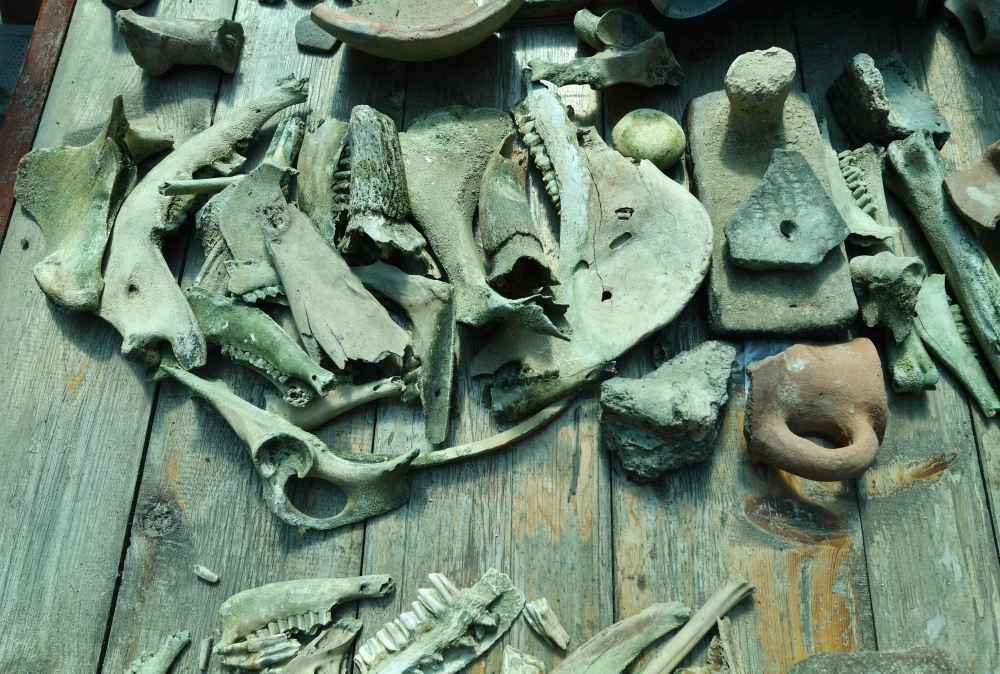
A photograph shows artefacts discovered by the expedition members at the underwater site on the bed of Lake Issyk-Kul of what is identified by researchers as a submerged medieval city on the Silk Road in the settlement of Toru-Aygyr in Kyrgyzstan on September 22, 2026. Situated on an ancient trading route between China and Europe, little is known about the history of the settlement under Kyrgyzstan's largest lake or how it came to be flooded an estimated 800 years ago. The settlement is located at the heart of what was once the Silk Road, a trading route that linked China to the Mediterranean from the 2nd century BC until the mid-15th century. — AFP pic
‘Blind spot’
The settlement is located at the heart of what was once the Silk Road, a trading route that linked China to the Mediterranean from the 2nd century BC until the mid-15th century.
Although often associated with nomads, what is now Kyrgyzstan has been inhabited by multiple civilisations throughout its history, among them Turkic dynasties that traded between Europe and China.
“This is actually a blind spot in history, even though it is right in the centre of Central Asia,” expedition director Maxim Menshikov, who was steering the boat, said of the ruins.
“It is a very important chapter in the history of humankind, because it was the period that linked East and West during the Middle Ages. The Silk Road is not merely the history of a single region, it is the history of Eurasia as a whole,” he added.
The section of Silk Road that passed through the settlement during its existence is thought to have been under the control of the Karakhanids, a Turkic dynasty that controlled much of Central Asia from the 9th to early 13th centuries.
Researchers believe the city, the name and population of which are not known, may have covered up to five square kilometres (nearly two square miles).
Accurately dating the remains has been difficult.
But traces of two cemeteries discovered at the site suggest they were built during the early Islamisation of the region.
Among the discovered remains was a decorated public building, possibly a mosque, public bath or religious school.
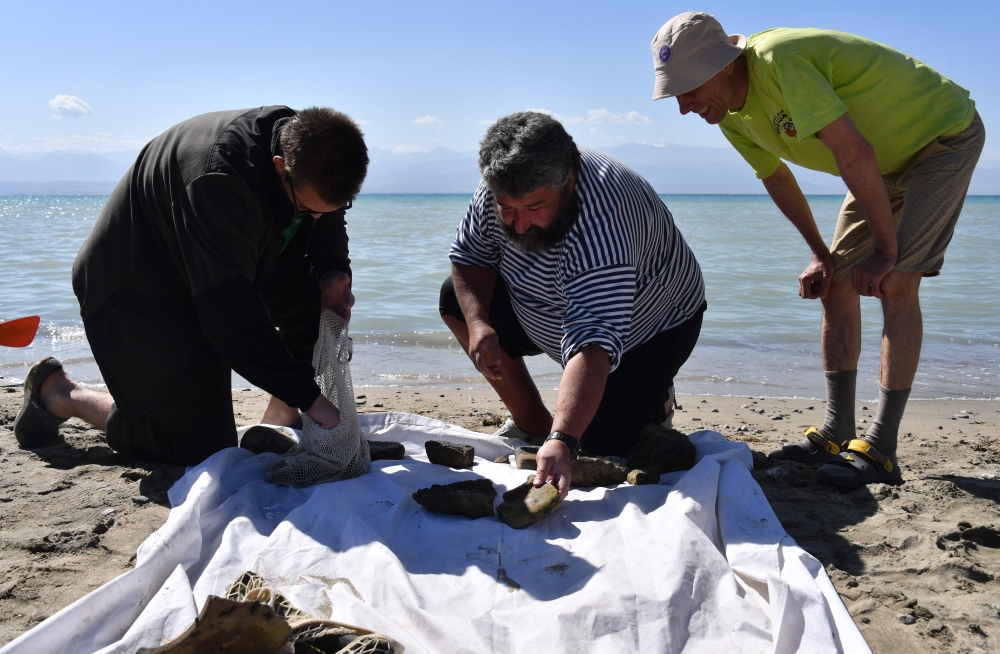
Maxim Menshikov, archaeologist and the expedition director, and fellow colleagues inspect the finds discovered by divers at the underwater site on the bed of Lake Issyk-Kul of what is identified by researchers as a submerged medieval city on the Silk Road in the settlement of Toru-Aygyr in Kyrgyzstan on September 22, 2026. Situated on an ancient trading route between China and Europe, little is known about the history of the settlement under Kyrgyzstan's largest lake or how it came to be flooded an estimated 800 years ago. The settlement is located at the heart of what was once the Silk Road, a trading route that linked China to the Mediterranean from the 2nd century BC until the mid-15th century. — AFP pic
Like ‘Pompeii’
After several hours scouring the lakebed, the divers returned to dry land with their spoils: the remains of animal bones and pottery shards.
“The bones that have been found will enable archaeologists to determine their diet and age of the remains, as well as the diet of the people who lived in this region,” said Viktor Pozdnyakov, a diver and laboratory assistant on the expedition team.
“The pottery will enable us to date the finds and determine the approximate period more precisely. And, of course, to understand where it was produced, how and by what method,” the 22-year-old added.
Back at base, the artefacts are carefully preserved, catalogued and recorded.
Among those in better condition was a child’s chamber pot, known as a “tuvaq”.
“In fact, these are still in use today in Central Asia and the Caucasus,” said Menshikov, pointing to it as evidence of the daily life in the city.
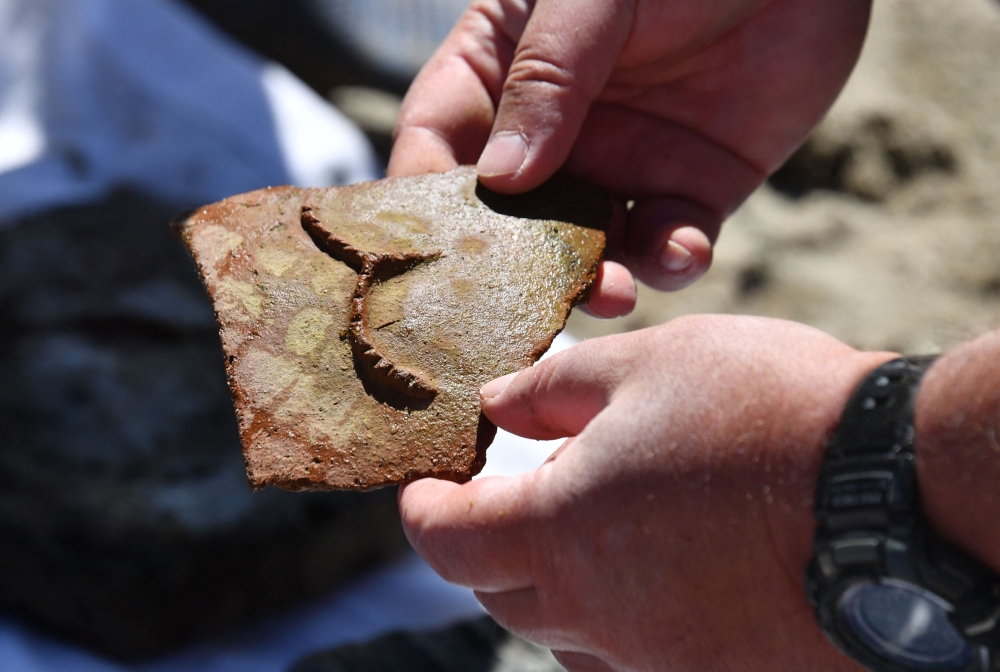
Maxim Menshikov, archaeologist and the expedition director, and fellow colleagues inspect the finds discovered by divers at the underwater site on the bed of Lake Issyk-Kul of what is identified by researchers as a submerged medieval city on the Silk Road in the settlement of Toru-Aygyr in Kyrgyzstan on September 22, 2026. Situated on an ancient trading route between China and Europe, little is known about the history of the settlement under Kyrgyzstan's largest lake or how it came to be flooded an estimated 800 years ago. The settlement is located at the heart of what was once the Silk Road, a trading route that linked China to the Mediterranean from the 2nd century BC until the mid-15th century. — AFP pic
Although known to researchers since the 19th century, the site has only been systematically explored in recent years by Russian and Kyrgyz teams.
The researchers hope their work will improve understanding of Central Asian history.
“You could compare this research to that of Pompeii,” said Menshikov, referring to the largely preserved ruins of an ancient Roman city buried by an eruption of Mount Vesuvius in 79 AD.
“They had a highly developed civilisation and culture. And in an instant, nature simply destroyed it all,” he said.
What submerged the city under Issyk-Kul remains a mystery.
Among the theories is that the settlement sank to the bottom of the lake following a landslide, or that it was gradually flooded by a “tectonic dam” — a natural damming of a water body that could have occurred following an earthquake.
The probable cause was a “past seismic disaster,” said Andrei Strelnikov, a geologist with the Russian Academy of Sciences. — AFP
KioskNews shows a cleaned-up reading view extracted from the publisher’s page — the original always lives on their site, not ours.