The Violinist shows how Singapore stories can resonate without losing their identity
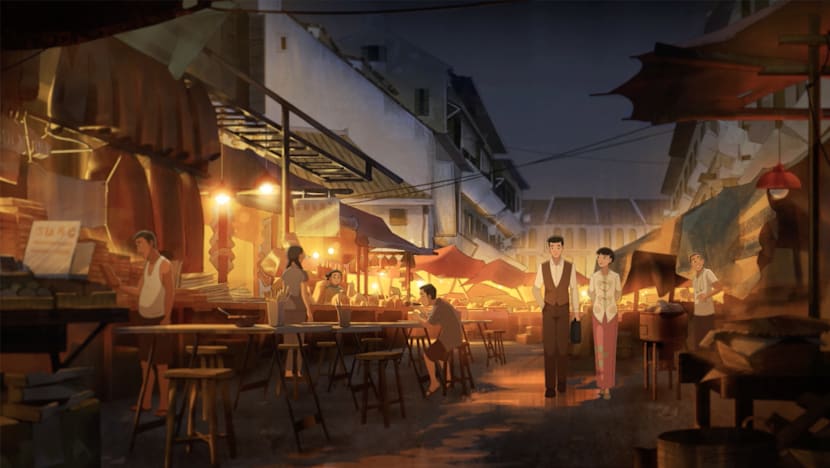
Set in Singapore and Malaya before and during the Japanese Occupation, award-winning animated film The Violinist doesn't dilute its local history for international audiences. Minor spoilers ahead.
New: You can now listen to articles.

This audio is generated by an AI tool.

17 Sep 2026 10:59AM (Updated: 17 Sep 2026 11:07AM)
When Singapore-produced animated film The Violinist won the Cristal for a Feature Film, the top feature prize at the Annecy International Animation Film Festival, the historic achievement inspired pride, joy, excitement and even shock back home.
Not only did the film receive one of animation's biggest international honours, it also remained unapologetically Singaporean while doing so.
Co-directed by Singaporean Ervin Han and Spanish animator Raul Garcia, and set largely in Singapore and Malaya before and during the Japanese Occupation, The Violinist doesn't shy away from the specificity of its setting. Its characters have Singaporean accents. Its streets reflect the communities that lived there. Its historical figures and events are woven into the story without explaining every reference for international audiences.
None of that makes the film's emotional core difficult to understand. The Violinist is proof that Singapore stories don't necessarily have to strip themselves of their Singaporean-ness to resonate beyond our shores – they just need to make us feel.
WELL-DEVELOPED, INTENTIONAL CHARACTERS
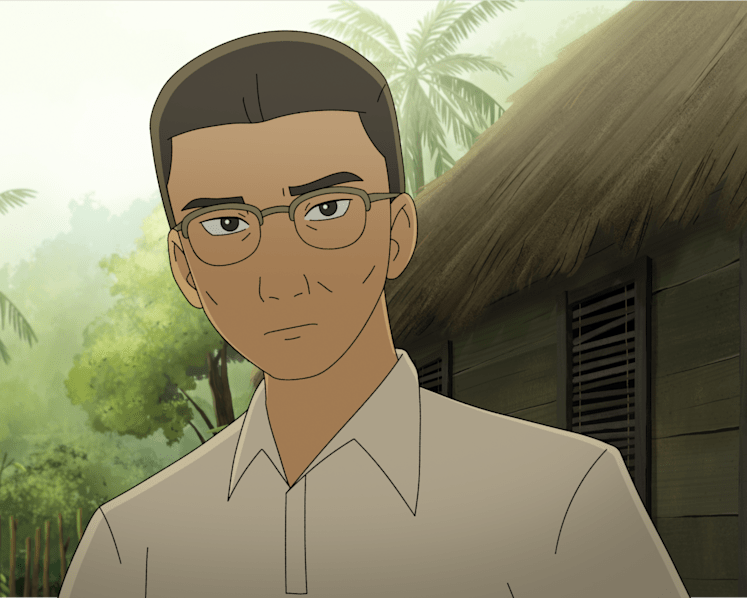
The Violinist begins with a stellar violin performance in the Esplanade Theatre and a curious Spanish journalist trying to understand the history behind an old instrument. This curiosity eventually brings us to Fei and Kai, childhood friends and gifted violinists growing up in pre-war Singapore.
Fei (voiced by Fang Rong as a young woman and Tan Kheng Hua as an older adult) is a Peranakan girl raised to play the violin from a young age. Kai (voiced by Ayden Sng), comes from a far poorer background but possesses an exceptional ear and instinctive talent for music. Their shared love of the violin draws them together, before war tears their lives and ambitions apart.
While their circumstances are specific to Singapore in the 1930s and 1940s, their motivations feel universal.
We understand Kai's wonder when someone recognises and nurtures a talent he never had the means to develop. We understand Fei's heartbreak when someone she loves feels compelled to leave to protect his loved ones from the war.
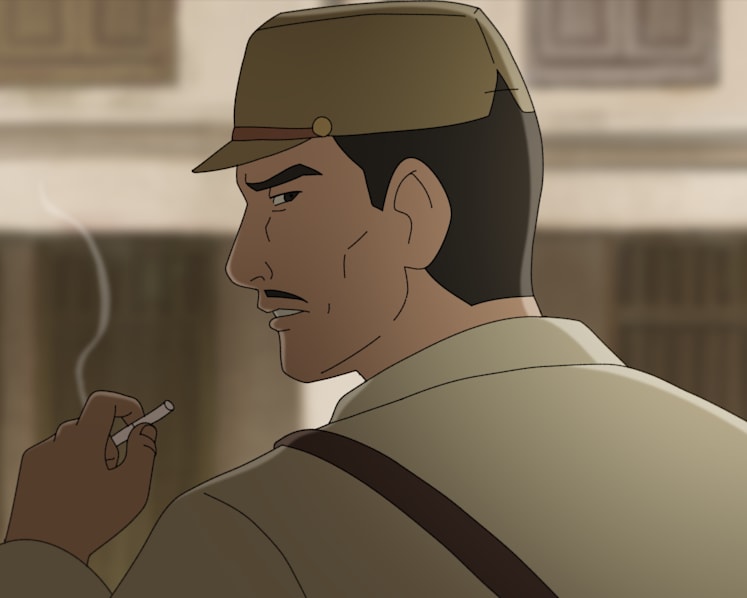
Even the Japanese soldier Takeshi (voiced by Kazuya Tanabe) is given moments that remind us that he's also a person displaced by war, and someone who misses music, his wife and his children. His character doesn't absolve the violence of the Japanese Occupation, nor does the film attempt to. It allows all its characters to remain human even as they are caught on vastly different sides of history.
The film rarely needs its characters to deliver grand speeches explaining what war, separation, resistance or sacrifice mean to them. Their decisions, relationships and losses do much of the work instead.
And that is precisely why their emotions remain legible even to someone who has never experienced wartime Singapore – or, for that matter, visited Singapore at all.
THE DISTINCT, LIVED-IN BACKDROP OF SINGAPORE
In a good story, a setting isn't merely a place for characters to stand. It has its own soul and personality, shaping the people moving through it.
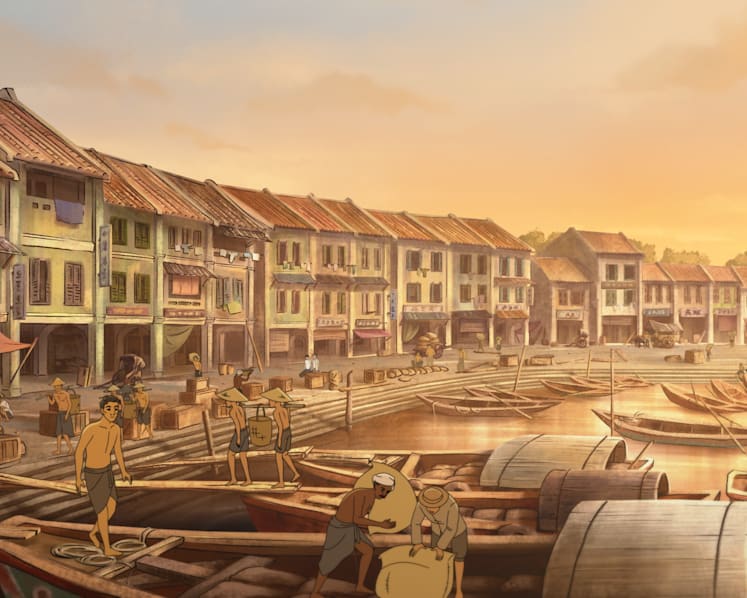
Old Singapore in The Violinist feels lived in.
There are Chinese coolies, Indian labourers, Arab merchants, Malay men in sarongs, women in kebayas, and many people from the different communities that populated the trading port. The attention to detail that the film gives these characters, even if they are largely only in the background, breathes more life into the Singapore of the 1940s.
The historical references go deeper still. Lim Bo Seng, voiced by Singaporean actor Adrian Pang, and Force 136, the British-led resistance network operating in Japanese-occupied Southeast Asia, enter the narrative as Kai becomes increasingly drawn into the war effort. For viewers familiar with Singapore history – and particularly Lim's eventual fate – their presence immediately raises the stakes.
The film also depicts the brutality inflicted upon people resisting the Japanese Occupation without allowing that violence to overwhelm the larger story it is trying to tell.
Even Singapore isn't treated as an island unto itself.
Penang, Jakarta and other parts of the region become part of Fei and Kai's journeys, situating their personal story within a wider Southeast Asia being transformed by war and its aftermath.
When the story moves to present-day Singapore, recognisable landmarks such as the Esplanade and Victoria Concert Hall appear not simply as obligatory establishing shots, but as parts of a city that has grown around the memories the film is exploring.
While there may be details that both local and international viewers do not immediately recognise, their presence offers an entry point into what that era was like in Singapore.
Popular narratives of World War II often centre on Europe, Nazi Germany and the Allied powers, while the experiences of Singapore and Southeast Asia may be less familiar to audiences elsewhere.
By placing its characters firmly within the history of this side of the world, The Violinist offers viewers another perspective on the war and, for those interested enough to look further, a starting point to discover the real people, places and events woven into its story.
THE UNIVERSAL APPEAL OF LOVE, MUSIC AND LOSS
Ultimately, at the heart of The Violinist is love.
And not simply the love between Fei and Kai as friends and lovers. But also their shared love of music. There is love for family, for friends, for home and country. There is the longing of a soldier for the family he left behind, and the love that allows people separated by war and decades to remain connected through memory.
And then there is the violin itself.
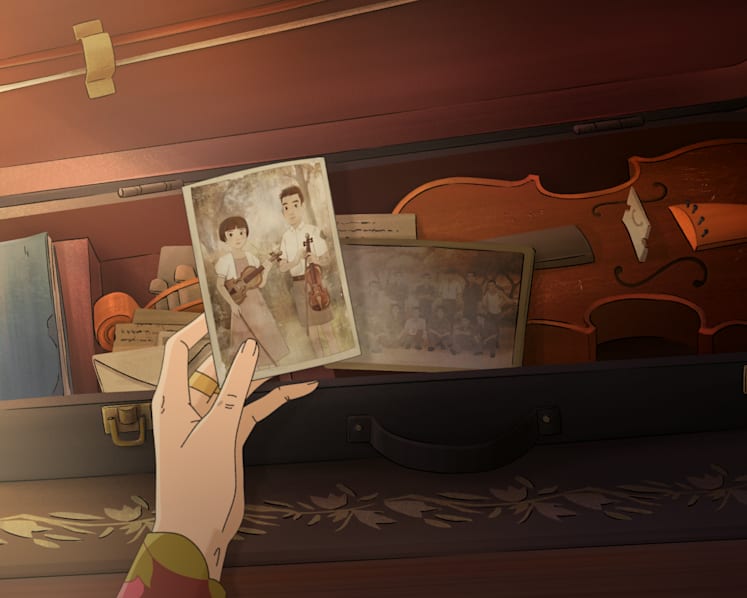
Music becomes one of the film's most effective universal languages because viewers don't need to understand the history behind every scene to recognise what a melody is doing to the people in it.
Through Ricky Ho's original score (which also won the SACEM Award for Best Original Soundtrack at Annecy), The Violinist trusts its audience enough not to translate every emotion into dialogue: longing, nostalgia, loss, betrayal, memories, and resilience.
That's why the film's Singaporean-ness never feels like an obstacle that needs to be overcome. Singapore is what gives the story its texture, history and identity, but the emotions are what allow everyone else in.
The international reception to The Violinist – including its selection for the 2026 Toronto and Busan international film festivals – doesn't mean that every Singapore story will resonate simply by being local. But neither should filmmakers feel compelled to sand away recognisable landmarks, Singlish phrases or historical references in search of a supposedly universal version of Singapore.
The Violinist offers the delicate balance: Be specific about where your characters come from, and make us understand why they love, hurt, hope and hold on.
KioskNews shows a cleaned-up reading view extracted from the publisher’s page — the original always lives on their site, not ours.