The 10 Greatest Weird Fiction Books, Ranked

Diego Pineda has been a devout storyteller his whole life. He has self-published a fantasy novel and a book of short stories, and is actively working on publishing his second novel.
A lifelong fan of watching movies and talking about them endlessly, he writes reviews and analyses on his Instagram page dedicated to cinema, and occasionally on his blog. His favorite filmmakers are Andrei Tarkovsky and Charlie Chaplin. He loves modern Mexican cinema and thinks it's tragically underappreciated.
Other interests of Diego's include reading, gaming, roller coasters, writing reviews on his Letterboxd account (username: DPP_reviews), and going down rabbit holes of whatever topic he's interested in at any given point.
Sign in to your Collider account
For the longest time, Romantic and Gothic literature made it seem like supernatural fiction (whether that was fantasy, horror, or science fiction) could only ever be ghost or vampire stories with clear moral lessons and rational views of the supernatural. It was authors like Edgar Allan Poe who helped move supernatural literature away from these traditions, laying the foundations for a subgenre of speculative fiction that has come to be called "weird fiction."
Weird fiction is all about blending elements of horror, fantasy, and sci-fi to evoke an inescapable sense of dread and uncanniness, as well as inspire awe and refuse easy explanations of supernatural phenomena. The genre was greatly popularized by pulp magazines in the early 20th century, and throughout the years, bookworms have been treated to ten particular weird fiction masterpieces that continue to define the genre to this day.
10 'Annihilation' (2014)
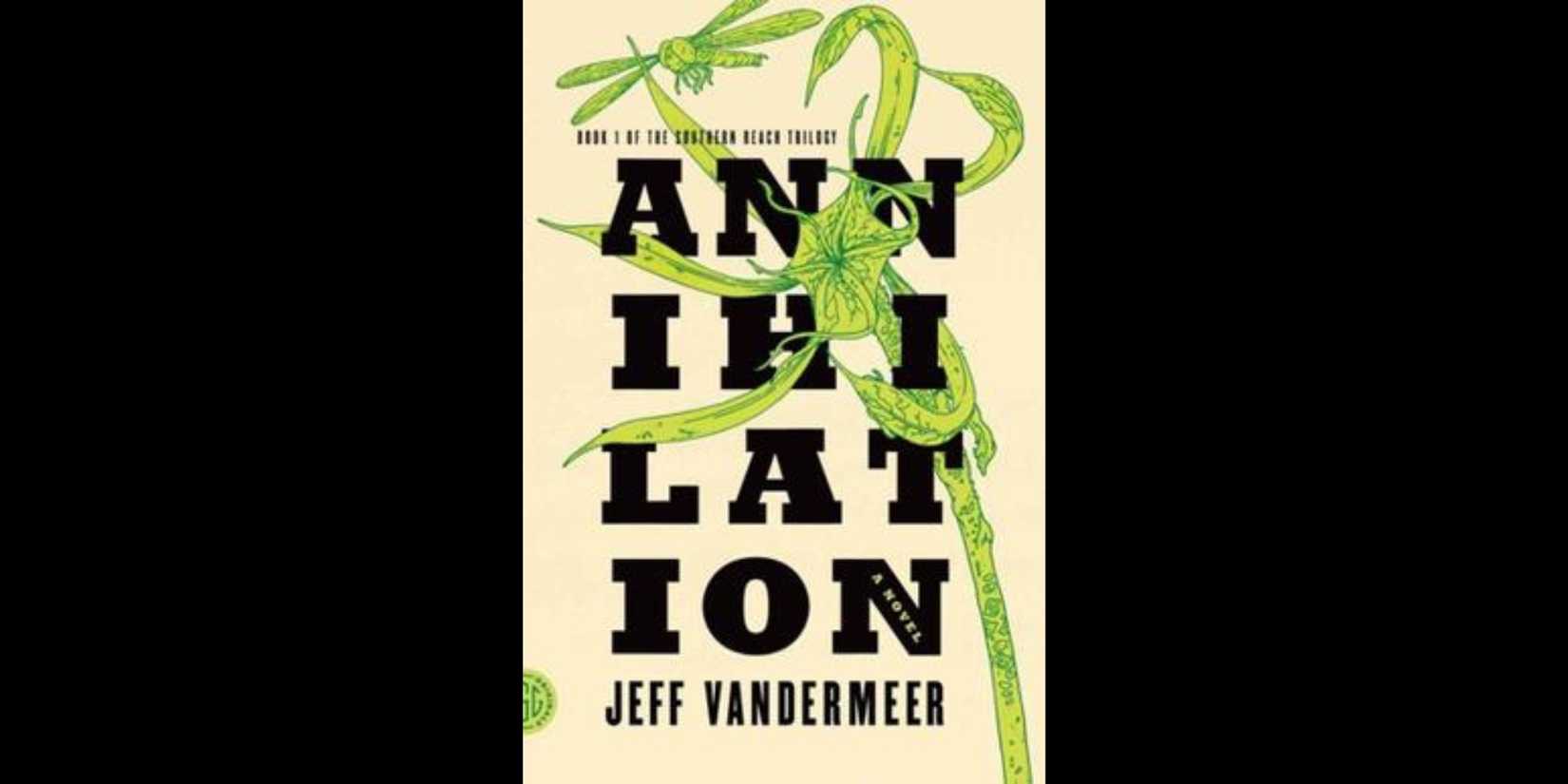
While much of history's best weird fiction comes from its foundational 20th-century days, plenty of incredible authors are still working today—which undoubtedly includes Jeff VanderMeer, a central and hugely defining figure in the subgenre's modern tradition. His best-selling Southern Reach book series is essential reading for any weird fiction fan, and it all starts with Annihilation.
Winner of the Nebula and Shirley Jackson Awards, Annihilation is arguably one of the best American books of the last 15 years. The late '90s and early 2000s saw the birth of the New Weird, a literary movement that modernized weird fiction by injecting complex moral, social, political, and philosophical themes into it. As far as New Weird works go, it doesn't get much better than Annihilation, a head-scratchingly surreal and subversive masterpiece that pretty much begs for at least one re-read.
9 'The King in Yellow' (1895)

Jumping from modern times all the way back to the 19th century is something that must be done every time one is talking about weird fiction, because there are also masterpieces like Robert W. Chambers' short story collection The King in Yellow. It contains nine short stories and a sequence of poems, and the book is uniquely structured in that it starts out as full-on horror and grows more lighthearted and romantic as it goes on.
H.P. Lovecraft himself, master of weird fiction, once cited The King in Yellow as an influence; and speculative fiction author Lin Carter once called it "the single greatest book in weird fantasy written in [the US] between the death of Poe and the rise of Lovecraft." It's a collection that masterfully bridges the gap between the aesthetics of Victorian horror and 20th-century cosmic horror, offering a masterpiece that still serves as a major blueprint for weird fiction authors.
8 'The Etched City' (2003)

The debut novel (and the only one published to date) of Australian artist K. J. Bishop, The Etched City is yet another one of the most essential cornerstones of the New Weird works from the 21st century. It's an award-winning cult favorite that could very reasonably be said to be among the best sci-fi books of the 2000s, a wonderfully atmospheric gem that continues to be compared to the work of weird fiction masters like VanderMeer and China Miéville.
Much like all great New Weird authors should, Bishop deviates from traditional Lovecraftian tropes and instead delivers a deeply philosophical, beautifully baroque, and downright hallucinatory nightmare of gritty, muddy surrealism. But as intentionally bizarre as it is, Etched City deploys its surreal elements in a subtle, even artful way. With her powerfully quiet prose, Bishop crafts every sentence with tremendously visceral and sensorial weight.
7 'House of Leaves' (2000)
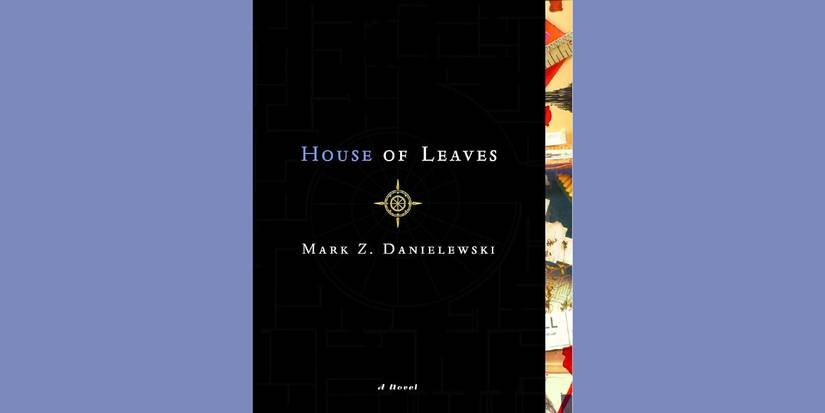
Ergodic literature is absolutely fascinating, a mode of storytelling that requires active physical and/or mental effort from the reader to traverse the text, rather than just turning pages in a linear sequence. As far as ergodic literature goes, it doesn't get much better or more essential than Mark Z. Danielewski's debut novel, House of Leaves. There are many elements that make this book ergodic, from its different fonts and colors to the fact that it sometimes has to be rotated to be read.
But what has allowed House of Leaves to remain one of the best cult classic books of all time for 26 years is that, though effort is certainly required to read it, it pays off in spades. Brilliantly meta, satirical, and creative, it's some kind of a literary version of an intricate matryoshka doll. The ergodic form feels like it was designed in a lab to be leveraged by weird fiction authors, and none have ever leveraged it in a more genius way than Danielewski.
6 'The Willows' (1907)

Originally published as part of Algernon Blackwood's 1907 collection The Listener and Other Stories, The Willows is a novella that H.P. Lovecraft himself considered one of the best and most influential supernatural tales in the history of the English language. Indeed, it's one of those classic horror books that are still a must-read in 2026.
It's a novella that helped lay the foundations and design the blueprint for cosmic horror as a genre, highlighting humanity's insignificance in the grand scheme of a large, terrifying world. Some of history's greatest horror stories achieve their terrifying power through what they withhold rather than through what they show, and The Willows is a masterclass in such a kind of horror. Thanks to that, it's still incredibly fun and creepy to read in the modern day.
Collider Exclusive · Sci-Fi Survival Quiz Which Sci-Fi World Would You Survive? The Matrix · Mad Max · Blade Runner · Dune · Star Wars
Five universes. Five completely different ways the future went wrong — or sideways, or up in flames. Only one of them is the world your instincts were built for. Eight questions will figure out which dystopia, galaxy, or desert wasteland you'd actually make it out of alive.
💊The Matrix
🔥Mad Max
🌧️Blade Runner
🏜️Dune
🚀Star Wars
01
You sense something is deeply wrong with the world around you. What do you do? The first instinct is often the truest one.
02
In a world of scarcity, what resource do you guard most fiercely? What we protect reveals what we believe survival actually requires.
03
What kind of threat keeps you up at night? Fear is useful data — if you're honest about what you're actually afraid of.
04
How do you deal with authority you don't trust? Every dystopia has a power structure. Your approach to it determines everything.
05
Which environment could you actually endure long-term? Survival isn't just tactical — it's physical, psychological, and very much about where you are.
06
Who do you want in your corner when things fall apart? The company you keep is the clearest signal of who you actually are.
07
Where do you draw the line — if you draw one at all? Every survivor eventually faces a moment that tests what they're actually made of.
08
What would actually make survival worth it? Staying alive is one thing. Having a reason to is another.
Your Fate Has Been Calculated You'd Survive In…
Your answers point to the world your instincts were built for. This is the universe your temperament, your survival instincts, and your particular brand of stubbornness were made for.
The Matrix
You took the red pill a long time ago — probably before anyone offered it to you. You're a systems thinker who can't help but notice the seams in things.
- You're drawn to understanding how the system works before figuring out how to break it.
- You'd find the Resistance, or it would find you — your instinct for spotting constructed realities is the machines' worst nightmare.
- You function best when you have access to information and the freedom to act on it.
- The Matrix built an airtight prison. You'd be the one probing the walls for the door.
Mad Max
The wasteland doesn't reward the clever or the well-connected — it rewards those who are hard to kill and harder to break. That's you.
- You don't need comfort, community, or a cause larger than the next horizon.
- You need a vehicle, a clear threat, and enough fuel to outrun it — and you're good at all three.
- You are unsentimental enough to survive that world, and decent enough — just barely — to be something more than another raider.
- In the wasteland, that distinction is everything.
Blade Runner
You'd survive here because you know how to exist in moral grey areas without losing yourself completely.
- You read people accurately, keep your circle small, and ask the questions others prefer not to answer.
- In a city where humanity is a legal designation rather than a feeling, you hold onto something that keeps you functional.
- You're not a hero. But you're not lost, either.
- In Blade Runner's world, that distinction is everything.
Dune
Arrakis is the most hostile environment in the known universe — and you are precisely the kind of person it rewards.
- Patience, discipline, and political awareness are your core strengths — and on Arrakis, they're survival tools.
- You understand that the long game matters more than any single victory.
- Others come to Dune and are consumed by it. You'd learn its logic and earn its respect.
- In time, you wouldn't just survive Arrakis — you'd begin to reshape it.
Star Wars
The galaxy far, far away is vast, loud, and in a constant state of violent political upheaval — and you wouldn't have it any other way.
- You find meaning in being part of something larger than yourself — a cause, a crew, a rebellion.
- You'd gravitate toward the Rebellion, or the fringes, or whatever pocket of the galaxy still believes the Empire's grip can be broken.
- You fight — not because you have to, but because standing aside isn't something you're capable of.
- In Star Wars, that willingness is what makes all the difference.
5 'Perdido Street Station' (2000)

There are those who would point to China Miéville as the single biggest titan of the New Weird movement, and that's thanks to masterpieces like what many fans would confidently call his magnum opus: Perdido Street Station, one of the best soft sci-fi books of all time. It's the first installment in Miéville's New Crobuzon book series, and there's a strong argument to be made that this is one of those trilogies that peaked with their first entry.
Perdido Street Station is New Weird and weird fiction at their most exquisitely quintessential, a radical rejection of Tolkien-inspired high fantasy and Lovecraft-inspired cosmic horror that instead delivered a fiercely original science fantasy tale. A politically charged meditation on urban decay, oppression, and the dark consequences of industrialization, Perdido Street Station is a testament to how socially conscious New Weird can be. The worldbuilding is enrapturing, the character writing is top-notch, and the horror elements are still incredibly effective 26 years later.
4 'Songs of a Dead Dreamer and Grimscribe' (2015)

Thomas Ligotti is a major cult writer and a foundational voice in modern weird and philosophical horror, touted by many as Poe and Lovecraft's direct heir. Both Songs of a Dead Dreamer and Grimscribe: His Lives and Works are among the best horror short story collections in history, and thus, essential reading for weird fiction fans. In 2015, Penguin Classics put together a volume combining these collections, and the result should be a must-have on the bookshelf of anyone who enjoys weird fiction and cosmic horror.
It's literary pessimism at its most philosophically terrifying, with Ligotti treating existence, self-awareness, and human consciousness themselves as nothing less than abhorrent sources of existential horror. People looking for a great collection of horror stories have plenty of potentially great places to look, but those interested in a short story collection that offers horror and also endless existential crises, Songs of a Dead Dreamer and Grimscribe is undoubtedly the way to go.
3 'Titus Groan' (1946)

Writer, painter, poet, and illustrator Mervyn Peake was an impactful and influential artist, whose uniquely dark brand of Gothic and surreal fantasy allowed him to completely redefine the genre in his time. The biggest contributor to that redefinition was his best-known book series, the Gormenghast series, which Peake tragically passed away before being able to complete. The first installment of the bunch is seen by many as the best and most influential: Titus Groan.
One of those fantasy books that are unforgettably bleak, Titus Groan actually doesn't contain any overtly fantastical elements, which makes it all the more admirable that it's nevertheless widely praised as one of the greatest dark fantasy and weird fiction classics of its era. In Titus Groan, Peake constructs a claustrophobic, surreal, and grotesque universe of pure obsession and oppression, built through writing so baroque and stylized that it's almost hard to believe it came out during the first half of the 20th century.
2 'The City & the City' (2009)

Critics and readers often have debates on what China Miéville's true magnum opus is, but there is one masterpiece that often comes out on top: The City & the City, which won almost every major speculative fiction award under the sun at the time of its publication. While it's far less maximalist than Perdido Street Station, The City & the City's tighter approach may make it the most accessible entry point possible to weird fiction and Miéville's oeuvre.
Structured and constructed as what initially seems like a classic, gritty police procedural and detective noir tale, The City & the City thus grounds its absurdist surrealism in a familiar rhythm that makes it all the more effective in a lot of ways. Here, Miéville proved that the New Weird and weird fiction as a whole could serve not only as forms of escapism, but also as vehicles for sharp sociopolitical critiques and riveting narratives.
1 'The Dunwich Horror and Others' (1963)

Due to his extremely racist, xenophobic, and white supremacist views, H.P. Lovecraft is, needless to say, a substantially controversial author. He's also, however, the most foundational, influential, and essential voice in the entire history of weird fiction. As such, no journey of discovery of the subgenre could ever possibly be complete without reading his work—and there is no better way of reading Lovecraft than by picking up The Dunwich Horror and Others, which collects several of the author's most celebrated stories.
From The Call of Cthulhu to The Shadow Over Innsmouth, these are the stories that established the DNA of modern cosmic horror and weird fiction, which is more than enough to make The Dunwich Horror and Others one of those horror books that are perfect from start to finish. It's a collection of the crown jewels of classic weird fiction, and if one is prepared to separate the art from the author, then it's the best possible way of making oneself familiar with Lovecraft's most influential works.
KioskNews shows a cleaned-up reading view extracted from the publisher’s page — the original always lives on their site, not ours.