Will ‘strategic stability’ with China go out the window if Trump loses the midterms?
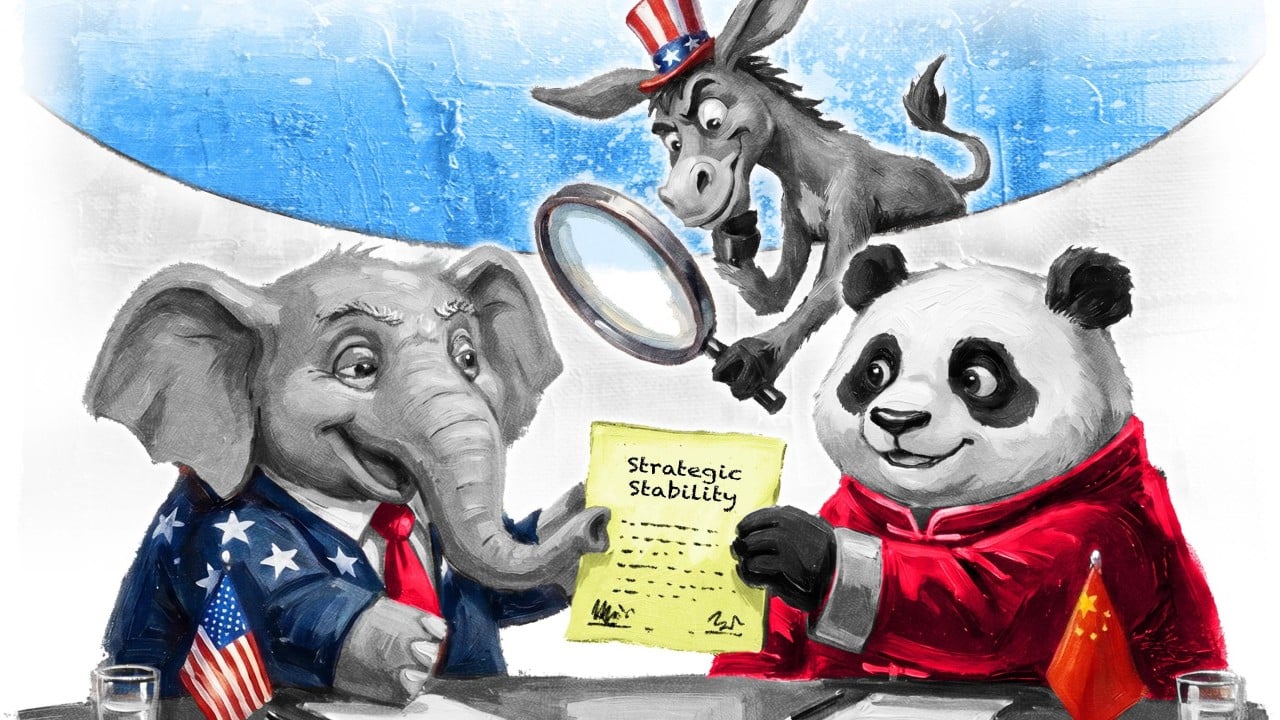
But there are numerous forecasts that the Democrats will win control of the House, if not both chambers of Congress, this week – though the contest for the Senate remains tight.
It comes as the Trump administration has been working with Beijing to keep strategic rivalry on a manageable track. The midterms are being held just weeks before Trump and Chinese President Xi Jinping are due to meet in Shenzhen – their third face-to-face talks this year – and ahead of another expected meeting in Miami in December.
How consequential are the US midterm elections?
Ali Wyne, a senior research and advocacy adviser on US-China relations at the International Crisis Group, said given that Trump had paid little heed to congressional counsel on China thus far, the outcome of the midterms would be unlikely to change his approach.
“If anything, as he starts paying more attention to his prospective legacy, he is likely to invest more in strengthening his rapport with President Xi and consolidating the tactical thaw that presently exists between Washington and Beijing,” he said.
“With wars convulsing Europe and the Middle East, Trump will want to claim that he helped preserve a semblance of calm in Asia – the fulcrum of the global economy.”
Sun Chenghao, a fellow with Tsinghua University’s Centre for International Security and Strategy (CISS), also expected Trump could use negotiations with Beijing to demonstrate his ability to govern, and that he could pursue gains with China in procurement, investment and market access.
But he added that the next Congress could also question whether Trump was trading security restrictions for commercial benefit – potentially raising the political cost of carrying out any agreements reached with China.
“High-level engagement between China and the US is likely to continue but implementation by departments and specific cooperation could be more susceptible to interference,” Sun said.
He added that whether Trump could “translate stable relations with China into domestic political gains” would be key for ties, along with his willingness to “constrain hardliners within his own administration”.
SCMP Plus is a new premium news platform that gives you an
all-inclusive edge to stay ahead on China news.
To access our exclusive content you’ll need to subscribe.
Already a subscriber?
LOG IN
Over the past two years, the Republican-controlled Congress has been seen as a junior partner to Trump, failing to provide an effective check on a series of controversial foreign policy moves, particularly the war against Iran.
Trump has also appeared to overrule China hawks in his administration and on Capitol Hill, notably stalling the announcement of a US$14 billion arms sale to Taiwan that was informally cleared by Congress in January.
There has been growing debate in recent months about whether a Democratic-led House – if not a Congress controlled by the party – would lead to renewed volatility in the US-China relationship by pushing more confrontational legislation targeting Beijing.
Wu Xinbo, dean of the Institute of International Studies at Fudan University in Shanghai, said the midterms were likely to affect US policy towards China and bilateral relations more “indirectly” than directly.
If the Democrats returned to power, China might not rank highly on their foreign policy agenda, according to Wu.
He said they could instead prioritise securing an agreement with Iran to help bring down oil prices, putting greater pressure on Israel over the conflict in Gaza and preventing Trump from striking a deal with Russia over the war in Ukraine at Kyiv’s expense.
Still, a Democratic comeback would weaken Trump politically, leaving him more reliant on the backing of Republican lawmakers, many of whom are China hawks and could then set conditions for their support.
Wu expected that they could press for more arms sales to Taiwan, greater US support for Tokyo amid its current tensions with Beijing and tighter tech restrictions on the Chinese side.
He said Trump might then feel compelled to take a harder line on those issues in exchange for support within his own party.
Beijing sees Taiwan as part of China to be reunited by force if necessary. Most countries, including the US, do not recognise Taiwan as an independent state, but Washington is opposed to any attempt to take the self-governed island by force and is committed to supplying it with weapons.
“If Trump takes a tougher line on China, that will undermine stability in China-US relations,” said Wu, who also heads Fudan’s Centre for American Studies (CAS).
He said the Democrats could also pile pressure on China if human rights issues surfaced, and they could push back if the new Board of Investment sought to ease restrictions on Chinese investment in the US.
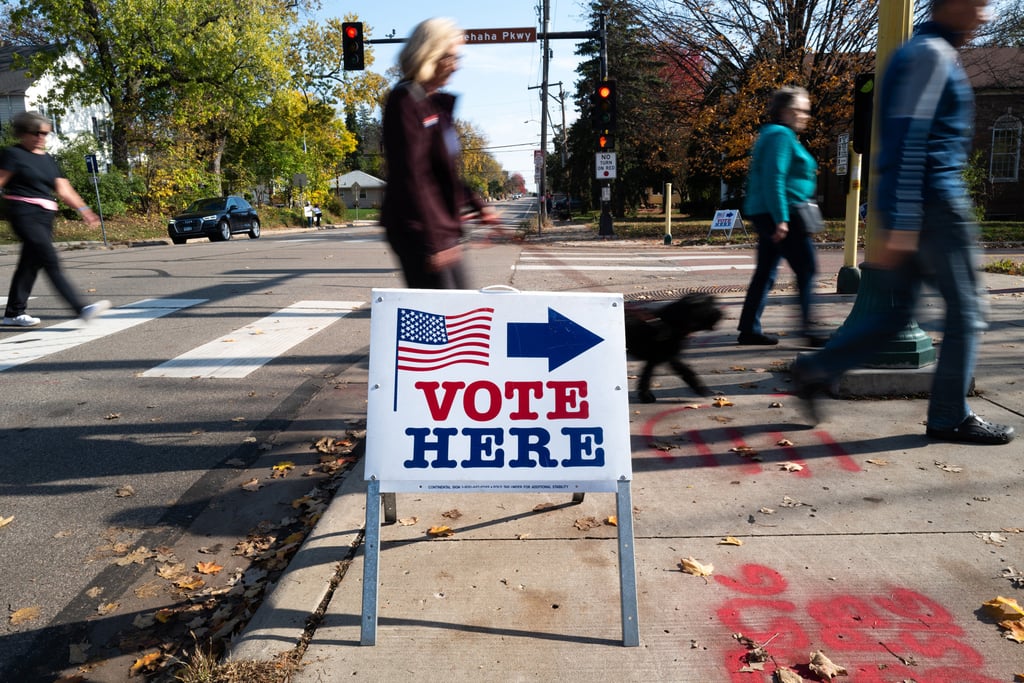
China has not been a focus in the American midterms race. A poll conducted earlier this month by The Associated Press-NORC Centre for Public Affairs Research found that lowering the cost of living and winding down the war in Iran were among what voters most wanted from the next Congress.
Still, a bipartisan consensus in favour of a more competitive approach to China appears to have firmed up in the US.
The number of China-related bills introduced in Congress has risen in the past decade, ranging from trade, technology and education to Taiwan, Xinjiang and Tibet, according to separate studies published by Fudan’s CAS, Tsinghua’s CISS and Service Outsourcing, a journal affiliated with the commerce ministry.
Sun from Tsinghua noted that if the Democrats won control of either chamber, or both, it was likely they would more closely scrutinise Trump’s deals with China while continuing to back restrictions on technology, investment and supply chains.
He expected Trump would rely more on executive tools to advance negotiations and exert pressure on China.
“The elections will affect how policy is pursued more than it will change the direction of competition with China,” Sun said.
Wyne from the International Crisis Group did not expect congressional activity on China to change significantly but noted that a combination of factors could “create more political space for members of the next Congress to advocate alternative approaches”.
Those factors included “Trump’s unorthodoxy on China policy, warming American sentiment towards China, and growing anxiety among US allies and partners over Washington’s unreliability and unpredictability”.
During Trump’s first term as president, the Republicans lost control of the House in the 2018 midterms. The following two years saw US-China relations swing from a trade war to a trade deal before they deteriorated again in 2020.
Recent signs show strategic competition between the two powers remains fierce, including Washington designating Confucius Institutes as a national security threat and rolling out more sanctions and bans on Chinese companies in the past two weeks.
But a survey released earlier this month by the Chicago Council on Global Affairs found that 57 per cent of Americans polled in 2026 said the US should seek to work cooperatively with China rather than try to contain it – up from 40 per cent two years ago.
04:52
‘New joint arrangement’ on trade as Xi meets Trump at White House
After they met in Beijing in May and in Washington in September, Trump and Xi agreed to build “a constructive relationship of strategic stability on the basis of respect, fairness and reciprocity”, according to statements from both sides.
Beijing has linked this vision to Trump’s presidency, saying it hopes the framework will guide bilateral ties “over the next three years and beyond”.
According to Wu, the midterms outcome could affect whether the Trump administration would continue to mention this concept. “US domestic politics has always been the biggest source of instability in China-US relations,” he said.
Still, he expected Trump would continue to seek stability in ties for the rest of his term. “This is in his interests,” he said.
Sun also said there was room to maintain the consensus on strategic stability.
“Trump needs a manageable external environment and also wants to preserve room for making deals through head-of-state diplomacy,” he said.
But Wyne noted that efforts to operationalise that commitment could falter if Trump perceived that Xi had “disrespected” him – as he did after the outbreak of Covid-19 – or if Xi believed that Trump was quietly preparing to launch a new assault on China’s economy.
KioskNews shows a cleaned-up reading view extracted from the publisher’s page — the original always lives on their site, not ours.