US Jews vote decidedly Democratic, but Michigan's race emphasizes divisions on candidates
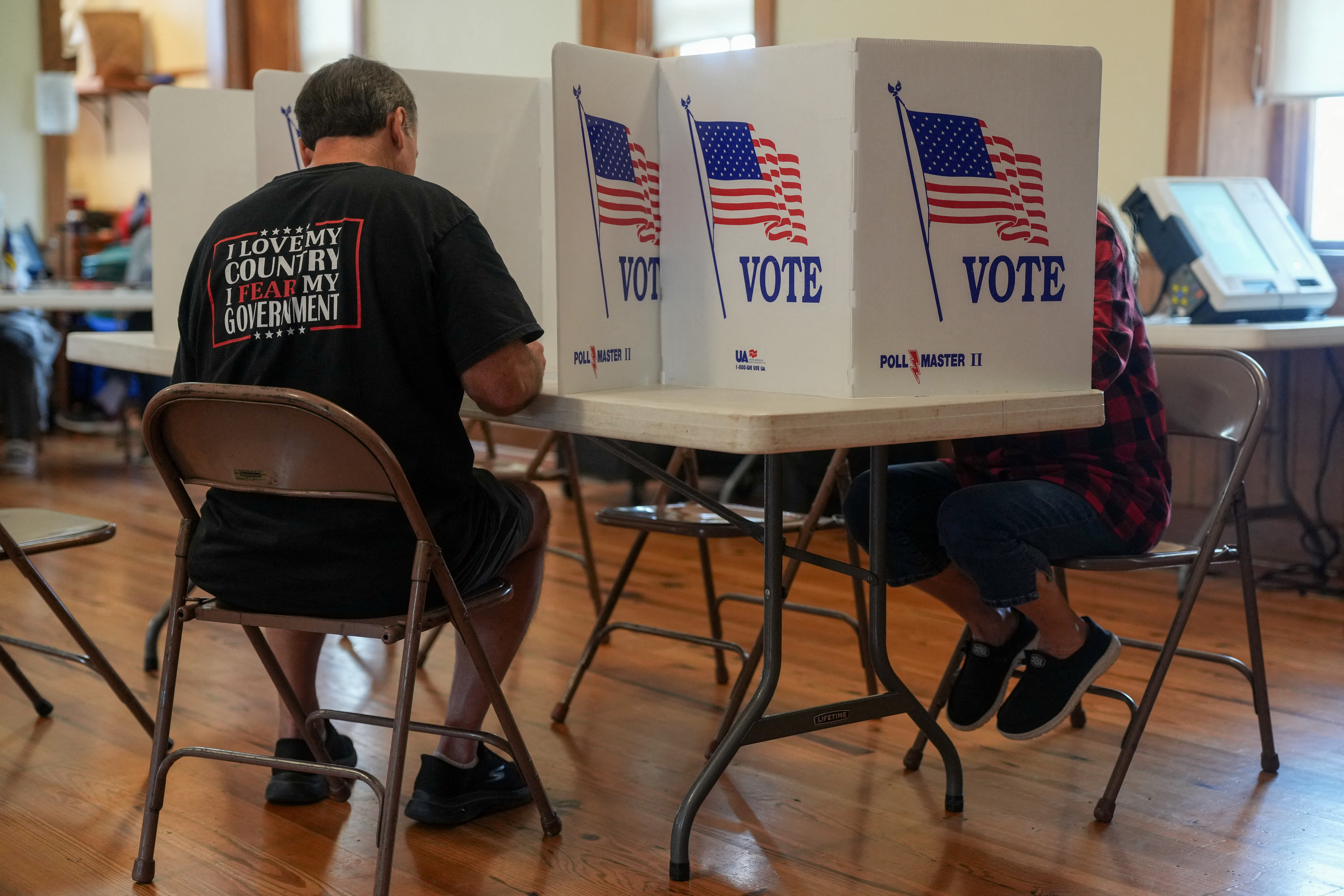
The findings indicate that, despite growing divisions within the Democratic Party over Israel and concerns about antisemitism, Jewish voters continued to favor Democratic candidates nationally.
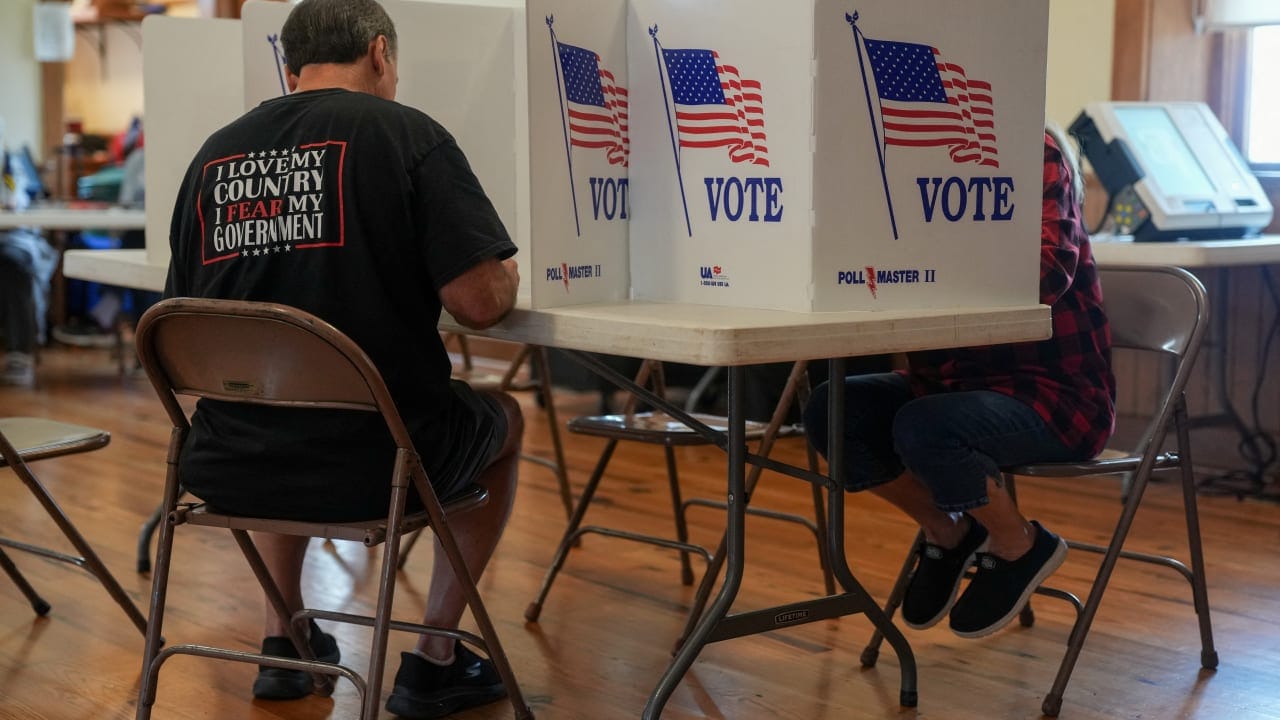
American Jews continued to vote overwhelmingly Democratic in the November 3 midterm elections, with preliminary polling indicating that roughly two-thirds backed Democratic candidates.
The findings indicate that, despite growing divisions within the Democratic Party over Israel and concerns about antisemitism, Jewish voters continued to favor Democratic candidates nationally. However, the results in the state of Michigan point to a more complicated picture at the individual-candidate level.
According to the NBC News exit poll, 67% of Jews across the US voted Democrat, and 32% voted Republican.
This is a preliminary figure only, but it conforms with the pre-election polls of Jewish voters which indicated a similar split. The Jewish Electorate Institute voting intention survey of US Jews in September found 71% intended to vote Democrat and 23% Republican. Among Jewish Democrats, 97% supported the Democratic candidate. Among Jewish independents, Democrats led 35%–21%, although 43% were undecided.
A separate voting intention survey by the Jewish Voters Resource Center reported 67% Democrat and 26% Republican.

The two pre-election surveys showed consistent Democratic support among Jewish voters.
The surveys also suggested that support for Israel and concerns about antisemitism do not necessarily translate into a complete rejection of Democratic candidates.
Jewish support for El-Sayed in Michigan
Looking specifically at the state of Michigan, exit polling of Jewish early voters indicated a narrow majority of 57% cast a ballot for Democratic Senate nominee Dr. Abdul El-Sayed.
Michigan's race drew particular scrutiny because El-Sayed faced accusations of antisemitism and criticism over his positions on Israel throughout his campaign.
The exit poll, carried out by The Jewish Majority, said El-Sayed dramatically underperformed other Democrats among a heavily Democratic Jewish electorate. It noted that 78% of Jewish early voters supported Jocelyn Benson for governor on the same ballot.
Jewish Democrats voice concerns over antisemitism
Additionally, 92% of self-identified Jewish Democrats who did not vote for El-Sayed cited the concerns about antisemitism and his positions on Israel as reasons they did not support him.
Among Jewish early voters who supported Republican Mike Rogers, 61% described their vote as mainly against El-Sayed, compared with 17% who said it was primarily in support of Rogers.
Among self-identified Jewish Democrats who voted for Rogers, that figure rose to 92%.
"The results point to a rejection of El-Sayed rather than a broader break with the Democratic Party," reflected the Jewish Majority Vote. "Those voters overwhelmingly cited concerns about antisemitism, El-Sayed’s positions on Israel and his treatment of Michigan’s Jewish community as reasons for withholding their support."
“Nearly every Jewish Democrat who rejected Abdul El-Sayed said they would have voted for a different Democratic nominee," added Jonathan Schulman, Executive Director of The Jewish Majority.
“Jewish voters want to remain part of the big Democratic tent, but they expect their concerns about rising antisemitism, Israel and the treatment of their community to be taken seriously."
How do these results compare to previous elections?
Jewish voters have consistently favored Democratic candidates in past elections, although how big that advantage has been depends on the election and the polling methodology.
In the 2020 Presidential election, polls found between 69% and 77% of Jews voted for Joe Biden, and 21% and 30% voted for Donald Trump.
In the 2024 Presidential election, between 66% and 79% were found to vote for Kamala Harris, and between 21% and 26% for Trump.
Regarding the last midterm election in the US - which was in 2022 - the split was reportedly similar to today's. Fox News and AP polled Jewish support for Democrats at 65%, and for Republicans at 33%. The J-Street poll reported 74% Democrat and 25% Republican.
2026 Jewish voters continuing to favor Democrats by a substantial margin is therefore broadly consistent with the pattern in recent midterm elections and, to an extent, presidential elections.
KioskNews shows a cleaned-up reading view extracted from the publisher’s page — the original always lives on their site, not ours.