Do not usurp the constitutional function of the DKU — Hafiz Hassan
SEPTEMBER 22 — Four months ago, I wrote that there is already a constitutional body to solve the constitutional dispute in the State of Negeri Sembilan.
That body is the Dewan Keadilan dan Undang (DKU) established under Article 16 of Chapter 6 of Part 1 of The Laws of the Constitution of Negeri Sembilan, 1959 (State Constitution).
As I wrote as well, the State of Negeri Sembilan is indeed unique. The State Constitution is in two parts, which were agreed to by the then Yang di-Pertuan Besar, Undangs of the Luaks of Sungai Ujong, Jelebu, Johol and Rembau as well as the Tengku Besar of Tampin.
The First Part “constitutionalizes” the adat perpatih on the customary ruling structure. There is no First Part in the other state constitutions.
There are eight Chapters and thirty-two Articles in the First Part.
Chapter 6 makes provisions on the DKU or The Council of the Yang di-Pertuan Besar and the Ruling Chiefs. The DKU is “to advise on questions relating to Malay Custom in any part of the State including questions relating to the election or succession to or removal from or vacation of office of any of the Ruling Chiefs referred to in Article 14 or on other matters which may be referred to it by His Highness or any of the Ruling Chiefs and to exercise such functions as may be conferred upon it by this Constitution or any other written law”.
The DKU has received the stamp of approval of the country’s apex court, the Federal Court, twenty-five years ago in the case of Dato Menteri Othman Bin Baginda & Anor v Dato Ombi Syed Alwi Bin Syed Idrus [1981].
In that case, the Federal Court (by a majority of 4:1, Lord President Suffian dissenting) held as follows:
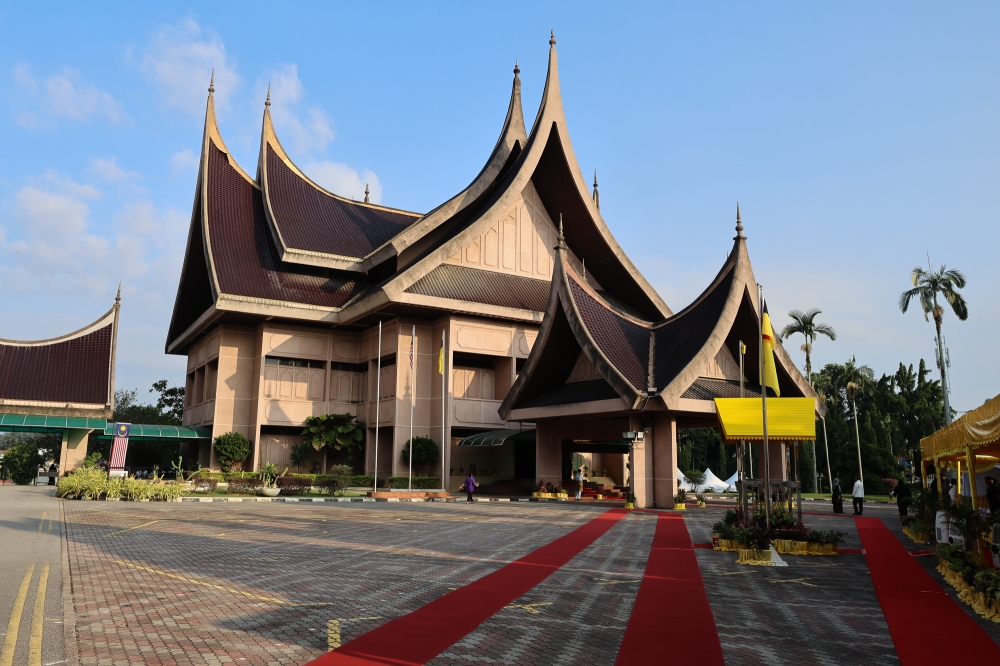
A general view of the Negeri Sembilan State Legislative Assembly building in Seremban on April 23, 2026. The op-ed examines the constitutional role of the Dewan Keadilan dan Undang in Negeri Sembilan. — Picture by Yusof Isa
The apex court held, by a majority (Lord President Suffian dissenting), as follows:
(1) the DKU was given power under the State Constitution to advise on matters relating to Malay custom and as the DKU in this case had blessed the appointment of the Second Defendant as the Undang of Jelebu. The court should not attempt to usurp the function of the Dewan, which was a more suitable forum for discharging that function.
(2) The court should decline jurisdiction on the ground that it was forum non conveniens (Latin for an inconvenient court) and that there was another body which was more appropriate and which had been given power under the State Constitution to decide the matter.
(3) The DKU having sat and deliberated upon the matter and finally given its ruling, the matter should have ended there.
Eighteen years later in the case of Dato’ Laxamana Dato’ Mokhtar Bin Dato’ Kelana Maamor & Ors v Lembaga Adat Istiadat Luak Sg Ujong [1998] when similar succession issue as Undang of the luak of Sungei Ujong came before the Melaka High Court, the learned judge, Justice Suriyadi (as he then was) referred to Dato Menteri Othman case and advised the four Plaintiffs before him as follows:
(1) there were sufficient authorities to show that in matters of this nature – that is, customary succession matters – the civil court was not the appropriate body to resolve it.
(2) The High Court was a forum non conveniens.
The gist of the above is this: when the DKU has blessed the appointment of an Undang, it is not for the courts to usurp the function of the DKU. The DKU is a far more suitable forum.
The DKU is the appropriate body to decide on the appointment of an Undang, and by extension on who reigns as the Yang di-Pertuan Besar.
The DKU has reaffirmed that Tuanku Muhriz Tuanku Munawir remains the legitimate Yang di-Pertuan Besar of the state, saying there is no vacancy in the position and no successor while it is lawfully occupied.
As former minister of law and former minister of foreign affairsTan Sri Syed Hamid Albar wrote, the State Constitution must prevail.
The apex court decision must be upheld.
Do not usurp the constitutional function of the DKU.
* This is the personal opinion of the writer or publication and does not necessarily represent the views of Malay Mail.
KioskNews shows a cleaned-up reading view extracted from the publisher’s page — the original always lives on their site, not ours.