China and beyond: how the Democrats’ blue midterm wave has rippled around the world

This live article is freely available to our registered users. Please log in or create an account.
Unrivalled US-China relations analysis: get real-time updates and exclusive boots-on-the-ground reporting from our US and China bureaus. Subscribe now with great savings to stay ahead.
Americans are awaiting the results of midterm elections that will determine control of Congress and shape the next two years of Donald Trump’s presidency, with consequences for US-China relations, global trade and the war with Iran.
His Republican Party is fighting to retain its majorities in the House of Representatives and Senate as Democrats seek to capitalise on dissatisfaction with Trump’s leadership and the economic fallout from the war.
Democratic control of either chamber would give the opposition greater power to block legislation and scrutinise the administration. Trump would retain significant authority over foreign policy, but face greater congressional resistance to his agenda.
Governorships and state legislatures are also at stake, with implications for how states implement or challenge the administration’s policies.
Follow our live coverage for results, developments and analysis from the SCMP’s reporters in the United States.
Reporting by Teresa Frontado, Mark Magnier, Lucy Quaggin, Nayan Seth, Han Li, Richard Zhang and Vincent Choi.
All times given in blog entries are Eastern Time (UTC-5, HKT-13)
More from our coverage:
Enable alerts for all live updates
5:52PM
Voter enthusiasm
From SCMP Reporters
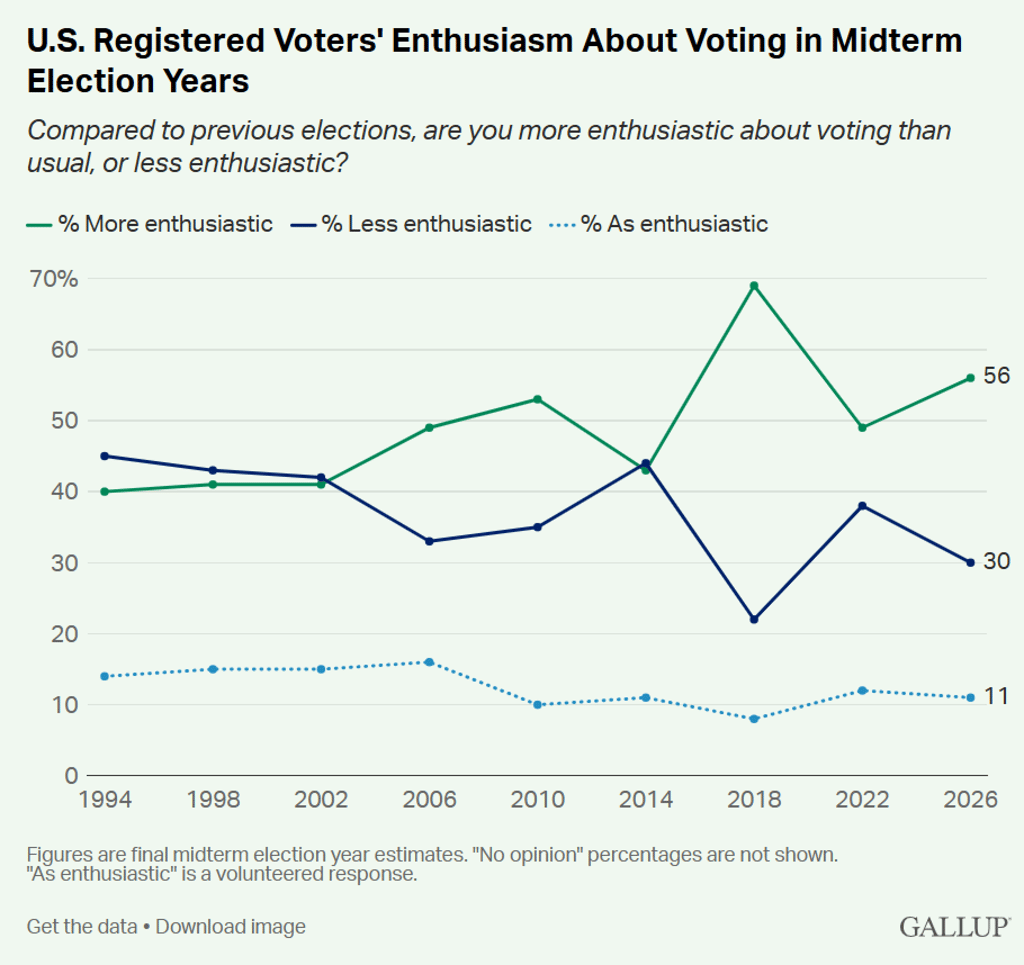
Are you excited? How’s everyone doing tonight? It may sound like the opening of a live comedy act but an enormous amount in this midterm is riding on excitement and enthusiasm, which can make all the difference in countries where the electorate is not obliged to cast their ballot.
According to an October 1-19 Gallup poll, 56 per cent of US adults said they were more enthusiastic about this election than usual. This is the highest level for any recent midterm election with one exception: in 2018, which was also a midterm judgment on Trump’s first administration, when the figure hit 59 per cent. This time, enthusiasm levels are 10 percentage points higher for Democrats at 58 per cent than for Republicans. Years when one party has a significant enthusiasm lead tend to see it gain the majority in the House, as seen in 1994 and 2010 for Republicans and in 2006 for Democrats. In 2014, Republicans increased the majority they already held in the House.
4:35PM
How elections work in the US
From SCMP Reporters
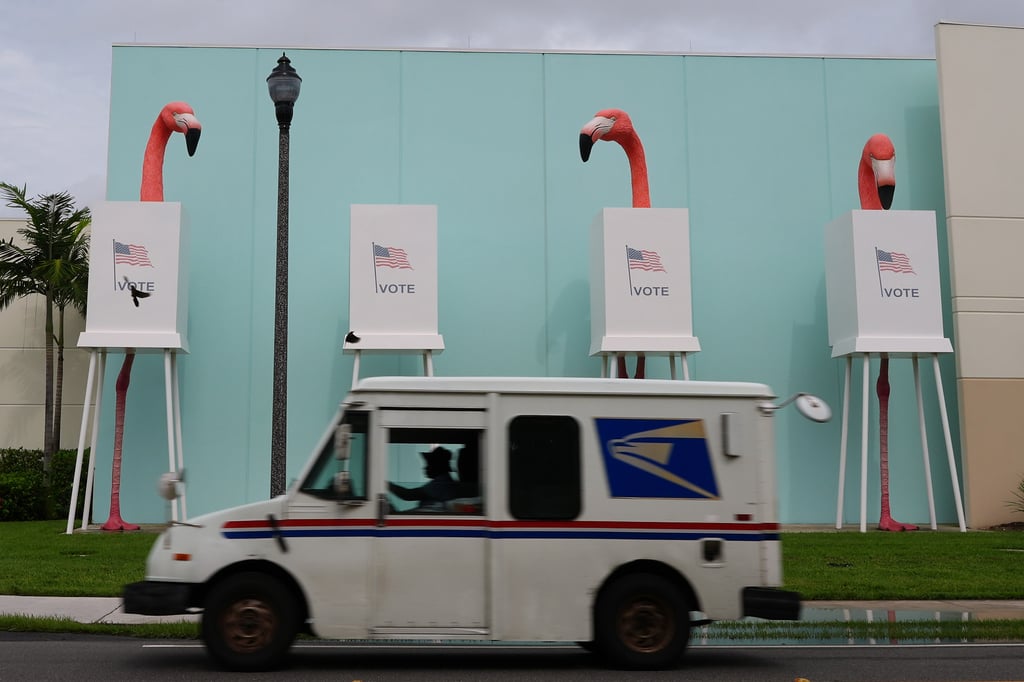
The US Constitution gives the 50 states primary authority over the “times, places and manner” of elections. That means rules differ from place to place. Some states require photo identification at polling stations and others do not. Some mail a ballot to every registered voter, while others allow postal voting only with a valid reason. Voting machines, ballot designs and deadlines all vary.
4:33PM
How are we calling the elections?
From SCMP Reporters
Most media outlets, including the South China Morning Post, rely primarily on results gathered by the Associated Press. The American not-for-profit news agency based in New York has counted the vote in US elections since 1848. For the 2026 midterm elections, the AP is expected to count votes and declare winners in nearly 7,000 races. That will include more than 5,200 contested races, ranging from congressional and gubernatorial elections to state and local contests in all 50 US states.
Because US polling hours vary significantly by state – and even within individual states that span multiple time zones, like Indiana, Kentucky, Florida, Texas, and Michigan – the AP receives and processes election results in staggered waves as polls close across the country.

KioskNews shows a cleaned-up reading view extracted from the publisher’s page — the original always lives on their site, not ours.