Bee stingers work like saws to pump venom
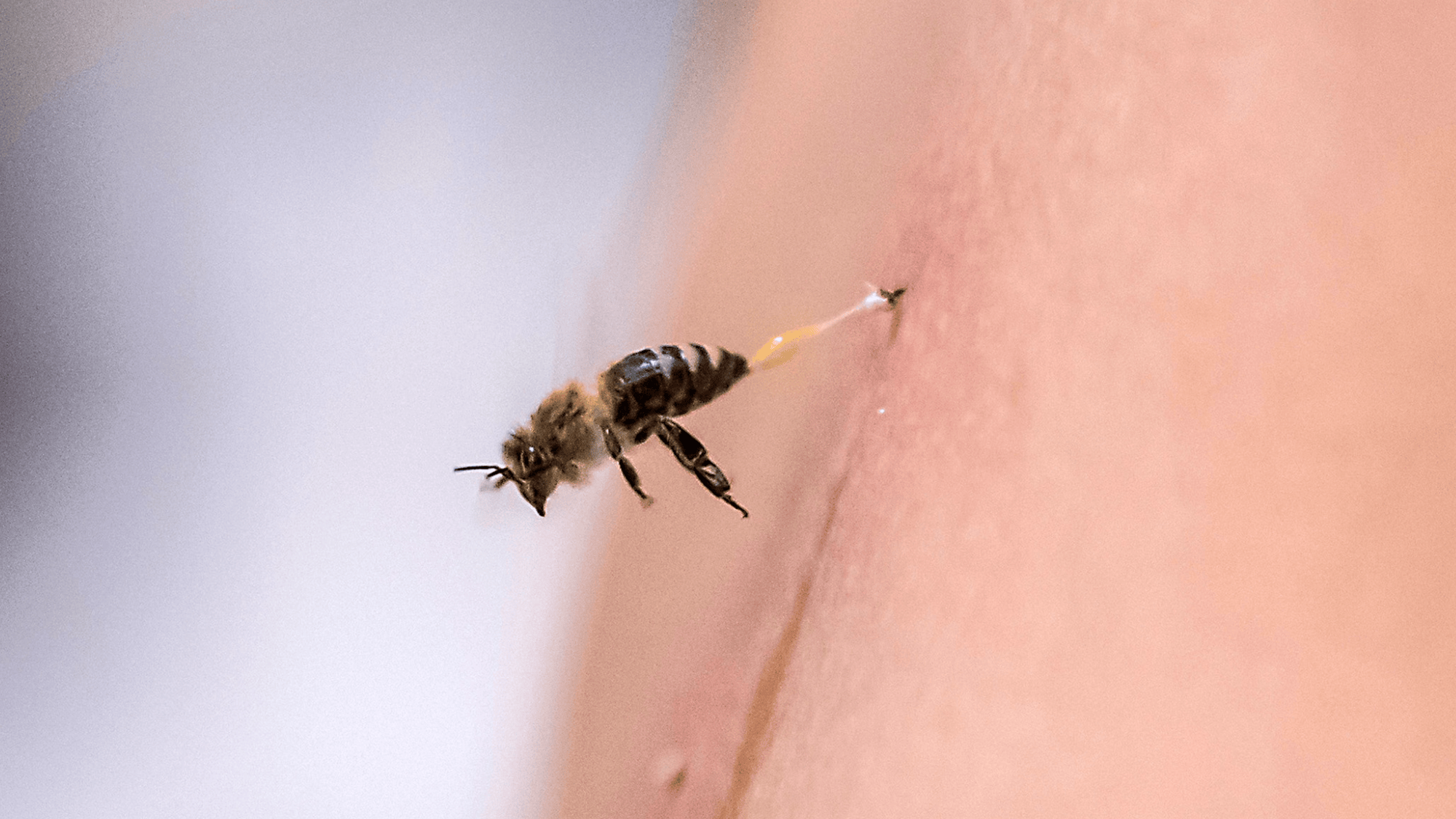
It’s one of nature’s seemingly magical tricks. A honey bee (Apis mellifera) stings a victim, and the stinger will still pump venom into a wound even after it has fully detached from the bee’s body. Thanks to some high-speed video, we may finally know the secrets behind this sting.
A team in Australia found that the tiny 2 millimeter (or only 0.08 inch) stinger of a honey bee works like a double-piston micro-pump. It pumps in two different directions and can deliver a continuous flow of venom. The findings are described in a study published today in the journal PNAS.
“We’ve known since as early as 1910 that the venom sac of a honey bee stinger empties into a chamber with little pumping elements called valves, but until now we didn’t know exactly how they work,” Fiorella Ramirez-Esquivel, a study co-author and entomologist at Macquarie University, said in a statement. “If you’ve ever been stung by a bee, you’ll know it’s a very painful process, but now we’ve been able to identify all the working parts packed into the tiny stinger.”
In bees, autonomy is when a worker bee thrusts its stinger into a target and then leaves the stinger behind. The stinger then continues to penetrate into the target tissue and inject venom all on its own.
To better understand how autonomy works, the team from Macquarie and the University of New South Wales had bees sting a clear gel that mimics human skin, while taking high-speed video. They saw that the tiny stinger itself contains several different components including one venom sac and a pumping chamber, muscles, and nerves. The stinger also has two sharp, pointed lancets. These lancets slide backwards and forwards on a system of rails (called the olistheter), similar to a reciprocating saw. These saw-like lancets are what pushes the stinger deeper into the skin and also pumps the venom.
Each of the two long lancets has a valve attached to it that sits inside of the pumping chamber. The team found that these valves change shape to form a seal during the downstroke. They then collapse during the upstroke, creating pressure for pumping while minimizing backflow when refilling.
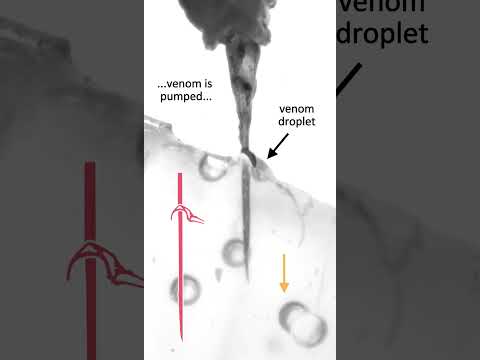
Bee stinger pumping venom
“Finally, and perhaps most dramatically, as the valves meet in the middle of the stroke, they change shape again to push past each other,” said Ramirez-Esquivel. “This is a remarkable strategy to pump fluid since maintaining a seal is vital to effectively transmit pressure. The unique geometry of the valves is the key; they act as collapsible pistons and—by pumping in opposite directions—they’re able to deliver a continuous flow of venom.”
The team continued to explore the mechanics and flow of the stinger with microCT scans. They then used these scans to 3D print a small robot of the bulb chamber and lancets. The tiny bee-bot confirmed these key features of the pumping cycle.
“The double piston design adds complexity but it’s the key to the stinger being able to deliver venom continuously in a compact, autonomous unit,” said Dr Ramirez-Esquivel.
Understanding this mechanism could inspire designs for new micropumps to deliver medicine to human patients in a less invasive way.
KioskNews shows a cleaned-up reading view extracted from the publisher’s page — the original always lives on their site, not ours.