Why Malaysia should convene, not just contribute to, Brics and Islamic finance — Ashurov Sharofiddin and Mohd Zaidi Md Zabri
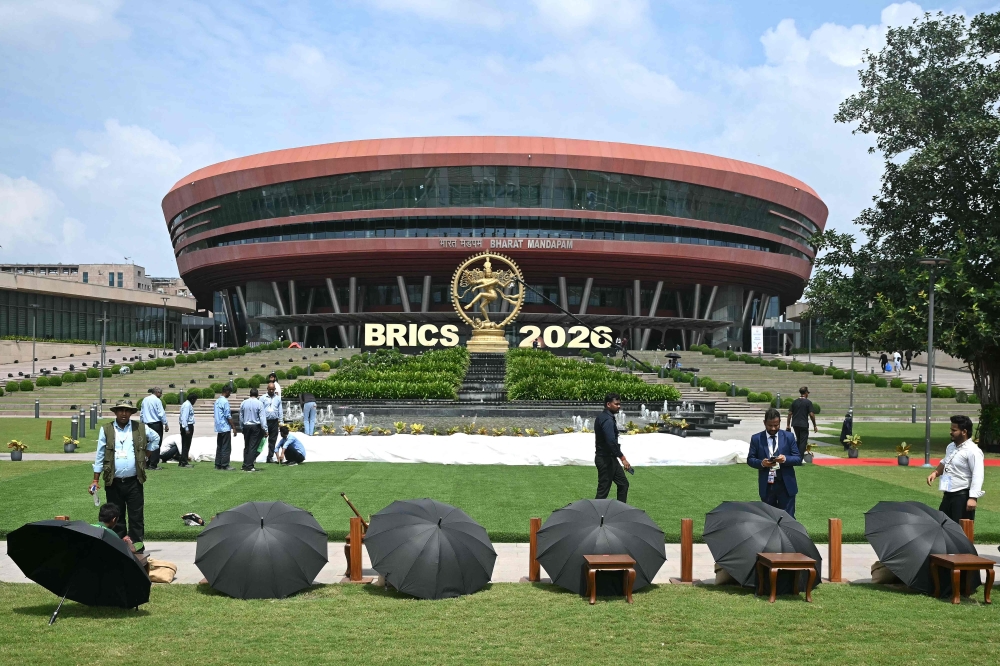
SEPTEMBER 23 — By the time Prime Minister Datuk Seri Anwar Ibrahim (PMX) left New Delhi, more people had watched him serenade a piano with a Kishore Kumar classic than had likely read the communique from the 18th Brics Leaders’ Summit itself. The clip crossed a million views within days and was widely called the standout moment of the gathering, charming soft diplomacy that Malaysians are quietly known for.
But somewhere between the singing and the standing ovation, a far less photogenic line from the summit slipped past almost unnoticed. PMX named Islamic capital markets among the areas he wants Malaysia to pursue through its Brics partnership, alongside trade diversification, semiconductors and artificial intelligence.
Notwithstanding, the discussion since New Delhi has followed a familiar, one-directional register: what Malaysia can offer to the grouping. Islamic finance is usually presented as a ready-made Malaysian export, a mature ecosystem waiting to be shared with less-developed markets. Almost no one has asked whether the relationship could run both ways, and that omission is the more interesting story.
The more useful question is not what Malaysia can teach Brics about Islamic finance. It is where Malaysia and its Brics partners each hold a missing half of the same problem, and whether Malaysia is prepared to convene that exchange rather than simply narrate its own expertise.
Nowhere is this clearer than in the financing of halal small and medium enterprises, a problem every Brics economy with a meaningful halal sector is quietly struggling with, and none has fully solved.
Prime Minister Datuk Seri Anwar Ibrahim named Islamic capital markets among the areas he wants Malaysia to pursue through its Brics partnership, alongside trade diversification, semiconductors and artificial intelligence. — AFP pic
A structural mismatch, not a values gap
Halal SMEs, particularly exporters, are frequently locked out of formal credit not because their businesses are unviable, but because conventional, collateral-based lending does not fit how they operate. Their assets sit in inventory and supply-chain relationships rather than fixed property; their working-capital cycles are tied to certification timelines and export documentation rather than to the kind of balance-sheet strength banks are built to assess.
A halal exporter can hold a strong order book, verified export contracts and a clean certification record, and still fail a conventional credit assessment built around land titles and fixed collateral. This is a financing-architecture problem before it is a religious one.
That is precisely where Islamic banking and trade finance, not capital markets alone, has something more than symbolic relevance to offer. Instruments such as commodity murabahah (cost-plus-profit sale) and musharakah (joint-venture)-based working capital, both Islamic banking products, sit alongside supply-chain sukuk, a capital-market product, as practical tools for turning operational momentum into bankable risk.
That is not a new financial technique; Malaysia’s own SME Bank, now under the Bank Pembangunan Malaysia group, already practices versions of it. What has not yet been built is a shared, cross-border standard that lets this data travel, so that a halal exporter’s certification history in one Brics market becomes legible, and financeable, to a bank or fund in another. Without that portability, every country’s halal-SME financing effort remains a domestic pilot rather than a scalable model.
Where Malaysia is still the student
If the gap is financing architecture and the missing piece is comparative experimentation across Brics economies, the opportunity for Malaysia is not to hand over a finished model. It is to convene the exchange, using its regulatory credibility to host what individual Brics partners cannot easily build alone.
Concretely, this could take the shape of a Brics Halal SME Finance Working Group tasked with a narrow goal: a shared standard for translating halal certification data into underwriting-ready information across borders. It is less exciting than announcing a new sukuk facility, but it is the kind of unglamorous task that actually ‘moves the needle’ toward SMEs that are creditworthy in practice and invisible on paper.
Malaysia’s regulators and Shariah scholars are well placed to chair such a group, not because Malaysia has the answers, but because it has the institutional credibility to get competing standards to the same table. That distinction, chairing versus dictating, is what separates a convenor from a vendor.
A group like this would need to grapple honestly with what does not travel well: data-privacy regimes differ sharply across Brics jurisdictions, and no single regulator can simply impose its own standard on the rest. The convenor’s job is not to resolve these differences in advance, but to build the forum where they can be negotiated and tested at small scale.
A scorecard for convening, not just exporting
Malaysia’s Brics strategy has rightly been urged to measure itself against a public scorecard, but the metrics should match the role. If Malaysia positions itself as convenor rather than vendor, the right measures are not exports of Malaysian expertise but signs of genuine exchange: certification-to-financing standards adopted across more than one Brics market, SMEs financed under shared frameworks in partner economies, and, just as telling, practices Malaysia itself has imported from elsewhere in the grouping. A scorecard counting only what Malaysia gives away would simply repeat the exporter framing in a different form.
Strategic autonomy, as has been argued elsewhere, has value only when it produces capability. For Islamic finance, that capability will not come from Malaysia performing a solo it already knows by heart. It will come from admitting what it does not yet know about how its Brics partners are already solving the same problem, and pulling up a chair at a table small enough that everyone can, quite literally, start comparing notes.
* The authors are faculty members at the IIUM Institute of Islamic Banking and Finance (IIiBF), International Islamic University Malaysia (IIUM).
** This is the personal opinion of the writer or publication and does not necessarily represent the views of Malay Mail.
KioskNews shows a cleaned-up reading view extracted from the publisher’s page — the original always lives on their site, not ours.