Trump announces Russia-Ukraine energy ceasefire amid worries over diesel prices

Roberto Schmidt/Getty Images News
President Donald Trump said Sunday that Russia and Ukraine have agreed to an immediate ceasefire covering energy infrastructure, potentially easing disruptions to global fuel supplies after months of attacks on oil refineries, power plants and other facilities.
"Effective immediately, there is an ENERGY CEASEFIRE in the War between Russia and Ukraine. Both parties have agreed. Do not break it!" Trump wrote on social media.
The president provided no details about the agreement, including its duration or enforcement. Neither Moscow nor Kyiv had immediately confirmed the ceasefire, according to Reuters.
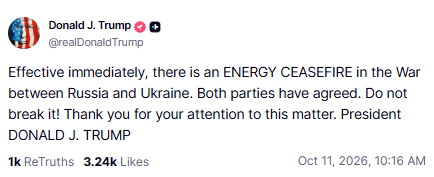
President Trump said Ukraine and Russia agreed to an energy ceasefire. (Truth Social)
For investors, an end to attacks on energy infrastructure could help stabilize global diesel supplies and reduce pressure on fuel prices. Diesel is a major expense for trucking companies, railroads, farmers and industrial businesses. Higher prices also raise transportation costs throughout the economy, complicating efforts to contain inflation.
Energy infrastructure targets
Russia has repeatedly targeted Ukraine's electricity grid, power plants and natural gas infrastructure since launching its full-scale invasion in February 2022. The attacks have caused widespread blackouts and disrupted heating supplies, particularly during the winter.
On Sept. 30, Russian forces launched one of their heaviest attacks on Ukraine's energy infrastructure in months, damaging power facilities around Kyiv and other regions. The strikes forced emergency electricity cuts and heightened concerns about the country's ability to maintain power supplies during the approaching winter.
Ukraine, meanwhile, has intensified drone attacks on Russian oil refineries, storage facilities and export infrastructure. Kyiv has sought to weaken Russia's ability to finance its military operations through energy exports while disrupting supplies of fuel used by Russian forces.
The campaign has damaged several major Russian refineries, including facilities in Perm, Syzran and Tuapse. Some were forced to suspend operations after attacks earlier this year.
The disruptions have contributed to domestic fuel shortages in Russia and reduced the availability of refined petroleum products on international markets. Russia extended restrictions on diesel exports through October in an effort to protect domestic supplies.
Trump blames refinery attacks for diesel price surge
Trump has increasingly expressed concern about the economic consequences of Ukrainian attacks on Russian energy facilities, particularly their effect on diesel prices in the United States.
During a Sept. 13 appearance in Ireland, Trump urged Ukrainian President Volodymyr Zelenskyy to stop attacking Russian refineries, arguing that the strikes were contributing to a worldwide diesel shortage.
The president said Ukraine should focus on other military targets rather than facilities producing diesel, which he argued were essential to global fuel supplies.
U.S. diesel prices had climbed above $6 a gallon nationally, intensifying concerns about inflation and transportation costs ahead of November's midterm elections.
Trump has placed much of the blame on disruptions to Russian refining capacity. Energy analysts, however, have identified additional pressures, including reduced petroleum shipments from the Middle East following the conflict involving Iran and disruptions to shipping through the Strait of Hormuz.
A September analysis by PolitiFact cited energy experts who said Ukrainian refinery attacks had materially reduced global diesel supplies, although the Middle East conflict and limited refining capacity were also important factors.
Trump also announced an agreement with Russian President Vladimir Putin to increase diesel supplies, accompanied by a temporary easing of U.S. sanctions on Russian diesel. The move drew criticism from Ukraine and U.S. lawmakers concerned that additional energy revenue could strengthen Moscow's ability to finance the war.
Investors await evidence
Sunday's announcement follows an unsuccessful effort in September to halt attacks on energy facilities. Trump previously claimed that both countries had agreed to stop targeting energy infrastructure, but strikes continued.
On Sept. 15, Russian forces attacked Ukrainian energy facilities while Ukraine struck a refinery in Russia's Samara region. Zelenskyy subsequently said Ukraine was prepared to halt such attacks if Russia made a reciprocal commitment backed by credible guarantees.
The latest announcement could therefore have implications for crude oil, diesel futures and refining margins, although the market impact will depend on whether the ceasefire is implemented and damaged facilities can resume normal operations.
A sustained halt to attacks could improve Russian refined-product availability and relieve some pressure on global diesel prices. That could benefit transportation companies and other fuel-intensive businesses while potentially reducing the elevated margins refiners have enjoyed during the supply shortage.
For now, investors face a familiar uncertainty: Trump's declaration suggests a potential diplomatic breakthrough, but its economic significance will depend on whether Russia and Ukraine honor the agreement and whether the ceasefire produces a measurable recovery in energy supplies.
Dear Readers: We recognize that politics often intersect with the financial news of the day, so we invite you to click here to join the separate political discussion.
KioskNews shows a cleaned-up reading view extracted from the publisher’s page — the original always lives on their site, not ours.