China uses military drones, heavy-lift and C909 planes in huge forest fire drill
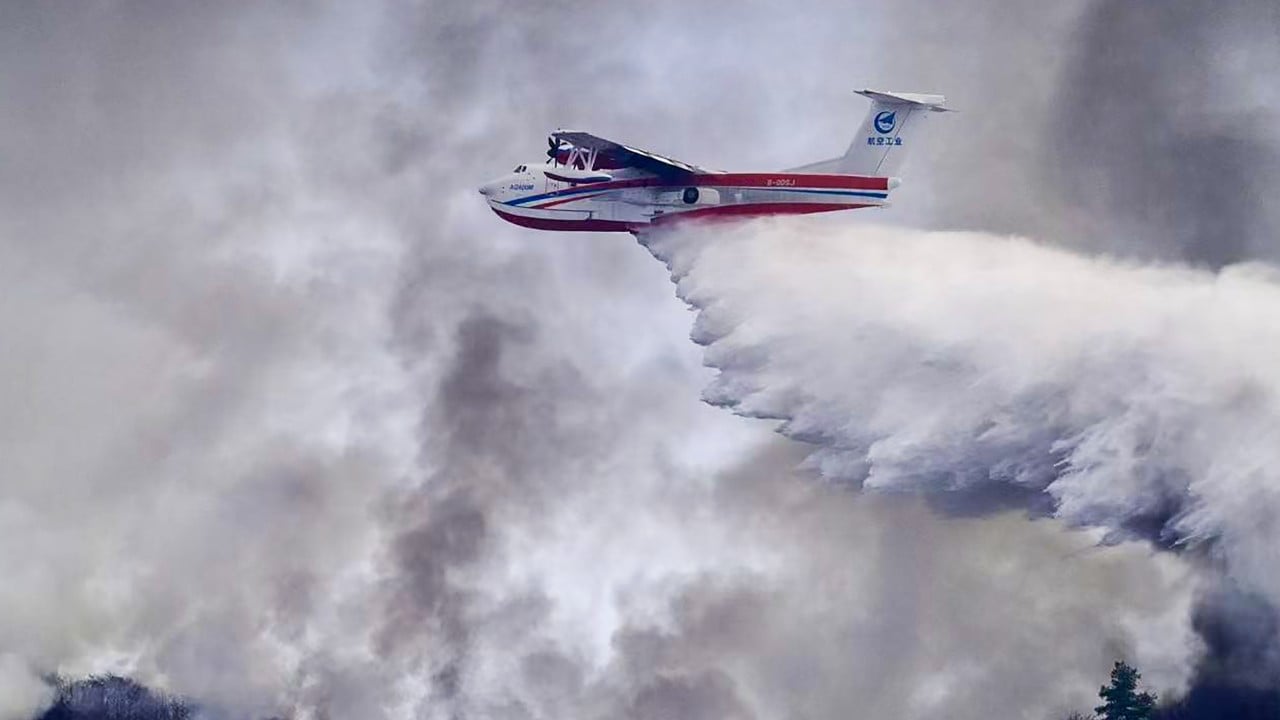
Firefighters used military drones, heavy transport aircraft and seaplanes in a large-scale drill in southwest China on Monday, as part of efforts to bring the latest technologies into emergency response operations.
The exercise involved more than 1,600 personnel and over 40 aircraft and simulated a major forest fire in a high-altitude mountainous region of Chongqing, state broadcaster CCTV reported.
Aircraft in the drill included the Wing Loong II and Twin-Tailed Scorpion – both unmanned aerial vehicles used by the People’s Liberation Army for surveillance and reconnaissance missions.
Both have a flight endurance of more than 25 hours and can reach altitudes of up to 8,000 metres (26,200 feet). They have high-resolution infrared thermal imagers, synthetic aperture radars and laser rangefinders.
On a firefighting mission they could hover over the area at altitude and use sensors to detect through dense smoke to locate hidden fires while sending real-time data and high-definition imagery to the command centre.
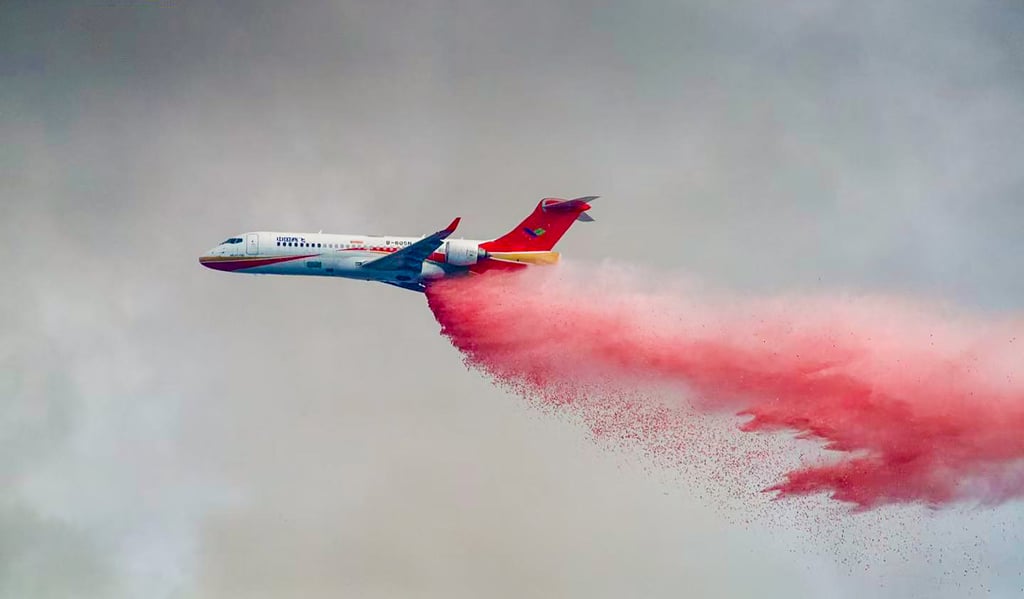
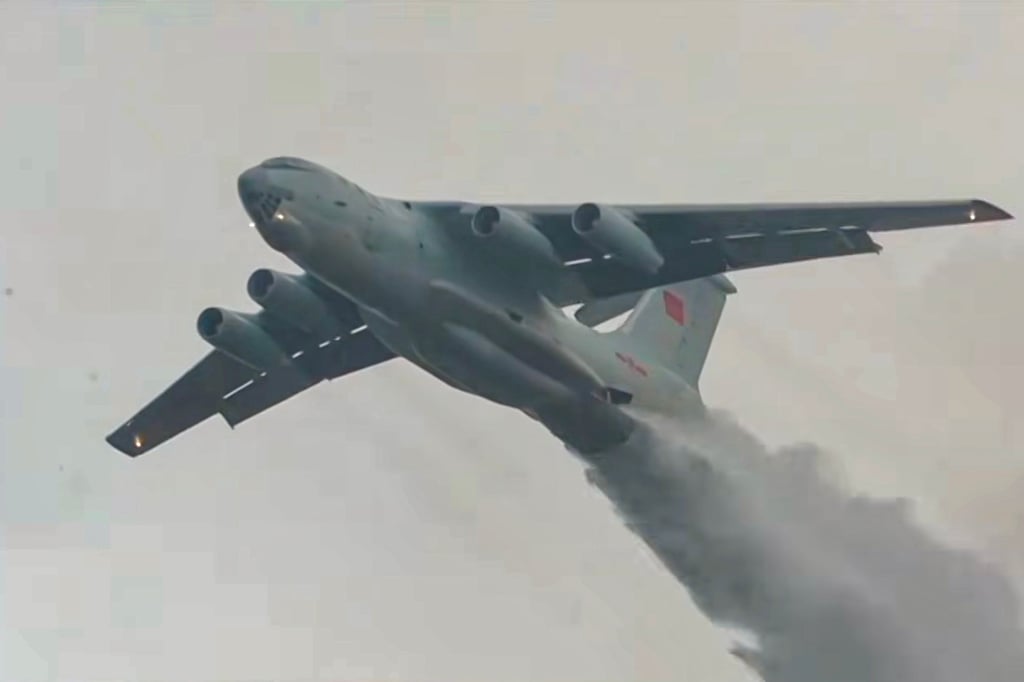
The Soviet-designed Il-76 heavy transport aircraft – long used by the PLA Air Force – was also part of the drill, along with a firefighting variant of the C909 regional passenger aircraft, which made its public debut on Monday.
Developed by the state-owned Aviation Industry Corporation of China, the Wing Loong II is a medium-altitude, long-endurance drone designed for reconnaissance and precision strikes.
It has reportedly been used by the PLA near Taiwan and is also said to have been used for missions over the South China Sea.
Variants of the drone have also been used in disaster relief missions since they can loiter over affected areas to carry out monitoring and communication where infrastructure has been damaged. The drone was used for this purpose after the devastating floods and mudslide on the China-Nepal border in August.
The other drone used in Monday’s drill was the Twin-Tailed Scorpion, or TB-001 – another long-endurance reconnaissance and strike-capable UAV that has been part of PLA operations around Taiwan and Japan’s southwestern islands.
A three-engine variant of the drone was purpose-built by developer Sichuan Tengden to release rain catalyst to help mitigate drought and help fight fires. That drone carried out cloud seeding and weather observations during a 2024 forest fire in Yajiang, Sichuan province.
The Il-76, meanwhile, is a four-engine heavy transport aircraft used for logistics, troop deployment and humanitarian operations.
Monday’s drill also included activities to clear airspace for aircraft involved in firefighting, with radars detecting unauthorised UAVs and anti-drone systems removing them, according to state media reports.
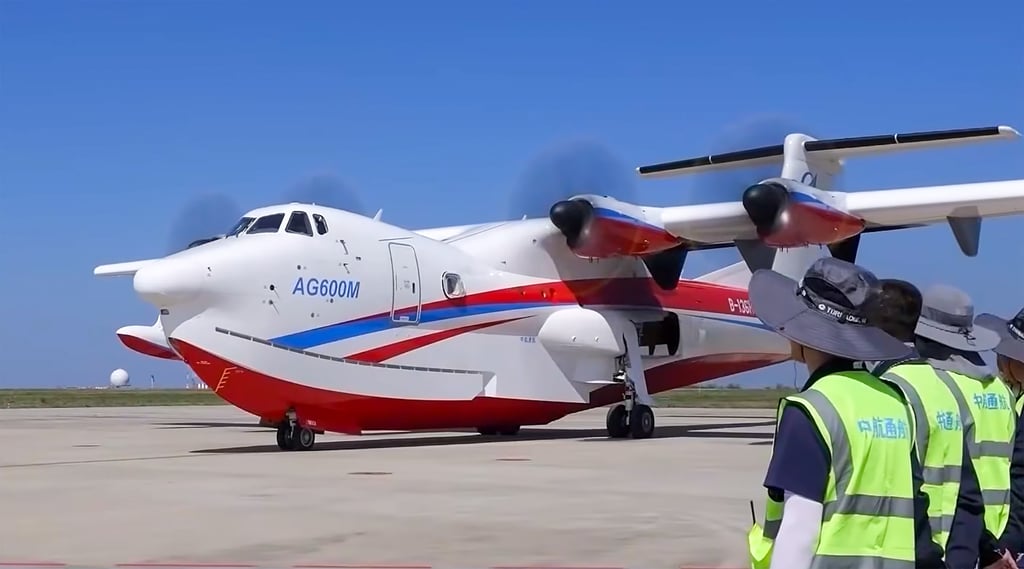
Firefighters also put AVIC’s new AG600 Kunlong amphibious aircraft to the test during the exercise. Other fixed-wing aircraft included the MA60 turboprop regional plane, which has a firefighting version that can carry up to 6 tonnes of water.
Monday’s drill focused on testing new firefighting tactics for the remote, mountainous terrain of southwest China – particularly coordination between ground and aerial forces, manned and unmanned aircraft, and fixed-wing planes and helicopters, according to CCTV.
The report said the drill aimed to help prepare firefighters as wildfires become more common amid extreme heatwaves and given the lack of firefighting capacity in mountainous regions such as the karst terrain of Chongqing.
The exercise was also a test of coordination between the military and civilian organisations and it brought in new approaches to integrate emerging technologies into emergency response operations.
It comes as China is trying to strengthen its emergency response capabilities following destructive wildfires in recent years. The drill tested how various aircraft could be deployed at different times, areas, heights and distances when fighting fires, according to the report.
Forest fires swept through Chongqing in August 2022 during an extreme heatwave and prolonged drought, with temperatures reaching 45 degrees Celsius (113 degrees Fahrenheit).
The fires threatened residential communities and mountainous forest areas and prompted a major response involving firefighters, military personnel, helicopters and thousands of volunteers.
KioskNews shows a cleaned-up reading view extracted from the publisher’s page — the original always lives on their site, not ours.