Tesla signs deal to integrate Alipay into its cars as China competition heats up
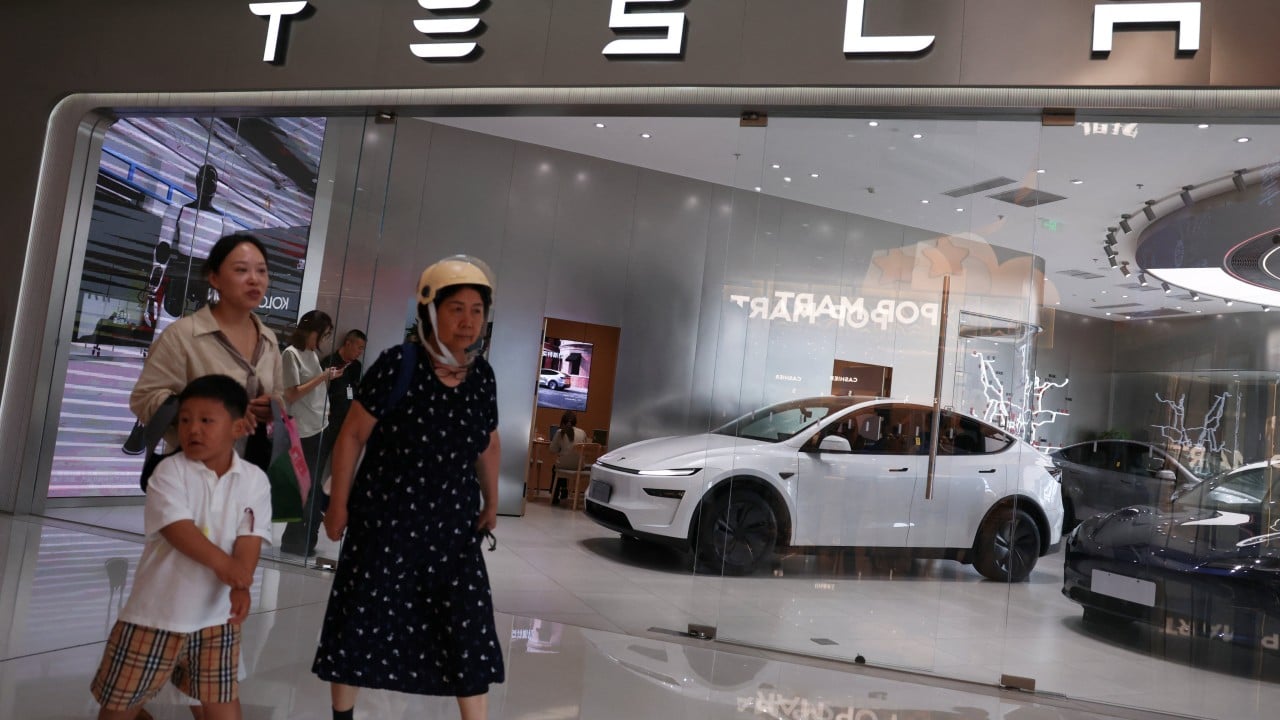
Tesla has agreed a deal to integrate Chinese fintech giant Ant Group’s Alipay digital payment software into its vehicles in China, as Elon Musk’s firm steps up efforts to offer localised smart features amid intense competition in the Chinese market.
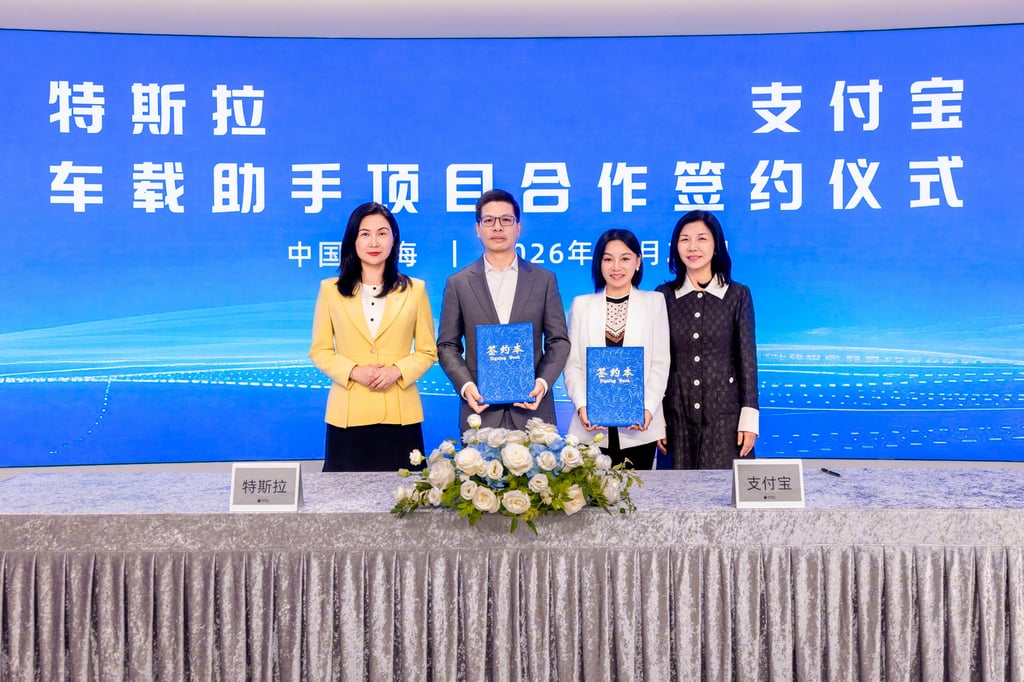
The agreement, signed on Tuesday, will see Tesla roll out an Alipay-powered smart parking service across its Chinese fleet, according to the fintech firm.
Neither side revealed a launch date or which car models would receive the feature, though Alipay said it would be rolled out via a “forthcoming software update”.
The feature would allow drivers to pay parking fees directly from their in-car touchscreens, Alipay said, adding that additional features for “in-car lifestyle scenarios” were currently in development.
Ant Group is an affiliate of Alibaba Group Holding, which owns the South China Morning Post.
The partnership marks Alipay’s latest push to deepen its foothold in the automotive sector. Launched in 2024, its smart assistant connects Alipay’s vast service ecosystem with driving scenarios, designed to enable users to book tickets, order meals and perform other tasks via voice commands.
Last year, the assistant was launched as an integrated app on software systems for domestic electric vehicle maker Li Auto, covering its Mega, L-series and i-series models. The feature allowed drivers to access Alipay mini-programs and payment functions to order coffee or track parcel deliveries, among other features.
The assistant has been deployed across a total of 66 models from 16 carmakers – including BYD, Xpeng, Nio, Geely and Dongfeng Motor – reaching more than 10 million vehicles, according to Chinese media reports.
For Tesla, the collaboration comes as an intense EV price war in China continues to squeeze profit margins. In September, the US carmaker offered discounts on its Shanghai-made vehicles for the first time since late 2024 to counter sluggish domestic demand.
In the first seven months of this year, Tesla’s Shanghai Gigafactory – its largest production hub globally – delivered 266,204 vehicles to mainland Chinese buyers, down 12.4 per cent year on year, according to data from the China Passenger Car Association.
Tesla has also faced delays in securing full regulatory approval to roll out its Full Self-Driving (FSD) driver-assistance system in China.
Although a “supervised” iteration of FSD was launched in May for eligible test vehicles, the company is still trying to navigate stringent data localisation and driver monitoring requirements to secure a nationwide roll-out.
KioskNews shows a cleaned-up reading view extracted from the publisher’s page — the original always lives on their site, not ours.