Smart economics: tackle climate change and air pollution together
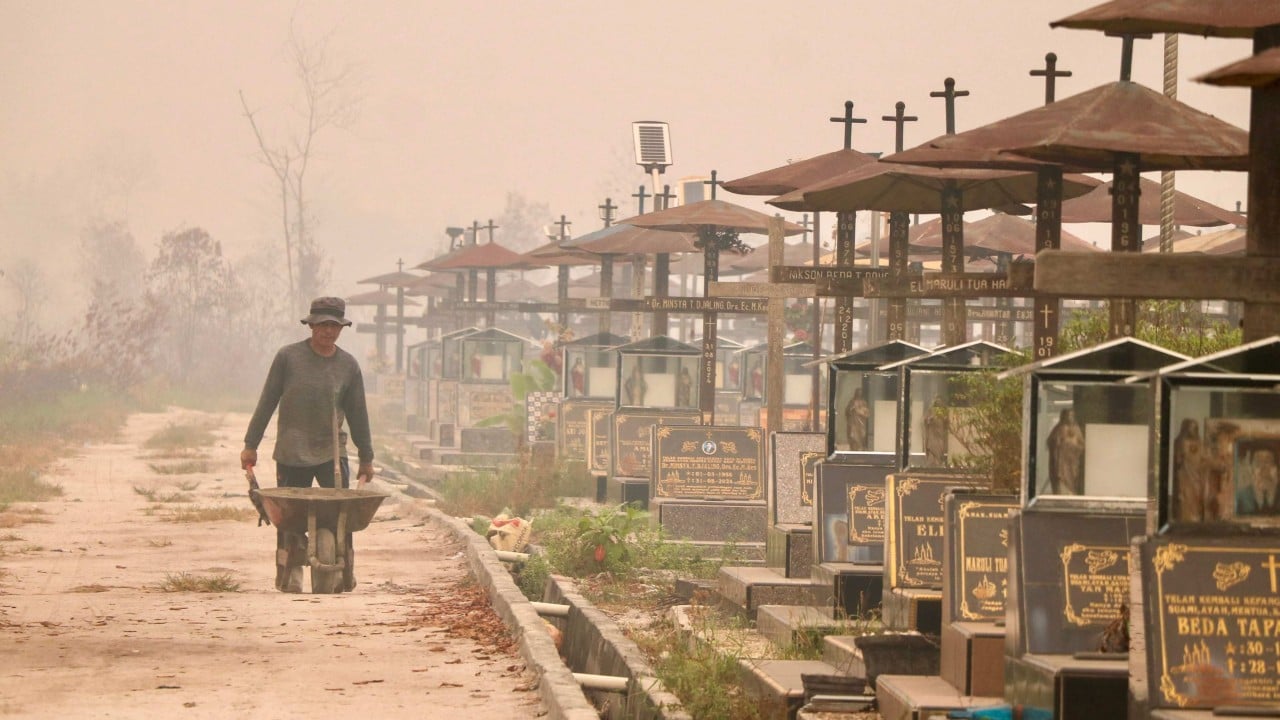
Indonesia continues to battle some of its worst wildfires in years, spreading toxic haze to Malaysia and Singapore. Floods have devastated communities in Thailand, India and Nepal. Kathmandu is also seeking climate justice after a catastrophic collapse of rock and glacier ice near its border with China.
Another environmental tragedy unfolds without such dramatic images. Across the world, millions of lives are lost each year to polluted air. Many more people live with debilitating illnesses that strain household finances, overwhelm health services and keep them from working.
Governments that plan and budget for climate change and air pollution separately miss opportunities to protect health and strengthen their economies through the same investment.
We recently co-chaired an assessment for the UN Environment Programme and the Climate and Clean Air Coalition (CCAC) that puts a value on those opportunities. We estimate that outdoor and household air pollution caused about 8.4 million premature deaths worldwide in 2025. Outdoor fine-particle pollution was also associated with 5.5 million new cases of childhood asthma, 2 million new cases of dementia and millions of cases of other serious illnesses.
Our assessment is the first to quantify the combined economic value of climate and clean-air action within a single, internally consistent framework. A key innovation is its fuller accounting of pollution-related illness, or morbidity, including healthcare costs and lost productivity that conventional analyses have often undervalued.
Air pollution has often been treated as an inevitable price of rapid economic growth, but polluted air itself imposes many enormous costs. Those losses should count whenever a government considers whether cleaner energy or transport is too expensive.
00:51
New Delhi records over 200,000 respiratory cases due to toxic air
At the same time, there is reason for optimism. Wider adoption of electric vehicles and renewable power can help improve local air quality and reduce long-term global warming. Work on our report began last year in Beijing, whose improvements in air quality demonstrate what sustained policy action can achieve.
Our assessment evaluates 25 measures across energy systems, industry, transport, agriculture, residential heating and cooking, and waste management. Complementing long-term decarbonisation, action on super pollutants – including methane, black carbon and hydrofluorocarbons – can help slow warming.
Measures targeting methane and black carbon also improve air quality. Methane contributes to ground-level ozone, which damages health and crop yields. Black carbon, a component of health-harming soot, warms the atmosphere and accelerates melting when deposited on snow and glaciers.
If the full package of measures is implemented, every US$1 invested could generate around US$4 in market benefits, including lower healthcare spending, higher productivity and avoided climate damage. Including the broader economic value of longer, healthier lives raises the benefits to US$15. Some health and economic gains can become apparent within a single term of government.
For governments seeking faster growth and balanced budgets, the US$4 market benefit figure deserves particular attention. Fewer illnesses mean fewer working days lost and less pressure on health services. Reduced heat exposure protects workers’ health and productivity. These gains help strengthen economies and ease pressure on public finances, even though they do not all accrue directly to the government.
Finance ministries should assess investments against these combined benefits. Each year of delay in implementing the package forfeits more than US$1.5 trillion in benefits we cannot recover.
02:05
‘It is extremely uncomfortable’: Hanoi becomes world’s most polluted city
Full implementation of these measures could prevent an estimated 144 million premature deaths from air pollution cumulatively by 2050. Compared with the report’s baseline scenario, it could also avoid around 0.34 degrees Celsius of warming by mid-century – a significant contribution to limiting the extent and consequences of an overshoot beyond the 1.5 degree warming threshold.
Governments need not finance every investment themselves. Clear legislation, predictable standards and credible enforcement can encourage private businesses to act. Rules on methane leakage, vehicle emissions and refrigerants can create demand for cleaner technologies. Better coordination between ministries can reduce delays and implementation costs.
Delivering these gains also requires attention to who can afford to change. Families need reliable access to cleaner cooking and affordable, energy-efficient cooling. Farmers need practical alternatives to burning crop residues. Targeted public support and access to affordable finance should be built into implementation from the start.
Pollution crosses borders, so neighbouring countries have much to gain from coordinating their efforts. International financial support also remains essential for countries unable to cover necessary upfront investments. These priorities belong at the centre of the CCAC Annual Meeting in Bangkok this week and the COP31 UN climate change conference in Antalya, Turkey, this November.
Governments need not wait for a breakthrough in international negotiations. They can remove barriers and set investment in motion now.
From smoke-filled and flooded cities to retreating glaciers, Asia has much to gain from tackling air pollution and climate change together. Investments made today can improve health quickly and deliver economic benefits for generations. Every budget that postpones them leaves families and economies paying the price.
KioskNews shows a cleaned-up reading view extracted from the publisher’s page — the original always lives on their site, not ours.