Exclusive-Cost pressures and deadlock force Honda to rework India strategy, sources say
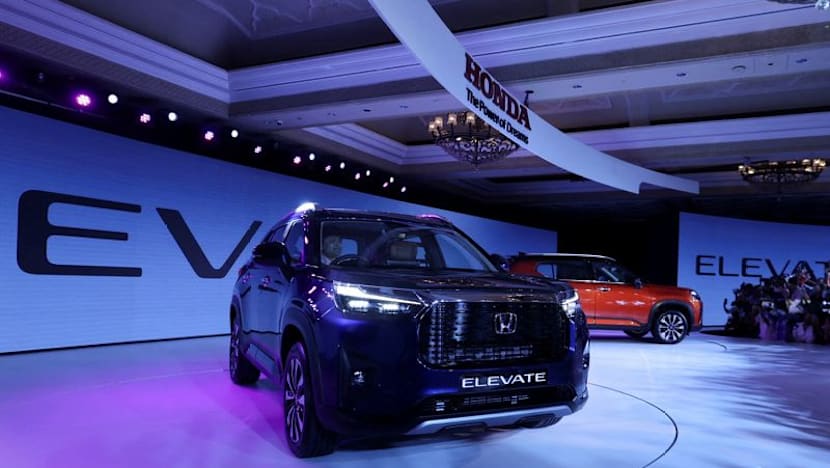
MUMBAI/TOKYO, Oct 5 : Honda Motor aims to cut costs by as much as a fifth and halve development times under its new partnership in India with Tata Technologies, according to two people familiar with the matter, as pressure from rivals forces the Japanese automaker to rethink its go-it-alone approach.
Reeling from electric vehicle (EV)-related losses that it expects to reach more than $12 billion, Honda is pivoting to gasoline-electric hybrids and slashing expenses. Last month, Reuters reported that it is seeking to cut more than $9 billion in costs over the next four years and has told suppliers to drastically reduce prices.
In May, engineering firm Tata Technologies said it was selected to develop vehicles for a Japanese automaker. It declined to name the partner, but the two people and another person familiar with the matter said it was Honda.
Under the outsourcing agreement, Tata Technologies will develop cars for the Indian market, while Honda expects to see up to 20 per cent in cost reductions and halve its development times from around five years at present, two people said.
Honda decided to bring in Tata Technologies after the automaker's Japanese and Indian managers failed to agree on which suppliers to use for upcoming vehicles in India, two of the people said.
All three sources declined to be identified because the information has not been made public. The cost-cutting and development targets in India, as well as the internal deadlock over supplier strategy, are being reported for the first time.
In a statement, Honda said it has not been able to offer a sufficient product line-up in India that allows customers "value for money." To that end, it was "redefining" its offerings in India and planned to introduce vehicles that strike a balance between quality and price, it said.
It denied there were disagreements between the Japanese and Indian teams over supplier selection.
In a separate statement, Honda India said product development involved close collaboration between different teams, adding that it was inaccurate to characterise collaborative discussions as disagreements.
Tata Technologies did not respond to a request for comment.
STRATEGY DEADLOCK
Japanese managers wanted to retain established suppliers to ensure quality and consistency, while Honda's team in India pushed for greater use of local suppliers to lower costs and speed up development in the world's third-largest car market, two of the people said.
Reuters could not determine how long the deadlock lasted but the disagreement was enough to delay work on some products, the two people said. The partnership had been under discussion for about two years before being finalised, one of them added.
Tata Technologies, which was spun off from Indian automaker Tata Motors, was chosen because of its access to a broad network of local suppliers and because Honda managers believed it could design vehicles in line with consumer tastes and spending preferences, the person said.
Honda will oversee the process to ensure quality standards are met and will retain control over areas like technology, connectivity and driver-assistance systems, the person added.
FAMOUS INDEPENDENCE
Honda has long carried the imprint of its famously independent late founder, Soichiro Honda. It developed two of the world's best-selling cars, the Civic and the Accord, along with the most popular motorcycle of all time, the Super Cub.
Like other Japanese automakers, Honda faces the difficult balancing act of defending its legacy business in places like the US while developing new technologies to compete with Chinese firms elsewhere. India, a fast-growing market that remains closed to Chinese EV makers, has become more important.
But Honda's market share there has slumped to 1.3 per cent from a peak of 7.3 per cent more than a decade ago. Its portfolio has shrunk to four models and it is losing to affordable, feature-packed rivals like Tata Motors and Mahindra. It also has little to offer in the biggest and fastest-growing SUV segment.
"Honda is already late and behind competitors," one of the people said.
Honda President Toshihiro Mibe is under pressure to turn around the automaker, which recorded its first-ever annual loss in the last financial year.
In May, Mibe said that while India was a "key focus" for Honda, the automaker had not always been successful there.
"We need to rebuild the business on an entirely different footing," he said.
Previously, Honda adapted for India cars that were originally designed for Japan or other global markets. That resulted in it offering vehicles that were seen as over-engineered and pricey.
The first vehicle under development with Tata Technologies is a small SUV that is less than 4 metres (13.1 feet) in length, a segment that accounts for a large portion of India's car market and where Honda has limited presence. It is targeted for launch in 2028, two of the people said.
A second, mid-size SUV is expected to follow, with Honda later trying to revive its strength in sedans, one of them added.
In its statement, Honda said it planned to launch vehicles in India in the sub-4-metre category and the larger midsize category from 2028 onwards.
India is Honda's only major emerging market and it wants to make manufacturing and sourcing there more competitive.
If the first product under the deal is successful in terms of quality, sales and profitability, it will open opportunities for Honda to export from India, one of the people said.
KioskNews shows a cleaned-up reading view extracted from the publisher’s page — the original always lives on their site, not ours.