Will China’s maritime moves push Japan and South Korea closer together?
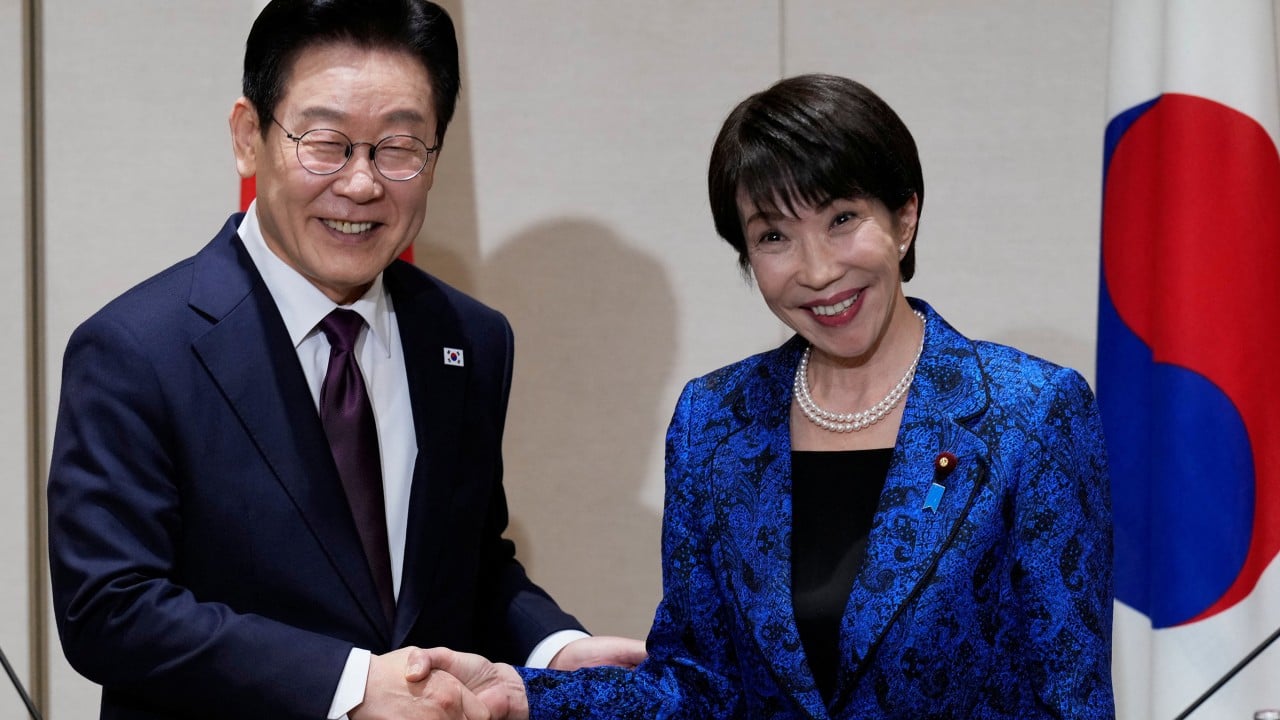
China’s growing naval presence in the waters between Japan and South Korea could give the two neighbours a new incentive to overcome long-standing historical tensions and strengthen security cooperation, according to analysts.
A reported sharp increase in Chinese warships and coastguard vessels passing through the strait that separates the two countries, some operating alongside Russian forces, has raised concerns about Beijing’s expanding maritime reach.
The strait, which links the East China Sea with the Sea of Japan, or East Sea, has become a growing focus of Chinese naval activity, according to a Japanese security institute.
The Struggle for the Arctic, a 216-page book published in September that compiles research by security analysts associated with the Security Strategy Research Institute of Japan (SSRI), concludes that Beijing is stepping up naval operations around Japan due to growing interest in the Arctic sea route.

It found that Chinese naval vessels had transited the strait 22 times in an 11-year span to 2020, with that number soaring to 61 in the past five years.
The long-term strategic goal was securing an unobstructed maritime route to the Arctic Ocean, the book’s authors found.
Beijing has described its naval operations around Japan as routine, consistent with international law and not aimed at any particular country.
But William Yang, a Taiwan-based analyst with the International Crisis Group, said the increase in ships, “and especially the joint operations they are conducting with Russian maritime units poses a potential national security risk” for both Tokyo and Seoul.
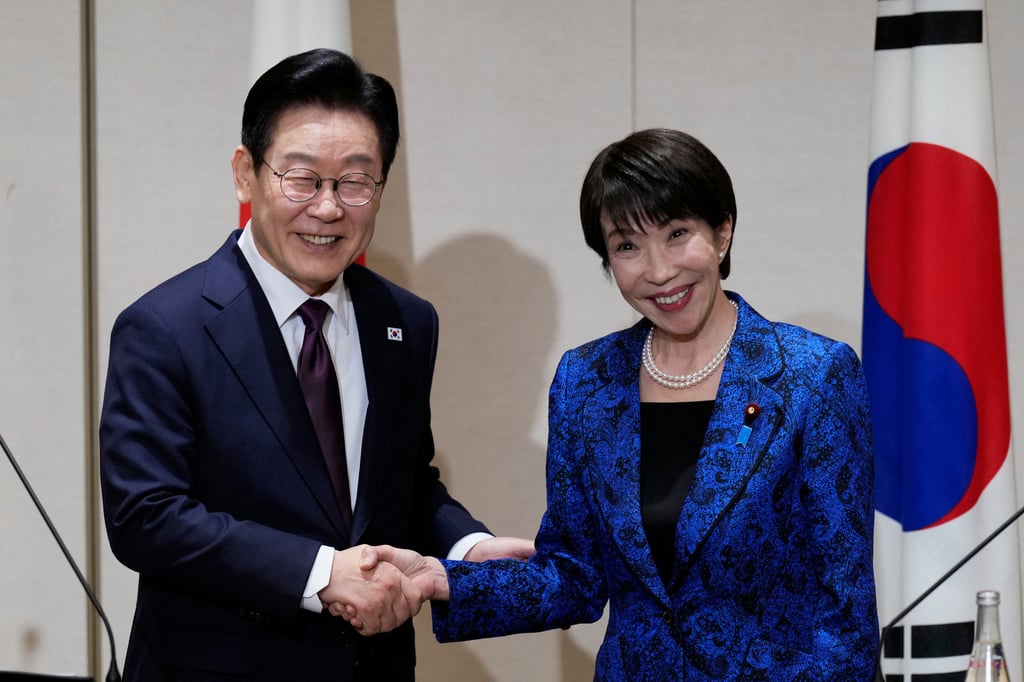
Yang believes the uptick in Chinese naval activity could encourage Japan and South Korea to build on ties that have improved in recent years.
“These are troubling military operations in waters where Japan and South Korea have overlapping security interests,” he said.
“For South Korea … here are joint military operations taking place between China and Russia that justify a more proactive approach and working with Japan instead of relying on the US.”
Tokyo’s relations with Beijing remain in the diplomatic deep freeze, a year after a major rupture sparked by Prime Minister Sanae Takaichi’s comments about a contingency in the Taiwan Strait.
Breaking precedent
Japan and South Korea could work together on surveillance of ships using the strait and aircraft using the air corridor above it, Yang suggested, adding that intelligence could be shared and any Chinese or Russian vessels of interest jointly shadowed.
Over time, cooperation could extend to discussions on countermeasures in a crisis and bilateral exercises, he said.
“There has been very little previous precedent for the two nations’ militaries to carry out exercises together as they have always been trilateral manoeuvres with the US acting as the connecting tissue,” Yang said.
China released its first official Arctic policy white paper in January 2018, outlining its ambition for a “Polar Silk Road”.
Three years later, in March 2021, the Chinese government officially released the outline of its 14th Five-Year Plan, marking the first time the Arctic had been explicitly mentioned.
02:02
Chinese scientists conduct ‘crucial’ expedition in the Arctic Ocean
The SSRI book explicitly linked this to the 6.8 per cent defence budget increase announced at the same legislative session, calling it evidence of an expansionist policy that would require the securing of sea lanes.
Chinese naval vessels had made similar transits through the straits between the islands of Okinawa prefecture, the book noted.
Dan Pinkston, a professor of international relations at Troy University’s Seoul campus, agreed with Yang that coordination and intelligence sharing would be the most straightforward first steps for South Korea-Japan security cooperation.
“Historical issues are still a significant obstacle to an immediately close working relationship between the two, and only time will tell if that can be overcome,” he said.
“But if the intensity of the threat is rising, then so will the desire on both sides to cooperate … If the threat is so dire that it is a question of national survival, then the cultural and historic differences of decades ago will very quickly be overshadowed.”
Yang pointed out that Lee and Takaichi had “already found some common ground”.
“Both sides see the practical benefits to their nations of working together and the need to set aside the historical baggage so they can focus on immediate, practical issues,” he said.
KioskNews shows a cleaned-up reading view extracted from the publisher’s page — the original always lives on their site, not ours.