How Trump's defeat in US midterms might affect Argentina
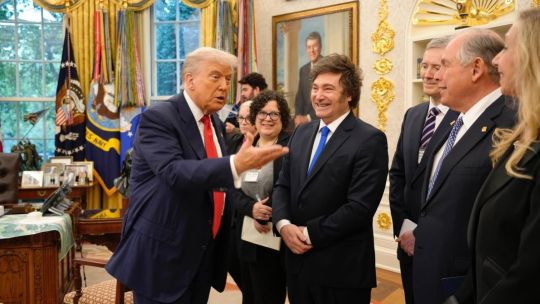
The Republican Party’s defeat in the US midterm elections has raised questions over how much room Donald Trump will have to repeat the direct financial support he extended to President Javier Milei in 2025, should Argentina face further currency turbulence in the lead-up to next year’s election.
Democrats objected to Trump’s unprecedented intervention and, having secured control of both chambers of Congress in Tuesday’s midterms, could seek to block similar assistance in the future. Several legislative initiatives have already been introduced to restrict this type of intervention by the federal government.
However, US Treasury Secretary Scott Bessent has said on several occasions that he would repeat a similar operation, arguing that it had been a good deal for the United States that made the country money.
The key will be to gauge signals from the Democratic Party regarding its approach to Latin America, and Argentina in particular.
Impact
Relations between the two countries have taken on a different dimension in recent months, with the development of the Vaca Muerta mega shale formation in Argentina’s south strengthening strategic ties through the scale of investment being deployed by US companies.
Another factor is the Democrats' position on China and their approach to relations with Beijing. The Trump administration has repeatedly and explicitly demanded that Argentina limit its ties with China through US Ambassador in Buenos Aires Peter Lamelas.
On the financial front, global interest rates, kept high by Trump's policies, have effectively shut Argentina out of international credit markets. Politically, meanwhile, Trump remains Milei's main ally, but has now been weakened, according to a report by the Centro de Economía Política Argentina (CEPA) think tank.
The conflict with Iran, which has cost Washington more than US$43.5 billion, has sent fuel prices soaring. For Argentina, higher oil prices have helped generate a record trade surplus, allowing the Central Bank to purchase US$14 billion.
At current prices, the energy trade balance is also expected to contribute more than US$5 billion by the end of the year. CEPA lists this among the positive effects of Trump's policies so far, alongside the impact of higher global interest rates.
Aid in 2027?
In October last year, the Trump administration intervened in Argentina's own midterm election campaign offering concrete support through a promised US$2-billion currency swap – which in practice amounted to no more than US$2 billion – and direct intervention by the US Treasury in the foreign exchange market.
Bessent and Milei’s Economy Minister Luis Caputo have both argued that similar support could be repeated in 2027.
But if the Republican defeat leads to changes in Trump's Cabinet or a reshuffling of policy priorities, Milei's government could suffer a blow to its access to foreign currency financing next year.
'No bailout'
Democrats have already introduced bills in both chambers of Congress aimed at blocking what they branded the 'Milei bailout': the No Argentina Bailout Act, which seeks to suspend the currency swap, and the American Farmers First Act, designed to compensate US producers affected by competition from Argentine agricultural exports.
A Democratic majority in Congress would not, in itself, prevent the Treasury from providing further assistance, but it would make such a move more difficult and increase its political cost, CEPA warned.
On the financial front, the Milei government faces around US$4 billion in obligations next year and needs US financial assistance.
Until now, tensions with international lending institutions have been resolved because they ultimately yielded to Trump's pressure to continue providing financial support to Milei. But an opposition-controlled Congress and a weakened White House could alter those priorities, CEPA cautioned.
Looking ahead, a Democratic victory could improve global financial conditions while weakening the political backing on which Argentina's economic programme depends as it heads into 2027.
KioskNews shows a cleaned-up reading view extracted from the publisher’s page — the original always lives on their site, not ours.