Opinion: Opinion: LSR, Astha Kunj And The Unfinished Fight For Women's Right To Public Spaces
Last year, five young women from the Cities for Youth Programme in Ajmer decided to set up Apno Thiyo, pop-up chai stops, not just to serve tea, but to create a safe, open, and public space for women to gather and chat.
"It was a case of making women visible over something as simple and basic as hanging out over a cup of tea, an image we usually associate with men,'' says Kalpana Viswanath, co-founder of Safetipin, a social organisation set up in 2013 to work with a wide range of urban stakeholders, including governments, to make public spaces more inclusive for women.
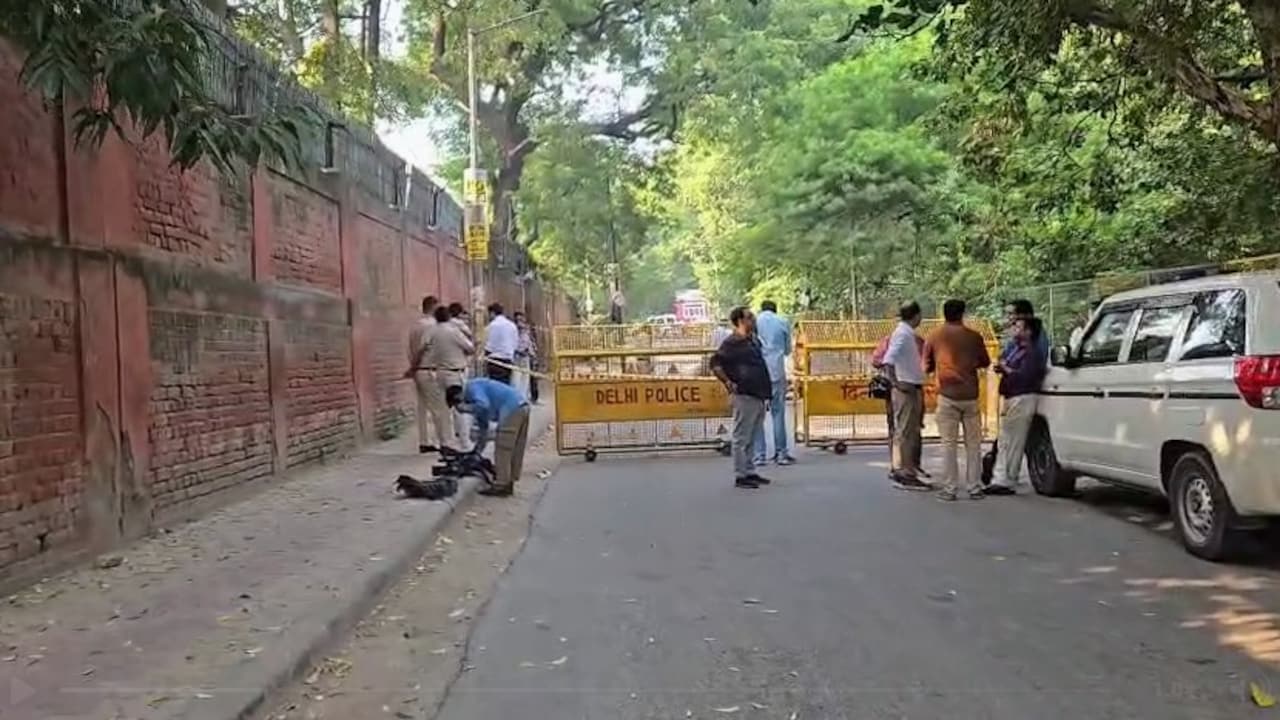
Initiatives like this remain few and far between. As the gang-rape of a 17-year-old at the Astha Kunj Park in Delhi shows the first instinct whenever there is sexual violence against women is to deny them the freedom to use public spaces. In what can only be described as a knee-jerk reaction, the Lady Shri Ram College near the park was shut for a day and classes taken online to safeguard student safety. No one thought the poor lighting and inadequate security around the 142-acre Astha Kunj Park, where the 17-year-old had gone with a male friend, was to blame.
That was until the students brought it to light themselves, underlining repeated requests to ensure safety in and around the college, which is studded with paying guest accommodations but also men who hang out with the purpose of stalking and harassing the young women. It is a persistent threat that was brought home when one of the accused rapists was shot and injured by the police 50 metres from the back gate of the college.
Instead of ensuring better infrastructure for the students, the immediate reaction of the authorities was protectionist. As Viswanath says, "No one has addressed the larger issues. Why is the park adjacent to the college and in the middle of such a busy locality so poorly maintained? Why do men consider a young woman accompanied by a young man to be 'fair game'? Why were the CCTV cameras in the park not working?"
This is when Delhi ranks 16th in the list of cities with the highest number of CCTV cameras, with nine per thousand population or 313,300 cameras. Yet, by all accounts, there is no CCTV coverage inside the park and most cameras at its 29 entry and exit gates are non-operational.
Delhi LG Taranjit Singh Sandhu has ordered a safety audit by the Delhi Development Association of all parks within a week, but it is not a novel step. Safetipin's last Safety Assessment Report of 2019 of 70 public parks, 12 tourist places and eight cinema halls (single screen cinemas) gave Delhi 2.5 out of 5, an average score. But such audits have to be done regularly, given the changing nature of public infrastructure.
Scholars in India have spent a considerable amount of time studying women and their relationship with public spaces. In 'Why Loiter? Women and Risk on Mumbai Streets', a seminal 2011 book based on more than three years of research, authors Shilpa Phadke, Sameera Khan and Shilpa Ranade argued that though women's access to urban public space has improved, they still do not have an equal claim to public space in the city. They also argued that only by celebrating loitering, a radical act for most Indian women, can a truly equal, global city be created.
Many initiatives across India have since then promoted the idea of women who loiter, from the Why Loiter?, a campaign started in 2014 to occupy public streets, parks, and transit at all hours simply to hang out, do nothing, and exist without a stated purpose to the Students' Federation of India's recent Reclaim the Night march on September 1, protesting the gang-rape of a 16-year-old girl from Greater Noida. Women in Kolkata also went on Reclaim the Night marches to protest against the rape and murder of a 31-year-old doctor in the RG Kar Medical College and Hospital.
The LSR students who marched in protest were not merely expressing support for the survivor but also reiterating their right to breathe the "night air".
Wherever women have got opportunity to travel without restrictions, it has made a significant impact on their lives and livelihoods. In June 2023, Karnataka introduced the Shakti programme, providing free passes for women and transgender residents on its state transport buses.
A report on the impact indicates increased employment and enhanced mobility. Reports show a 23 per cent rise in women's employment in Bengaluru and a 21 per cent increase in Hubballi-Dharwad following the introduction of the free travel initiative, while 87 per cent of surveyed women reported that fare-free travel reduced their need to walk long distances, while facilitating regular trips to work, family visits, and pilgrimages. Free bus rides on state transport has also been in existence in Delhi since 2019 through the fare-free public transport (FFPT) scheme started in 2019. A report on the impact by the civil society organisation World Resources Institute shows that between 2019 and 2023, women's share of total daily ridership increased by 20 per cent but without last-mile connectivity, the policy did not necessarily improve overall women's safety.
Clearly, women benefit from access to safe public transport and public spaces.
It is not a policing problem but an infrastructure issue. "The call for safety has to become a shared call for action, a shared responsibility. It has to be an act of solidarity, of creating infrastructures of change with vision," says Blank Noise founder Jasmeen Patheja. "This is an important moment for institutions to step in the role of allyship," she adds. She speaks from experience. Blank Noise started the Meet to Sleep campaign in 2014, creating collective action around the right to surrender to sleep in public parks, and they've partnered with organisations to do 50 such events in city parks, in open grounds, places where there were no parks. by the rocks, a beach and river banks too.
Indeed, many of the students, who were meant to be protected through online classes, were protesting in the streets against the gang rape. They were not indoors on the pretext of safety.
Surabhi Yadav, who lives and works in Bhopal, has documented more than 1,000 women at leisure, and she says: "Our homes, streets, parks, and cities are constantly breaking their promise to women: the promise that says 'this place is yours too'." Who in this city, in this park, on this campus, she asks, is doing the hard work of repairing that breach of trust with its women? Who is making space for this collective grief and all-consuming rage? Who is sincerely asking for women's forgiveness and finding creative, joyful and concrete ways to earn their trust back? Because until that repair work is done and sustained, the life in those places will have a big trust deficit.
Says Yadav, who is the founder of Women at Leisure and Sajhe Sapne, "this trust deficit will lead to fewer women being out and about in the parks freely lingering on the benches with whomever they want, for as long as they want. As long as fewer women are in the park, it will feel less safe which keeps more women away."
And eventually, by making women's leisure a game of permissions, everyone loses by living in the smaller, meaner world that this creates.
KioskNews shows a cleaned-up reading view extracted from the publisher’s page — the original always lives on their site, not ours.