Susan Thornton on US-China ties, post-midterms and averting a new balloon crisis

I’m probably more positive on this than other people because I do think that leader-level meetings in US-China relations are always difficult to put together. And the fact that Trump has done this twice with Xi – once in Beijing and once in Washington – may help regularise such high-level meetings, which we absolutely need to keep the relationship on track right now since we don’t have much else.
I’m not surprised by the negative coverage. The US-China summits are always held to a higher bar when it comes to outcomes of the meeting.
There have been expectations built up over many decades that US-China summits are always a big deal when they happen because they’re very hard to mount, and then they always have to have these long lists of outcomes.
We need to try to normalise these meetings between the US and Chinese leaders if possible. If you have to have a long list of accomplishments all the time, it’s going to be very hard to hold these meetings.
Trump rejects working with China on AI despite Xi’s recent visit
Some argue that the prospect of multiple face-to-face summits this year has put constraints on both sides, especially when it comes to sensitive issues. How could the two sides avoid a repeat of disruptions to bilateral relations, such as the balloon incident in 2023 and the fallout from then-House speaker Nancy Pelosi’s visit to Taiwan in 2022?
In the US, I believe that constructive strategic stability – to the extent that people who agreed to that were really understanding what the Chinese side was talking about – is really about avoiding these worst-case scenarios. Avoiding conflict, avoiding a crisis that leads potentially to a conflict, et cetera.
The key is for both sides to understand what those issues are that could lead us there. And I do think we have been making progress in this administration on those issues.
President Trump is not new to this. He did this before for four years, and it ended quite badly under Covid-19. But I think whenever I’ve heard him speak about that time, it seems to me that he has thought about it and understands what the dynamic was that led things to get so out of hand and doesn’t want to see that happen again.
I think others in the administration also understand this. I think [Treasury Secretary] Scott Bessent and [Secretary of State] Marco Rubio definitely understand that this is what they’re trying to accomplish.
You put that strategic stability on top of all of these areas of difference that we have, and it does make it quite difficult to manage. But I do think with those high-level cabinet officials understanding what the boundaries are, there are additional touch points.
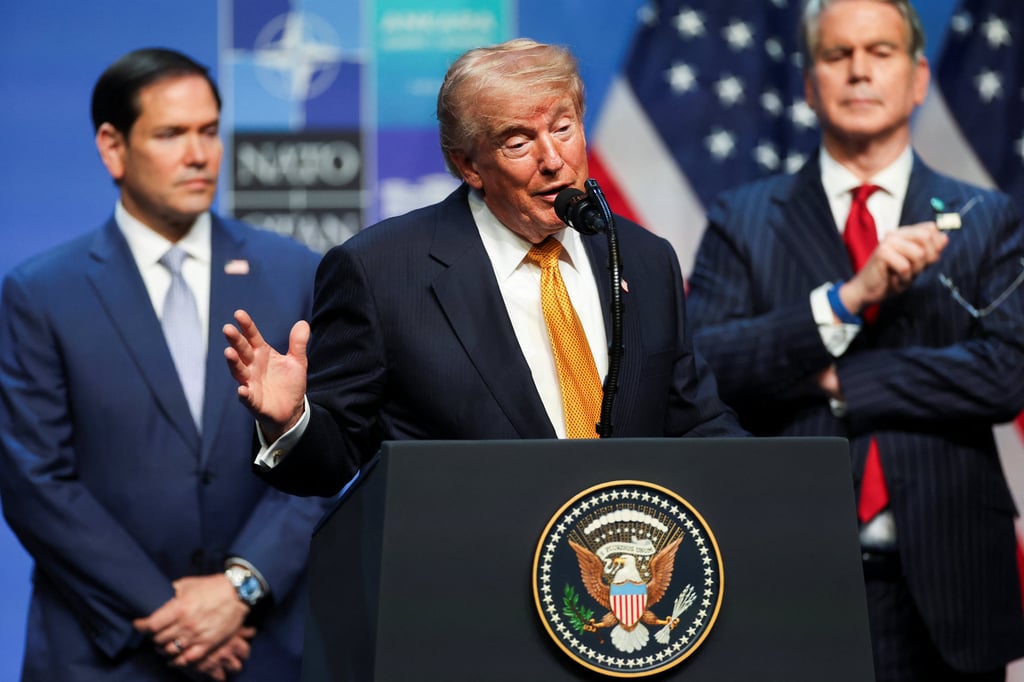
Marco Rubio and [Chinese Foreign Minister] Wang Yi have been speaking more than previously. Scott Bessent has a lot of things on his plate, so it may not be as easy for him to engage regularly with his counterpart, but he has been managing to meet [Chinese Vice-Premier] He Lifeng frequently. And you’ve got a number of economic and trade officials under him and under [US Trade Representative] Jamieson Greer who are plugged in together and talking.
I don’t think the crisis will come in the economic sphere. We can work through those questions and not have a crisis. We’ve really been doing this for quite a long time now.
The crises will come in the security area, most likely, and in a way those are harder because the security bureaucracies in both countries aren’t very connected to one another and don’t really have regular dialogue mechanisms.
We’ve always been talking about having some kind of military-to-military mechanisms for communication hotlines. There’s been a little bit of that in this administration and it’s got a bit improved, but it seems always very unstable. So, I think that’s the potential area that has to be guarded against.
President Trump does know where [Beijing’s] red lines are on Taiwan. That has been a learning curve probably for him. But he has a pretty firm view on that issue now, and I feel like Beijing has been reassured that he understands what the mainland’s position is.
It seems to me that the tension over Taiwan has abated, but the one question that Beijing keeps bringing up concerns Taiwan arms sales. I’m hopeful that the US side can find a way to manage that effectively. We’ve managed it in the past and should be able to do it again. And I think Trump will focus on it and try to take care that it gets done in a way that doesn’t cause a crisis.
How do you view the role of this summit in potentially helping address difficulties and challenges ahead in the US-China relationship?
I see US-China bilateral ties as being in a state of fragile stability.
During the summit in Beijing in May and since then, many Chinese colleagues have been excited about the notion that we’ve been able to put a name on the relationship, so we have a framework within which we can know what we’re working towards, which is a constructive relationship of strategic stability.
Looking at this summit, it’s important that they could meet and normalise that, but it’s also important that we be able to see them meeting in the future. We don’t have those kinds of mechanisms set up yet.
In addition to the leader-level meetings, what would be important to maintain this constructive stability is the institutionalisation of the relationship, which we’ve lost over the last 10 years. We need to start building that back to maintain stability.
The summit in September was the start of an institutionalisation of things that were agreed upon in May in Beijing.
For example, the Board of Trade, which was announced in May but really didn’t do much between May and now because of the summits, was actually pressured to meet, set up working groups and talk to one another. There are groups of people under Jamieson Greer and under [Greer’s Chinese counterpart] Li Chenggang who are meeting and talking through these things. You need a lot more connectivity among professionals if you’re going to have stabilisation of this relationship in any way.
The other area maybe that will move forward is AI, which was also announced in May. Scott Bessent announced that there would be an AI dialogue, and maybe that will meet in Shenzhen.
So, we can start to see the institutionalisation of these things. It’s still not nearly enough between the US and China.
I hope we’ll remember how hard it is to get mechanisms restarted because institutionalisation is a big job and it doesn’t happen overnight.
Trump gave Xi a very high-level reception, breaking some traditional protocols, and that triggered a lot of questioning and even criticism in the US. How do you view that?
Trump wants to appear welcoming and hospitable but also strong, so there was a jet flyover during the military review. A lot of this is just Trump’s personal way of thinking about how he wants to stage events. It doesn’t have as much to do with diplomatic protocol.
There were previous occasions when a president went to meet someone at Joint Base Andrews, so it does have some diplomatic precedent.
But I would hesitate to attach a lot of significance to the protocol.
00:35
Trump winces as fighter jet flies over during welcoming for Xi
Think of all of the things that they did that are highly unusual for a presidential visit. Walking out to look at the presidential helicopter, going over to see the construction of the White House ballroom. All these things are very much a signature of Trump’s way of handling the visit. I think a lot of people just don’t understand this.
That’s the main criticism: it’s very, very long on symbolism, pageantry, pomp and circumstance, and short on outcomes. This may signal a change in US-China summitry.
We used to try to, in diplomacy, trade diplomatic protocol issues and ceremonial issues, which were very high on the Chinese agenda for a visit, for concerns on the US side, for substantive outcomes.
But it’s no longer the case that we can expect that the Chinese are going to make concessions for only protocolary and ceremonial kinds of considerations. I think that is a change in the relationship that we’re seeing.
Both sides offer high levels of protocol and neither side really gets any trade for that. Maybe we can dispense with the ceremony of a state visit in the future and focus more on substantive issues at regular leader meetings.
Do you think that this summit has laid a proper foundation for Trump and Xi to meet at the Asia-Pacific Economic Cooperation (Apec) forum in November and Group of 20 (G20) in December? The Chinese side has called 2026 a “big year” for bilateral relations, with the two countries’ leaders having the chance to meet face to face four times. But what about next year? How could the US and China keep up this head-of-state diplomacy?
They will have to make a big effort. This is why I think it is positive that President Trump seems to really value his meetings with President Xi and really wants to continue to communicate with him directly either via face-to-face meetings or other ways.
I hope we’ll take advantage of that because that hasn’t always been the case with US leaders in the past. That is an important advantage that Trump offers in this very difficult time in US-China relations. He’s open to talking to President Xi anytime, I think.
I would like to see if they could connect more on the phone.
Next year they are probably not going to travel as much as they did this year. And that’s another reason the relationship has to be institutionalised in the way that we’ve been talking about. There’s such a thin layer of professional expertise in the government that is plugged in to the other side, and that is probably not going to change too much over the next couple years.
The other thing we have to worry about is that if we institutionalise the relationship under this administration, what’s going to happen in the next administration? I hope the next administration would keep whatever institutionalisation has been started and build on that, not just try to always do their own thing. That’s not going to be a good way for us to proceed with the relationship.
There has been discussion that the Apec gathering in November could open scheduling windows for a US-Russia, China-US-Russia or Trump-Kim Jong-un summit. How do you view the likelihood of these potential bilateral or multilateral meetings taking place?
It definitely raises possibilities for dramatic diplomacy that could certainly appeal to President Trump.
President Trump has already invited [Russian President Vladimir] Putin to come to Miami for the G20 summit, and it’s likely that he’ll attend. It’s creating some ripple effects in Europe because they may or may not be too pleased that he’s coming, but I think that will all be worked out.
President Trump still sees himself as a broker of peace, and so he wants to create these opportunities for dramatic things to happen and big changes in some of the problem areas that we see. Certainly the Russia-Ukraine war is one of them, but North Korea is another one.
We know that he wants to meet again with [North Korean leader] Kim Jong-un, and that has not happened yet. If that could happen in Shenzhen during Apec – several people have mentioned this as a possibility, or that Trump could do it on his way to China – those would be dramatic opportunities.
We were talking earlier about the calendar for next year, and then Trump is getting towards the end of his term. It seems like he might want to do something in this area.
It might make it more attractive for Trump to actually go to Shenzhen and for Xi to come to Miami if there is an opportunity for progress on Ukraine or the North Korea nuclear issue.
It’s very hard to see the preparation going far enough between now and November or December to make dramatic successes out of such a meeting, however. Usually, such things take a lot more preparation, so I would be sceptical on that score. But I have heard a lot of people talking about such possibilities, so perhaps they will materialise.
01:52
Xi says China and US have responsibility to ‘manage AI for good’
You mentioned the AI dialogue. The US and China appear to be taking different approaches to developing this technology. There is also debate within the US over whether the development of advanced models should be slowed. Given these international and domestic differences, how do you view the prospects for the bilateral AI dialogue?
I do think it’s going to be extremely difficult.
I participated in US-China discussions on mechanisms to report cyber incidents. The AI dialogue is not exactly the same as that, but in the area that the US is concerned about, I think it’s quite similar and also just as difficult, if not more so.
The US and China have different concerns, and it’s very hard for the two of them to talk to each other because they’re just coming from completely different vantage points.
The Chinese government – and Chinese interlocutors that I’ve talked to reflect this – seems to be quite confident in its ability to control its AI operators and make sure that things that it doesn’t want to have happen in the AI sphere will not happen. Is it overconfident? I am concerned they are not really thinking about the possibilities of loss of control on the Chinese side with AI.
They’re mostly worried about what’s happening on the US side and the possibilities of loss of control, the fact that the US government doesn’t control these private companies, that the companies themselves are reporting a lot of things that are somewhat hair-raising and fear-inducing. The US government seems to be thinking that China is going to have the same concerns it has, whereas it really doesn’t.
And also, the two systems don’t match up in terms of reporting, transparency and other things that you would need to talk about if you were going to try to share best practices or discuss a strategy for keeping incidents from getting out of control.
Trump said that the line for AI safety in the US is the Department of Justice, in other words, the legal system, and that is just not the way the Chinese are going to operate in terms of AI safety.
It’s going to be very hard from an institutional and bureaucratic set-up perspective, this security-to-security bureaucracy mistrust. The Chinese system is just not given to being transparent about these things. Chinese media have focused on various US AI operators who are trying to do the right thing by self-reporting accidents that have happened.
In the Chinese system, these things would not be publicly reported. China has been criticising the US AI labs and taking advantage of this moment to make itself look like a more responsible actor, when I’m not sure that is fully justified.
It’s also very hard to understand how the US and Chinese governments would put together delegations that would look at all similar and have the same kind of expertise. So, I find it a little bit head-scratching as to how this is going to go ahead.
It’s important to get some of these people in the room together and have regular discussions. Maybe they can build up a little bit of personal familiarity that will help us at some point in the future when we hit a real problem. I think that would be an advantage.
Xi has invited 100,000 young Americans to visit China over the next five years. You travelled to China this year and last year to attend events on subnational cooperation between the two countries. What is your read on the state of bilateral local and people-to-people exchanges? Are they still constrained by factors such as visas and flights? There have been recurring calls to reopen the US consulate in Chengdu and the Chinese consulate in Houston. How possible do you think that would be?
This area is still a source of difficulty, even though the two governments have pledged to make improvements.
I noticed that they did mention the number of flights. Certainly, they talked about students. But the question is how to make this happen. There’s still extreme suspicion in local-level, people-to-people exchanges, mostly coming from, to be honest, local-level politicians. There are some organised groups that are also pushing against people-to-people exchange between the US and China.
I don’t see much change in this. I don’t know, if the US midterm elections in November see a huge shift in the Congress, what might happen there. Most of the local anti-China legislation is coming from Republican states, so it depends a little bit on domestic politics.
I don’t know if the Democrats will focus on this as an issue, but in general Democrats have been much more open about people-to-people travel back and forth. I don’t know if they can affect the atmosphere on this issue. It is something to watch.
Certainly, the downturn in Chinese students is noticeable. I work at Yale University, and we’ve got a number of Chinese students who were unable to come for the start of the semester because they didn’t get their visas in time.
Visas are still an issue on both sides. I know people who are having trouble getting visas to go to China, so it’s a two-way thing, and it’s very unfortunate. But it’s really hard to see where a push is going to come from in the US to fix this problem.
We should keep pressuring both sides to make improvements here. And again, the devil’s in the details. These two security bureaucracies have a deep, deep level of mistrust.
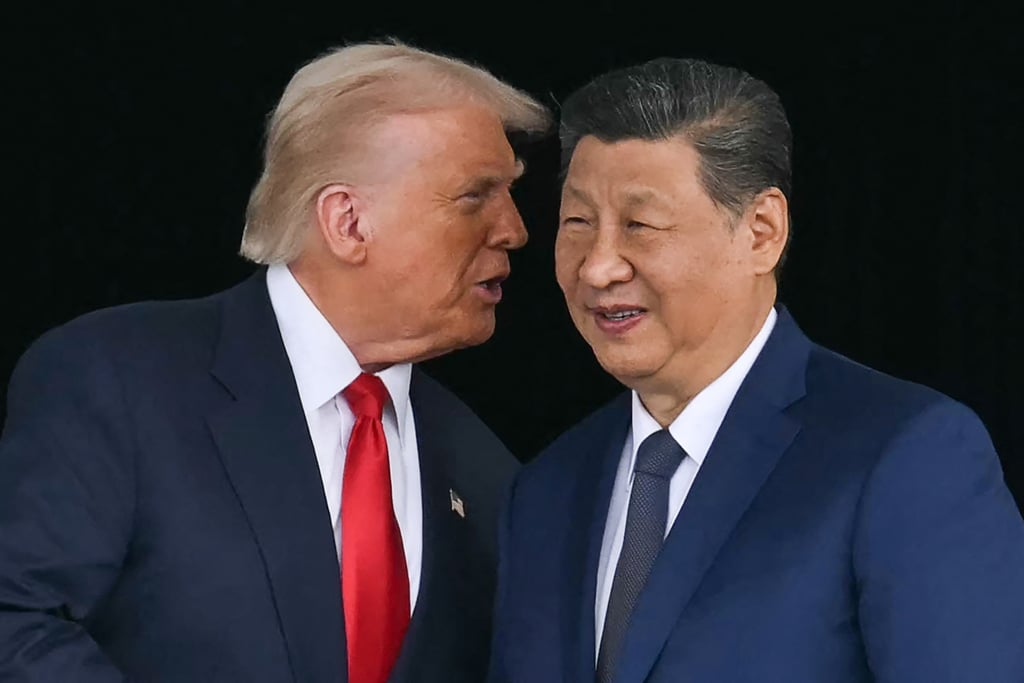
Treasury Secretary Bessent said China and the US had agreed to extend the trade truce for two months, until January 10 next year. Why only two months rather than a longer period? What could the two sides achieve during this time frame?
To me, it is a bit surprising that the extension of the Busan trade truce was so minimal. I think two months is about the minimum that they could have agreed.
What that says is they did not want the truce to end because neither side is prepared for what might happen or the consequences of ending that truce. But they couldn’t come up really with any agreement to extend it, so they’ve just basically rolled over the agreement from last year.
Both sides were probably hoping that they would be able to extend the truce and improve it, but apparently that didn’t happen. It’s probable that they didn’t have enough time to do that, because these kinds of negotiations take quite a bit of time and preparation. And you can’t just have a meeting on a Sunday in New York between top officials and expect to hammer these things out in that kind of time frame. So, my suspicion is that they did not manage to agree on any of the improvements in the rollover that they wanted, and they didn’t want to roll over the current truce, which is kind of minimal, for too much of an extended period of time because they still hope to get something better.
Probably the January time frame is not much time to do anything either. But at least if there is a meeting in November, then that gives another forcing function, and there’s also the G20 summit in Miami in December, that’s a lot of connectivity between now and January 10. So, there is a possibility of getting something done there, although it will be difficult.
And then we’ll hit January 10, and the truce will probably roll over one way or another. They won’t want to lose this truce, I don’t think, in January either.
The one factor that probably was pushing on the US side is the midterm elections coming up in early November. I think the US side wanted to get something that would get us past the midterm elections and give some comfortable margin after that to assess where things are going.
Observers in both countries argue that China is becoming more confident and increasingly sees itself as Washington’s equal, while perceptions of continuing US decline are growing globally. The narrative of “the East is rising and the West is declining” continues to surface in public discussions. What do you think about this? Before the September summit, some argued that China was in a stronger position at the negotiating table because of the war on Iran. If that is the case, how long could that last?
I do think China is more confident, reasonably so. And certainly, the US has been losing influence on the international stage for a period of time. In the wake of the war in Iran, that has accelerated, probably.
The question, really, is whether China is making gains from the losses that the US is inflicting on itself. I think China has made some gains, but it is not a slam dunk yet that China has made equal gains to the US’ losses. In other words, I don’t see that China is somehow displacing the US.
The interesting thing to watch is we’ve seen President Xi go to the Shanghai Cooperation Organisation summit in Kyrgyzstan and the Brics summit in India, talking in many of his speeches about China being a responsible player, that China stands for a continuation of globalisation, openness and free trade, and I think what people see China doing in practice is somewhat different from that. Or at least they are sceptical that this is what China is standing for and what China is all about.
In fact, a lot of countries, especially in China’s neighbourhood, continue to have concerns about China and are actually threatened by China. And China hasn’t really done much to reassure those countries that they shouldn’t be afraid of China. I think this is the dilemma China has.
It wants to take advantage of this moment when the US is on the back foot, clearly, in Iran and elsewhere, and it has taken some advantage, but it has not managed to really convince people of what its ambitions and intentions are. I think that is going to continue to be a tough balancing act for China.
I hope China will start to show in its actions more what it’s actually thinking about for the long term, and I think that will be important in terms of the narrative too out there in the world.
The US is clearly in a transition period. Domestic politics are at a turning point, and we’re going to have to work through that. So, it’s going to be a period of time. Whether China can take advantage of our domestic transition is really a question for China’s own policy and diplomats to work out.
US allies such as Japan and the Philippines are strengthening their security ties, while tensions with Beijing continue to simmer in the South China Sea, the East China Sea and the waters east of Taiwan. Would this make it more challenging for Beijing and Washington to manage their bilateral relationship?
As for the South China Sea, some Chinese experts have said that Beijing’s goal is not to expel US influence from the region and that it could consider opening certain island infrastructure to US vessels to help ease tensions. Do you think this is realistic?
I don’t know about that specific proposal, but certainly China can’t be happy about what it’s seeing in terms of its immediate neighbours linking up in tighter coalitions for their security.
China hasn’t been doing much to reassure them that they shouldn’t be worried about China, and so that’s going to produce this natural kind of build-up of defence and military capability and trying to link with other countries in the region to strengthen their posture. It’s exactly what you would expect. And it can’t be something that China sees as a good development.
I have to say that it’s really hard for these countries to see in the future how China is going to not behave in a very kind of domineering way towards them. This is how things have been playing out in the region, which is why they seem to be so eager to have US engagement stay in the region.
I think that’s a big question mark right now, which is making people in the region even more worried about the future. How to assure these countries about their future security, their relationship with China? How is China going to treat these countries? That’s a huge question. And right now, it’s not going so well.
Taiwan has, of course, always been at the centre of relations between Washington and Beijing. That issue is a bit special and separate from some of these other issues.
But the same dynamic is really at play there, the fear of what the relationship with Beijing would be like in the future. I think Beijing hasn’t given very clear or positive signals about that to anybody yet.
Confidence is one thing, but how you wield your confidence is very important.
KioskNews shows a cleaned-up reading view extracted from the publisher’s page — the original always lives on their site, not ours.