Since 1934, the Federal Duck Stamp has raised $1.3 billion for habitat conservation

Three hundred thirty-one gorgeous duck stamps. Fifteen finalists. Two days of fierce competition. One winner.
For the fourth time, Robert Hautman of Delano, Minnesota, is the winner of the 2026 Federal Duck Stamp Art Contest. His acrylic painting of a pair of long-tailed ducks (Clangula hyemalis)
will be made into the 2027-2028 Federal Migratory Bird Hunting and Conservation Stamp, aka the Duck Stamp. This annual bird stamp raises roughly $40 million per year to support wetland habitat conservation in the National Wildlife Refuge System.
“The Federal Duck Stamp Program is one of the most successful conservation programs in our nation’s history. Since the program began in 1934, Duck Stamp sales have helped protect millions of acres of wetland habitat for waterfowl and countless other species. It brings together art, wildlife, conservation, and the American outdoors,” Service Director Brian Nesvik said in a statement.
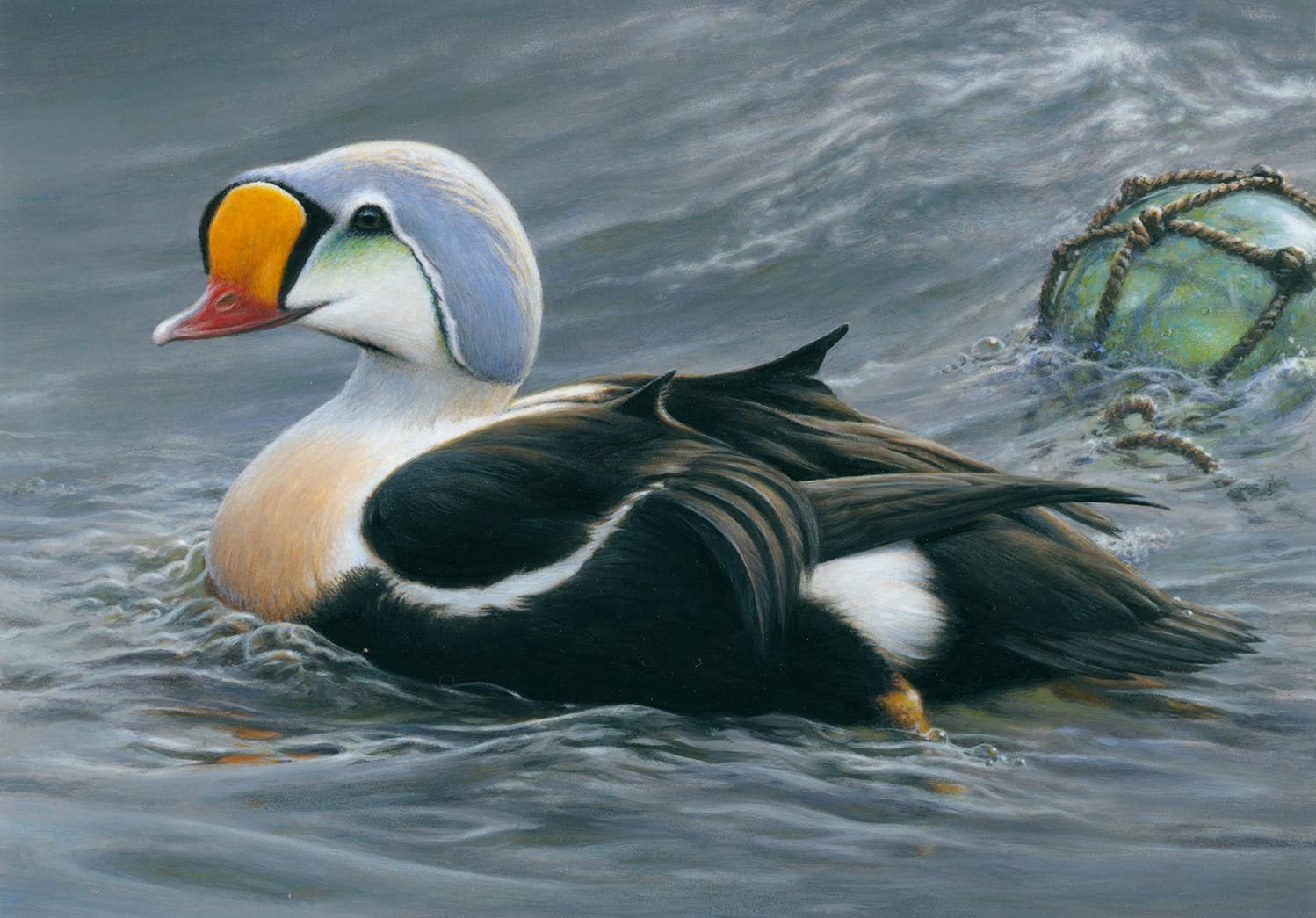
Madison Grimm of Wallace, South Dakota, placed second with an acrylic painting of a king eider (Somateria spectabilis). Joseph Hautman of Plymouth, Minnesota, took the third place prize also with an acrylic painting of a king eider.

The eligible species for this year’s Federal Duck Stamp Contest were the long-tailed duck, king eider, cackling goose (Branta hutchinsii), blue-winged teal (Spatula discors), and mottled duck (Anas fulvigula). All of the entries can be viewed in the online gallery of the 2026 Federal Duck Stamp Art Contest entries.
The Federal Duck Stamp has been sold to hunters, birdwatchers, outdoor enthusiasts, and collectors since 1934. In the process, it has raised over $1.3 billion to conserve over 6 million acres of habitat. The funds raised from the sale of Federal Duck Stamps go toward the acquisition or lease of bird and wildlife habitat for the federal Refuge System. These new areas provide the public with more access to places to hunt, fish, birdwatch, hike, and more. In total, the Refuge System includes 570 wildlife refuges all over the country, 70 fish hatcheries, and 20 million acres of wilderness for animals to live in and the public to enjoy.
Waterfowl hunters age 16 and older are required by law to purchase and carry the current Federal Duck Stamp. Many birdwatchers, conservationists, and stamp collectors, also purchase the stamp to support habitat conservation. A current Federal Duck Stamp can also be used for free admission to any national wildlife refuge and can be purchased through the U.S. Postal Service or U.S. Fish and Wildlife Service.
KioskNews shows a cleaned-up reading view extracted from the publisher’s page — the original always lives on their site, not ours.