Motorists wary as NCAP implementation starts in parts of Metro Manila
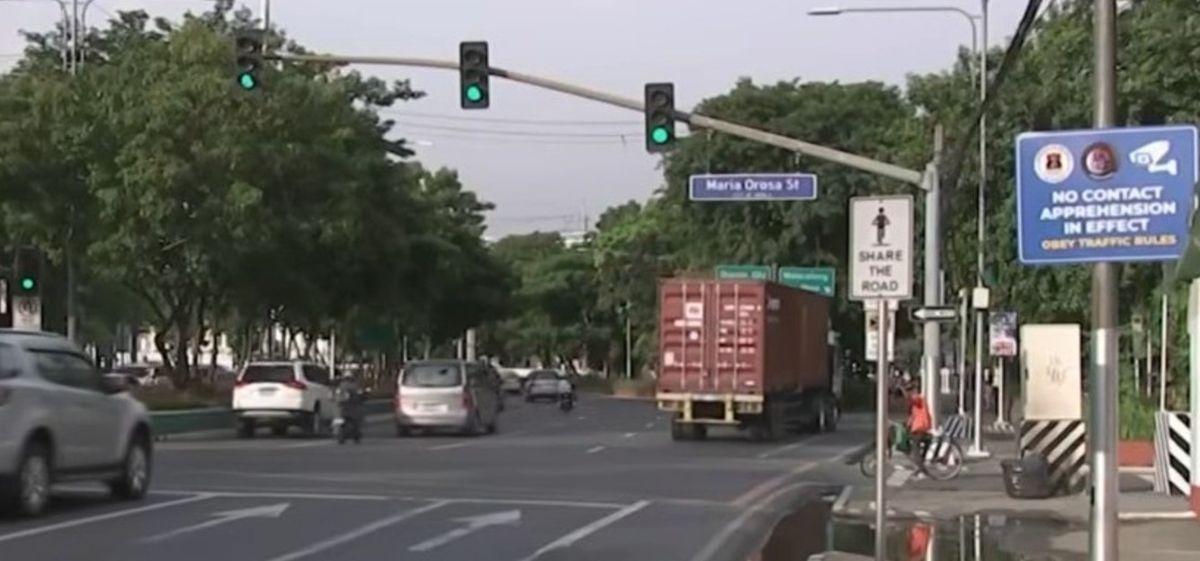
Motorists expressed mixed reactions as the No Contact Apprehension Policy (NCAP) resumed implementation in parts of Metro Manila on Monday.
Some of them welcomed the measure while others raised concerns about possible erroneous traffic violations and stiff penalties, according to reports of Mariz Umali and Bam Alegre on GMA News’ Unang Balita.
NCAP resumed in Manila, Quezon City, Parañaque, Muntinlupa, and San Juan, where high-resolution CCTV cameras are being used to monitor traffic violations and capture vehicle plate numbers.
NCAP is a traffic enforcement system that uses closed-circuit television (CCTV) cameras, digital cameras and other technology to detect and record traffic violations. Unlike traditional traffic apprehension, motorists do not necessarily have to be stopped by a traffic enforcer on the ground at the time of the violation. The recorded images or videos are reviewed and processed, and then a notice of violation may be issued to the vehicle owner.
In Manila, motorists interviewed by GMA News had differing views on the policy.
One motorist said he supports NCAP, saying it could encourage motorists to follow traffic rules and become more disciplined on the road.
However, another driver said he was against the policy because motorists could be ticketed for circumstances beyond their control.
“Hindi naman ako driver na violator pero may mga bagay na hindi mo ginusto. Talagang nagkaroon ka ng problema sa pupuntahan mo tapos hindi naman, tapos matitiketan, guhit lang kapiraso. Nakita ko sa ibang kwento ng kaibigan ko nga isang guhit lang tapos nag-ano na agad,” he said.
(I'm not a driver who violates, but there are things you don't intend. You really had a problem with where you were going and then you get a ticket, just for a piece of a line. I heard from a story of my friend that it was just a line and then it was already counted as a violation.)
In Parañaque City, some motorcycle riders said they had no concerns about NCAP because they follow traffic rules.
But one motorist said the government should carefully consider the policy because of the high penalties that motorists could face.
A taxi driver described NCAP as an additional burden, particularly for drivers who are already struggling to earn enough from their daily trips.
Interviewed on Unang Balita, Manila Traffic and Parking Bureau Chief of Operations Wilson Chan said upgraded and high-resolution CCTV cameras are capable of clearly capturing traffic violations and vehicle plate numbers.
Among the violations that can be detected are improper lane changes and crossing solid lines.
The violations covered by NCAP follow those under the Metro Manila Traffic Code and the Single Ticketing System with fines ranging from P500 to P3,000 depending on the offense.
Chan said the rules and standardized fines are generally the same among Metro Manila local government units implementing NCAP.
Motorists who believe they were wrongly cited may file a protest online or at the concerned traffic office within 10 days from receipt of the notice of violation. The case will then be reviewed by the adjudication board.
If the violation is found to have been incorrectly issued, the ticket may be voided.
Chan acknowledged that there had been instances in the past when motorists were issued violations that were later found to have valid explanations, such as being forced to change lanes because of road construction that was difficult to see at night.
Valenzuela City was initially expected to be among the cities resuming NCAP on Monday but temporarily suspended its implementation because of ongoing road construction in the city.
In Manila, authorities said the initial rollout on Monday was being conducted as a dry run, with motorists committing violations to be warned and informed first.
Actual penalties will be imposed once the full implementation takes effect.
The resumption of NCAP followed the Supreme Court's dismissal of petitions challenging the policy and the lifting of the temporary restraining order that had stopped its implementation.
Chan defended the return of NCAP, saying the absence of the system had affected traffic discipline and was accompanied by an increase in road accidents.
He said data from Manila traffic authorities showed that accidents in the city dropped by more than 60% during the previous implementation of NCAP. —KG, GMA News
KioskNews shows a cleaned-up reading view extracted from the publisher’s page — the original always lives on their site, not ours.