It’s not just awkward optics. Wilson’s 90-year lease plan could backfire
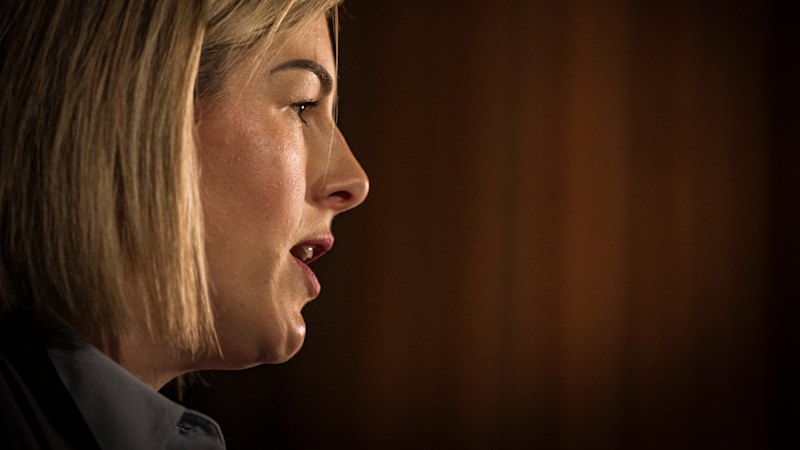
The final battle of the 2026 Victorian state election campaign will be fought on the banks of shit creek.
The Jess Wilson-led Coalition, having promised to balance the state’s books by 2032, revealed on Thursday that this is dependent on a once-off, $9.2 billion windfall from leasing for 90 years the treatment and disposal of Melbourne’s sewage.
Labor, having closely examined and decided against doing something similar, will spend the next two days warning about the risk of spiralling water bills. If that doesn’t work, you can expect your phone to be deluged by malodorous images of rivers of poo and turds washing up on our beaches.
The Coalition plan is to lease for close to a century the state-owned Western Treatment Plant in Werribee, the Eastern Treatment Plant in Bangholme, 400 kilometres of sewerage running beneath our streets and the nine pumping stations that keep our wastewater flowing.
It is a politically fraught idea, in no small part because of the unhappy experience of UK residents, who since the Thatcher government privatised its water authorities in 1989 have seen their bills outpace inflation and a lack of investment compromise infrastructure used to transport and treat wastewater.
This explains why Wilson chose to announce one of her boldest policies at the last possible moment – after more than 2 million Victorians have voted – along with the Parliamentary Budget Office’s costings of the Coalition’s other campaign promises.
She assured that the Essential Services Commission would continue to regulate water prices after the sewerage assets were leased.
The Coalition believes the bottom line of its total election platform – $19.9 billion less debt than Victoria would otherwise accumulate by 2029-30 -- justifies the political risk. The PBO calculates that reducing net debt at this scale would shave $2.7 billion from the state’s total interest payments over the same timeframe.
Wilson rightly points out that the annual interest bill, a figure that, according to Treasury’s most recent statement, is forecast to nudge $12 billion by the end of the forward estimates, is “cannibalising” the budget.
But to achieve its fiscal targets, a Coalition government will be heavily reliant on getting what it says it will from the long-term lease of sewerage assets.
This is awkward for Wilson, who, when asked just three months ago whether she would privatise Melbourne Water, emphatically ruled it out.
“We have never considered this, and I am not going to go to the election and suggest in any way, shape or form that this is a policy,” she told the ABC’s Patricia Karvelas on August 5.
“We’re not touching it!”
Wilson insists her plans announced on Thursday do not break that promise, that leasing a public asset is different to privatising one, and that selling off all of Melbourne Water is a different proposition to leasing its sewerage assets. She denied that she was dancing on the head of a pin.
“I reject that,” she said. “We’re not privatising Melbourne Water. What we are doing is offering a 90-year lease for the sewerage assets to bring the interest bill down in this state.”
Semantics aside, the more substantive issue is whether the policy stacks up.
Melbourne Water is part of Victoria’s public non-financial corporations sector. This means that its assets, expenditure and revenue do not impact the state government’s operating budget. It is a profitable business that currently gets a 4.1 per cent return on sewerage assets it owns.
RMIT Emeritus Professor of Public Policy David Hayward says that by effectively splitting Melbourne Water into two businesses – one publicly owned and one private – the Coalition plans to shift an off-budget revenue stream to an on-budget saving.
This is clever accounting, as far as the budget goes. It also diminishes the value and profitability of the parts of Melbourne Water – including the provision of drinking water – which will remain in public hands.
The most contentious figure associated with the policy is the 90-year expanse of the lease. It is difficult for anyone, whether PBO officials, Department of Treasury and Finance officials or expert consultants brought in from outside, to make assumptions about what the value of a dollar will be 90 years from now – an essential calculation when figuring out a fair price.
The Coalition took to the last two election proposals to lease Melbourne’s sewerage rights for 50 years.
When the Andrews government was looking to offload the Port of Melbourne, it investigated the idea of a 99-year lease before pulling it back to 50 years.
Earlier this year, then-treasurer Jaclyn Symes and finance minister Danny Pearson looked at a 40-year lease of Melbourne Water sewerage assets. The work done for them suggested a lease price of between $4.5 billion to $5.5 billion. Doubling the lease does not double the price.
The government concluded that, rather than leasing the sewerage assets, it would be better off booking a dividend – known as a capital repatriation – from Melbourne Water.
KioskNews shows a cleaned-up reading view extracted from the publisher’s page — the original always lives on their site, not ours.