Homeowners win bitter land row after neighbours paved over garden for new driveway

A railway expert could face having to tear up a drive at his £615,000 home after an "acrimonious" row sparked when he paved over part of his GP neighbour's garden.
Dr Piers Connor and Prof Christine Pasquire clashed with their neighbours Dr Dawn and Richard Moore-Elphick after they ordered workers to install a block-paved driveway in 2017.
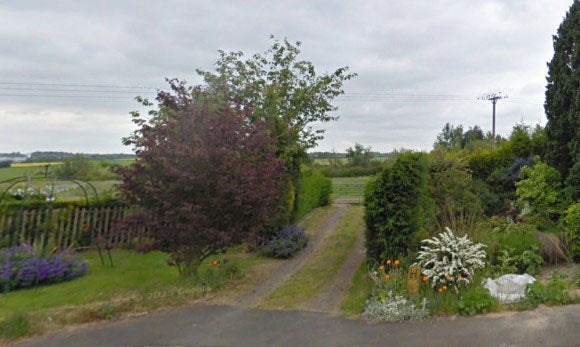
The driveway was intended to make it easier for them to drive wide vehicles into a horse paddock they own next to their house in Kirby Bellars, Leicestershire.
Dr Connor, a renowned expert on railway operations who advised on the Channel Tunnel project, moved into his home in 2012, while the Moore-Elphicks moved next door two years later.
But the two couples soon fell out over the tapering 1.4-m wedge of land.
By 2021, the GP and her husband were accusing their neighbours of “land grabbing” part of their garden for the driveway and threatening to "cut through" and remove the section of paving that strayed onto their land.
The case ended up before a judge, with Dr Connor and Prof Pasquire claiming they had legally gained adverse possession – or squatters' rights – over the land.
To gain rights to land via averse possession, a person has to prove that they have had unchallenged physical possession of the disputed land for at least 10 years, for example by enclosing it inside a fence, and that they genuinely believed that it was part of their own property for all that time.
Representing themselves before the First-tier Tribunal, Dr Connor and Prof Pasquire's arguments included claims that because parts of their vehicles and those of previous owners of the house – including wing mirrors – had regularly passed over parts of the disputed land, that amounted to having taken control and possession of the strip.
But after a two-day hearing, Judge Ewan Paton rejected their case, declining their bid to have the parcel registered in their names.
The judge found Dr Connor and Prof Pasquire had not been in possession of the land long enough to succeed in their claim.
He added that stones laid at the entranceway to the field by a previous owner of the house to make it easier for vehicles to drive across the grass entranceway had also not amounted to them taking control and possession of the disputed strip.

“In this, as in many such apparently acrimonious neighbour disputes, the most recent events, including the confrontations and mutual allegations dating from the dispute’s inception, are generally of the least and probably no relevance,” he said.
“Dr. Connor['s]...evidence was that they had always believed that they owned the whole of the accessway right up to the hedge, which they understood was a boundary feature.
“Completely excavating the ground, and laying a brand new block paved driveway ... amount to an act of factual possession of all the areas it covered. I do not consider that the initial basic stone laying ... went this far.
“The same applies, with greater force, to acts consisting merely of passing over, e.g. with parts of vehicles, such as their wing mirrors, someone else’s land.”
The judge heard that Dr Connor and Prof Pasquire had begun developing part of the disputed land in 2017, five years after moving in.
A large leylandii hedge planted by the previous owners of the GP's house ran along the edge of the disputed parcel of land, but was ultimately cut down by the Moore-Elphicks around five years ago.
In his evidence in the “apparently acrimonious dispute”, Dr Connor said he and his partner had “always believed” they owned the entire “accessway” right up to the leylandii hedge which they understood was a "boundary feature”.
They only started to question this when they began researching the title plans, the tribunal heard.
But the Moore-Elphicks’ barrister, Christopher Hudson, labelled the couple next door as “opportunists” or “land grabbers” with no solid claim to the disputed land, said Judge Paton.
Securing the tiny “wedge” of land was probably the key to improving their driving access to the horse paddock, said the judge, continuing: “That is the part of the block paving which the (Moore-Elphicks) threatened to diagonally cut through and remove from use by the applicants.”
Giving his ruling, the judge said: “In 2017, the applicants, through contractors, excavated most of the previous surface of the now disputed land, along with a larger portion of what is indisputably their own land, and laid a large block paved accessway, to improve the access to the field/paddock part of their title.
“I consider that this case is really a dispute about access, masquerading as one about title; and that the applicants have – unfortunately – probably made the wrong application to meet their immediate concerns.
“The applicants clearly wish to have a slightly wider berth and entrance arc for vehicles passing and repassing to and from their field. The relatively small - maximum 1.4m wide – ‘wedge’ abutting Hunters Rise is the key element of this.
“That is the part of the block paving which the respondents threatened to diagonally cut through and remove from use by the applicants. While there is no evidence either way, expert or otherwise, as to whether the loss of that ‘wedge’ would make vehicular access more difficult, merely less convenient, or wholly impossible, I can see why the applicants would want to have that area available for such use.”
But he concluded: “The applicants have, I find, only been in factual possession of, with an intention to possess, such part of the disputed land as is block paved since 2017, as conceded by the respondents. Prior to that, neither they nor their predecessors ... were in such possession of it.”
He directed the Chief Land Registrar to reject their application for registration of the land in their names.
KioskNews shows a cleaned-up reading view extracted from the publisher’s page — the original always lives on their site, not ours.