8 Fantasy Books With the Most Interesting Characters, Ranked

Diego Pineda has been a devout storyteller his whole life. He has self-published a fantasy novel and a book of short stories, and is actively working on publishing his second novel.
A lifelong fan of watching movies and talking about them endlessly, he writes reviews and analyses on his Instagram page dedicated to cinema, and occasionally on his blog. His favorite filmmakers are Andrei Tarkovsky and Charlie Chaplin. He loves modern Mexican cinema and thinks it's tragically underappreciated.
Other interests of Diego's include reading, gaming, roller coasters, writing reviews on his Letterboxd account (username: DPP_reviews), and going down rabbit holes of whatever topic he's interested in at any given point.
Sign in to your Collider account
There's a myriad of factors that can make a fantasy book a masterpiece, whether that's hugely creative and intricate world-building, a tightly-paced plot, or—of course—some exceptional character writing. It's one thing for a fantasy book character to be cool or simply iconic, however, and a wholly different thing for that character to be interesting. We're talking about heroes, villains, and people in between who have deeply intriguing backstories and personalities, the kind readers would love to have a conversation with.
From award-winning science fantasy masterpieces like the groundbreaking The Fifth Season to foundational classics of the high fantasy genre like A Game of Thrones, there have been eight particularly exceptional fantasy books throughout the years which have noteworthily interesting characters. These are novels which are absolute masterclasses in character writing, proving just how important it is for fantasy to have characters readers constantly want to learn more about.
8 'The Fifth Season' (2015)

N. K. Jemisin made history with her Broken Earth trilogy, which was the first trilogy in history where every volume won the Hugo Award for Best Novel in consecutive years. It all started with The Fifth Season, one of the best science fantasy books published since 1990, about a woman named Essun who embarks on a desperate journey across a disaster-prone supercontinent, in order to rescue her kidnapped daughter and avenge the murder of her young son.
Jemisin imbues The Fifth Season's ensemble with psychological realism and diverse perspectives.
A lot of praise is often thrown at The Fifth Season's fun plotting, ambitious structure, and delectably experimental prose, meaning that its fascinating character writing often ends up going awfully underappreciated. Rather than writing a book with typical hero or villain archetypes, Jemisin imbues The Fifth Season's ensemble with psychological realism and diverse perspectives shaped by trauma, obsession, and the fight for survival in a broken world.
7 'The Lies of Locke Lamora' (2006)
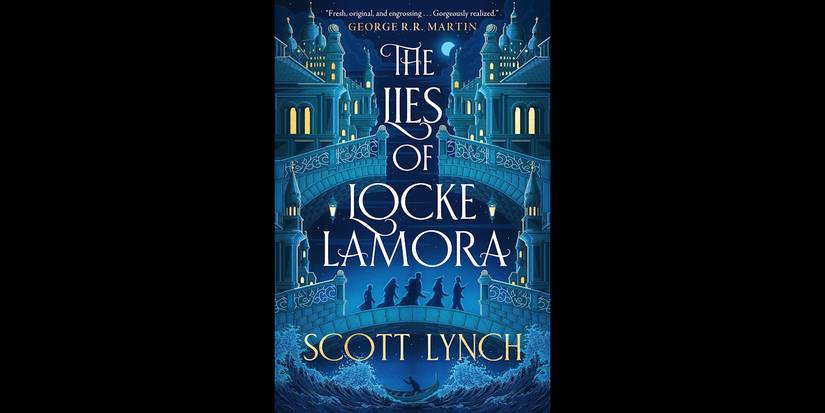
Often described as a kind of fantastical Ocean's Eleven, Scott Lynch's The Lies of Locke Lamora is one of the most perfectly-written high fantasy books of all time. The first book of the Gentleman Bastard series, the story follows the titular Locke Lamora, a thief-turned-con-artist. He, along with his crew of endearing misfits, pulls off elaborate heists against the rich in a fantastical version of Venice, only to suddenly be dragged into a bloody gang war.
Often, in fantasy stories as ensemble-driven as The Lies of Locke Lamora, the enjoyability of the whole novel ends up coming down to how vibrant and distinct the personalities and backstories of each member of the ensemble are. Lynch absolutely succeeds at crafting character dynamics so electric, characters so fascinatingly flawed and nuanced, and character arcs with such anchoring emotional weight that Lies of Locke Lamora's entertainment value ends up being all the more razor-sharp as a result. That's without even singling out Locke himself, one of the most interesting fantasy characters in recent memory.
6 'Gardens of the Moon' (1999)

Canadian author Steven Erikson's The Malazan Book of the Fallen is widely considered one of the most important and influential series in modern epic fantasy, a subversive masterpiece composed of over three million words across 10 mainline books. The first of the bunch is the masterful Gardens of the Moon, where a web of characters collide in a high-stakes struggle for power as the expansionist Malazan Empire violently conquers the last free city of Darujhistan.
As a whole, Malazan is one of those fantasy series where every book is a masterpiece, but that's only thanks to how flawlessly Gardens of the Moon established a strong foundation for the rest of the rest of the series to build on top of—including a vast ensemble of interesting characters. Even in this overwhelmingly dark and violent world, Erikson finds space to ground his heroes and villains in the deep humanity of his story. For such a sprawling and epic story, it's surprising just how realistic Gardens of the Moon's characters often feel.
5 'The Name of the Wind' (2007)
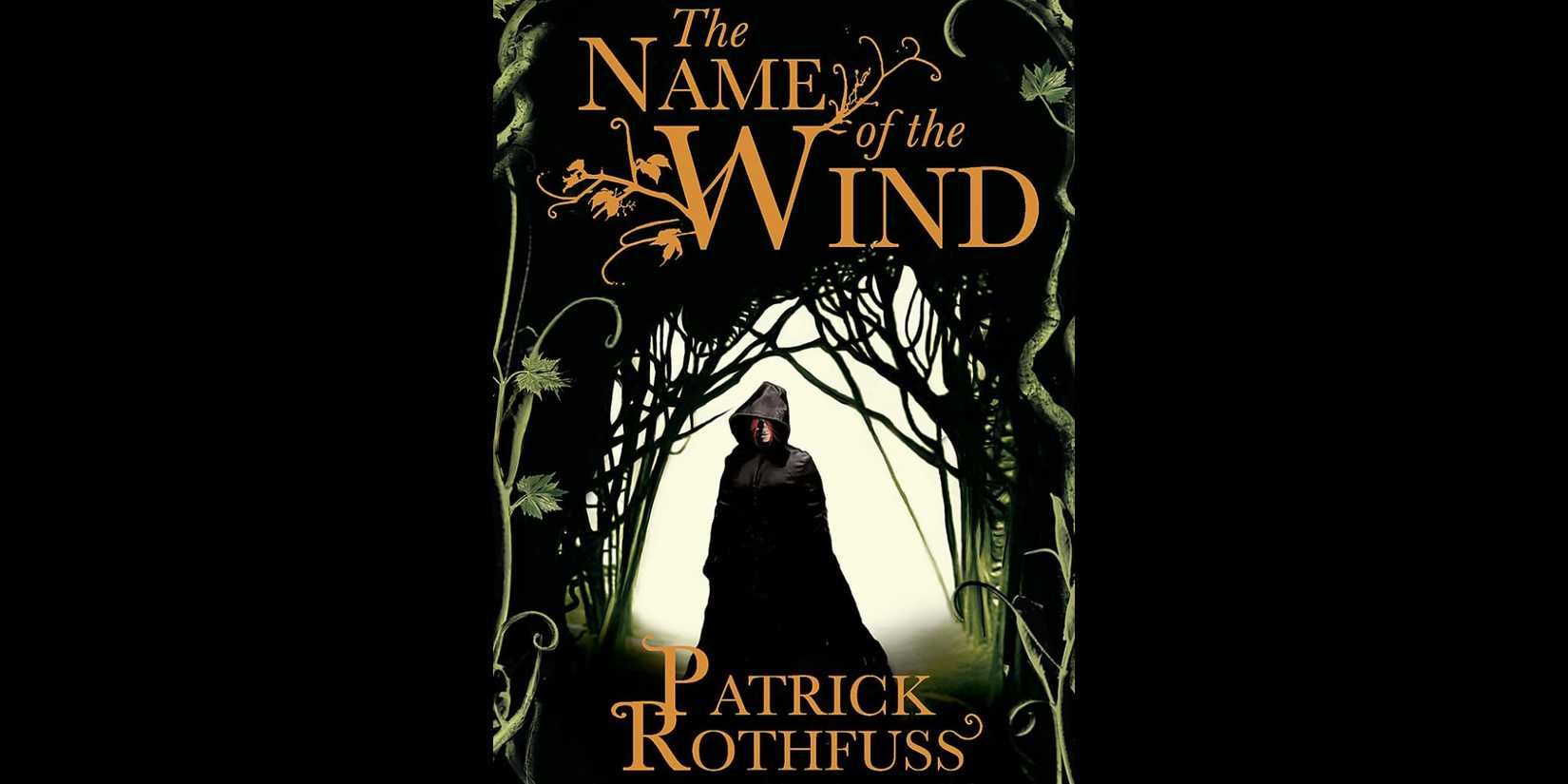
After 15 years of waiting for the third installment in the series, it's anyone's guess whether Patrick Rorthfuss will ever actually finish his Kingkiller Chronicles trilogy. Regardless of that answer, however, one thing remains certain: The Name of the Wind is one of the greatest fantasy novels in history, one of those fantasy books that are a masterclass in prose. It follows Kvothe, a legendary wizard and artist living in hiding as a quiet innkeeper, as he recounts the poignant story of his youth and his hunt for the mysterious demons who murdered his family.
For a novel with world-building so richly detailed and plotting so airtight, it's refreshing how remarkably character-driven Name of the Wind can often feel. Kvothe himself is one of the most interesting fantasy protagonists that literature has seen in years, the mystery of his myth-making story fueling the book's entire narrative. As he's accompanied by side characters who are every bit as memorable and fascinating, Name of the Wind is anchored by a character ensemble that helps to deconstruct several tropes that fantasy book characters have been built on for decades.
4 'The Blade Itself' (2006)
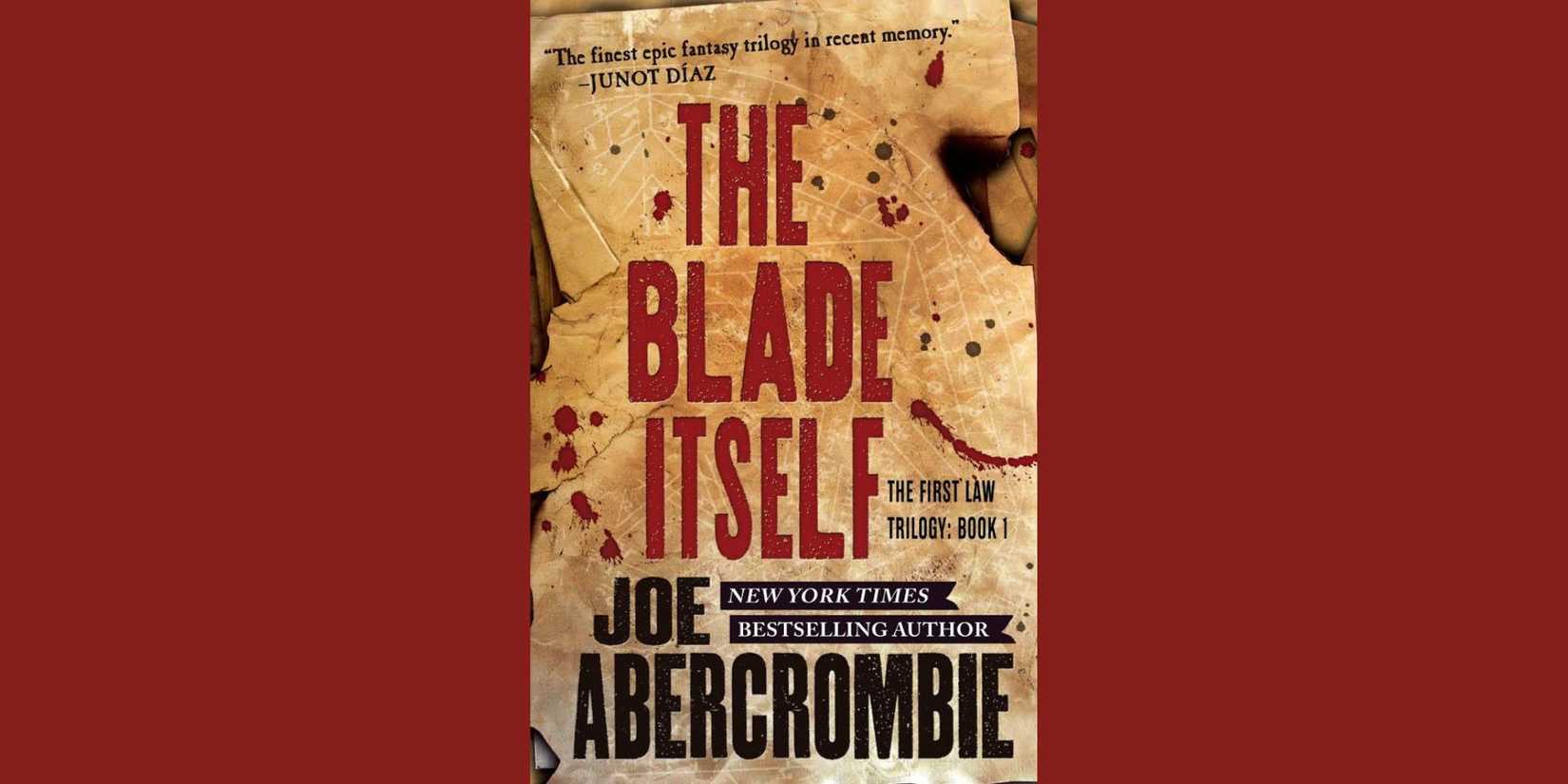
Joe Abercrombie's First Law series is an undeniable modern pop-cultural touchstone, a hugely influential powerhouse of the grimdark fantasy subgenre. The series is composed of two trilogies, three standalone novels, and two short story collections, and the first of those trilogies is generally considered the pinnacle of the series. The first installment in the First Law trilogy is The Blade Itself, where a barbarian, a torturer, and a vain nobleman see their lives collide as an ancient wizard manipulates them into a looming multi-year war.
With an exquisitely dark sense of humor that greatly elevates the whole book, Abercrombie subverts traditional heroic fantasy archetypes.
There's no shortage of reasons why The Blade Itself is generally considered one of the best sword-and-sorcery books of all time—certainly the best of the 21st century—, and the character writing is one of the most prominent. With an exquisitely dark sense of humor that greatly elevates the whole book, Abercrombie subverts traditional heroic fantasy archetypes by examining them under a microscope with a lens of pure cynicism and psychological realism. There is no saccharine magic in how The Blade Itself peels back its characters' layers.
3 'A Game of Thrones' (1996)

Though it's yet another instance of a fantasy book series that has kept fans waiting a whopping 15 years for the next chapter in the story, George R. R. Martin's Song of Ice and Fire series is nevertheless one of the most foundational post-Tolkien fantasy book series to date. The first book is the iconic A Game of Thrones, one of the heaviest books of the 1990s, about a bloody continent-wide struggle for the Iron Throne being unleashed by a royal betrayal being investigated by a noble lord.
Well before HBO's legendary TV show adaptation enshrined the characters of A Song of Ice and Fire as some of the most iconic in the entire history of the fantasy genre, A Game of Thrones was laying the foundations for the pop-cultural phenomenon that this franchise would become. Thanks to its multi-perspective structure, the novel is able to develop an admirable number of characters with an admirable level of depth and realism. By treating each and every character as a fully-realized human being, Martin is able to construct a level of character-driven drama that the genre doesn't often see.
2 'Assassin's Apprentice' (1995)

Robin Hobb's Farseer Trilogy is the starting point of the 16-book Realm of the Elderlings epic fantasy series, and it also happens to be one of the greatest speculative fiction book series of modern times. It is, indeed, one of the best fantasy book trilogies of all time, and it all started with the great Assassin's Apprentice. The plot covers the early life of FitzChivalry, a royal bastard who's secretly trained as an assassin for the king, forced to navigate deadly court politics while managing the forbidden magic powers he possesses.
Where the epic fantasy genre most often focuses on grand political and military conflicts, Hobb does something revolutionary by instead narrowing her scope and offering an intimate, emotionally devastating character study unlike anything else epic fantasy literature has ever seen. As one might expect from this premise, Hobb crafts her characters—including the fascinating FitzChivalry himself, of course—with deep psychological layers and emotional nuances, making Assassin's Apprentice a must-read for anyone who loves character-driven fantasy.
1 'The Lord of the Rings' (1954–1955)

J. R. R. Tolkien's The Lord of the Rings is technically not actually a trilogy, but rather a single epic fantasy novel that had to be published in three separate volumes. Regardless, one thing is pretty much universally accepted: It's far and away the greatest and most influential fantasy book of the entire 20th century, a game-changing masterpiece unlike any other. It's the tale of Frodo Baggins' Hero's Journey, as the meek hobbit inherits a powerful ring and must journey across Middle-earth alongside a loyal fellowship to destroy it in the fires of Mount Doom.
It's a classic structure that has often been imitated, but never matched. Indeed, The Lord of the Rings is one of those fantasy books where every chapter is perfect, and a lot of that perfection comes from how interesting the characters are. They're fascinatingly unique versions of classic, tried-and-true fantasy archetypes. Just like Lord of the Rings as a whole is the foundational masterpiece of the epic fantasy genre, so too is its character writing a masterclass, a key pillar in the novel's undeniable timelessness.
Collider Exclusive · 8 Questions · 2 Minutes What Fantasy World Do You Belong To? Middle-earth · Grand Line · The Continent · Camp Half-Blood
Pick your magic, your crew, where you want to wake up and who you would rather be fighting, and we will tell you which world you actually belong in. Four are open to you: an ancient kingdom living through its last good age, an endless sea full of pirates, a continent that pays people to kill monsters, and a summer camp where the Greek gods are extremely real and mostly a nuisance.
💍Middle-earth(Rings of Power)
👒Grand Line(One Piece)
🐺The Continent(The Witcher)
🔱Camp Half-Blood(Percy Jackson)
01
What kind of power do you want? Every one of these worlds runs on a completely different sort of magic.
02
Who is travelling with you? Nobody gets through any of these stories entirely on their own.
03
Where do you want to wake up tomorrow? The best fantasy is usually just somewhere you would genuinely like to live.
04
How are you making a living out there? Even in fantasy somebody has to pay for the horse.
05
There is something in the woods. What do you do about it? All four of these worlds keep something unpleasant out there in the dark.
06
Who is the villain of your story? The enemy tells you far more about a world than the hero ever does.
07
What do you actually believe in out there? Every world hands its heroes one rule and asks them to hold onto it.
08
A thousand years from now, how are you remembered? Eight questions in, this is the one that decides your world.
The Map Is Drawn Your World Is…
Four worlds and four completely different ideas of what a good life looks like. This is where you belong, what it would ask of you, and what you would get back in return.
Middle-earth
You belong somewhere old enough that the mountains have names and somebody can still tell you who gave them. Middle-earth is for people who think the right thing is worth doing even when it will not be finished in their lifetime.
- This is the only world on the list where doing good is understood as a very long defeat, fought anyway, by people who will never see how it ends.
- You are drawn to grandeur, to white cities and deep forges and the sense that almost everything you touch is older than your entire family line.
- The Rings of Power is set in the last good age before it all goes wrong, which gives every quiet scene in it a slightly unbearable weight.
- You would take the hard road, and you would take it on foot.
The Grand Line
You want the sea, a crew, and absolutely nobody telling you where you are allowed to go. The Grand Line is the world for people whose main ambition in life is finding out what is over there.
- One Piece has run for decades on one very simple engine, which is a group of people who each want something impossible and have decided to go and get it together.
- You collect people. Your ideal crew is a set of misfits who were each written off somewhere else before you turned up and offered them a better idea.
- The world is enormous and deliberately ridiculous, and the emotional gut punches land harder because of that rather than in spite of it.
- You would set sail knowing the map runs out, which is more or less the entire point of it.
The Continent
You would rather be feared and useful than liked and useless. The Continent is a world where the monsters are the straightforward part of the job and the people are where it all gets complicated.
- Witchers get paid to do what nobody else will and resented for existing at all, which is a trade most people would refuse and you would probably accept.
- You have no real illusions about which side is the good one, largely because on the Continent that question tends to have a disappointing answer.
- The best of these stories are not about the fighting. They are about somebody with a rigid code being repeatedly cornered into caring about people.
- You would take the coin, finish the job properly, and be out of town before the story got told wrong.
Camp Half-Blood
You want the myths to be real and loose in the actual world, and you want to find out at about thirteen that you were never anywhere near as ordinary as everybody kept telling you.
- Percy Jackson takes the oldest stories we have and drops them into car parks and diners, which makes the gods considerably funnier and a great deal worse.
- You would be the kid every school gave up on, who turns out to have been built for something nobody thought to test for.
- The series is genuinely about friendship rather than destiny, and it says so out loud every time a prophecy tries to get in the way.
- Camp Half-Blood is the real fantasy here: a place where the thing that made you difficult everywhere else is the thing that makes you belong.
KioskNews shows a cleaned-up reading view extracted from the publisher’s page — the original always lives on their site, not ours.