Arborists use supersonic air to save 300-year-old tree that survived American Revolution
Breakthroughs, discoveries, and DIY tips sent six days a week.
By signing up, you confirm you are 16+, will receive newsletters and promotional content and agree to our Terms of Use and acknowledge the data practices in our Privacy Policy. You may unsubscribe at any time.
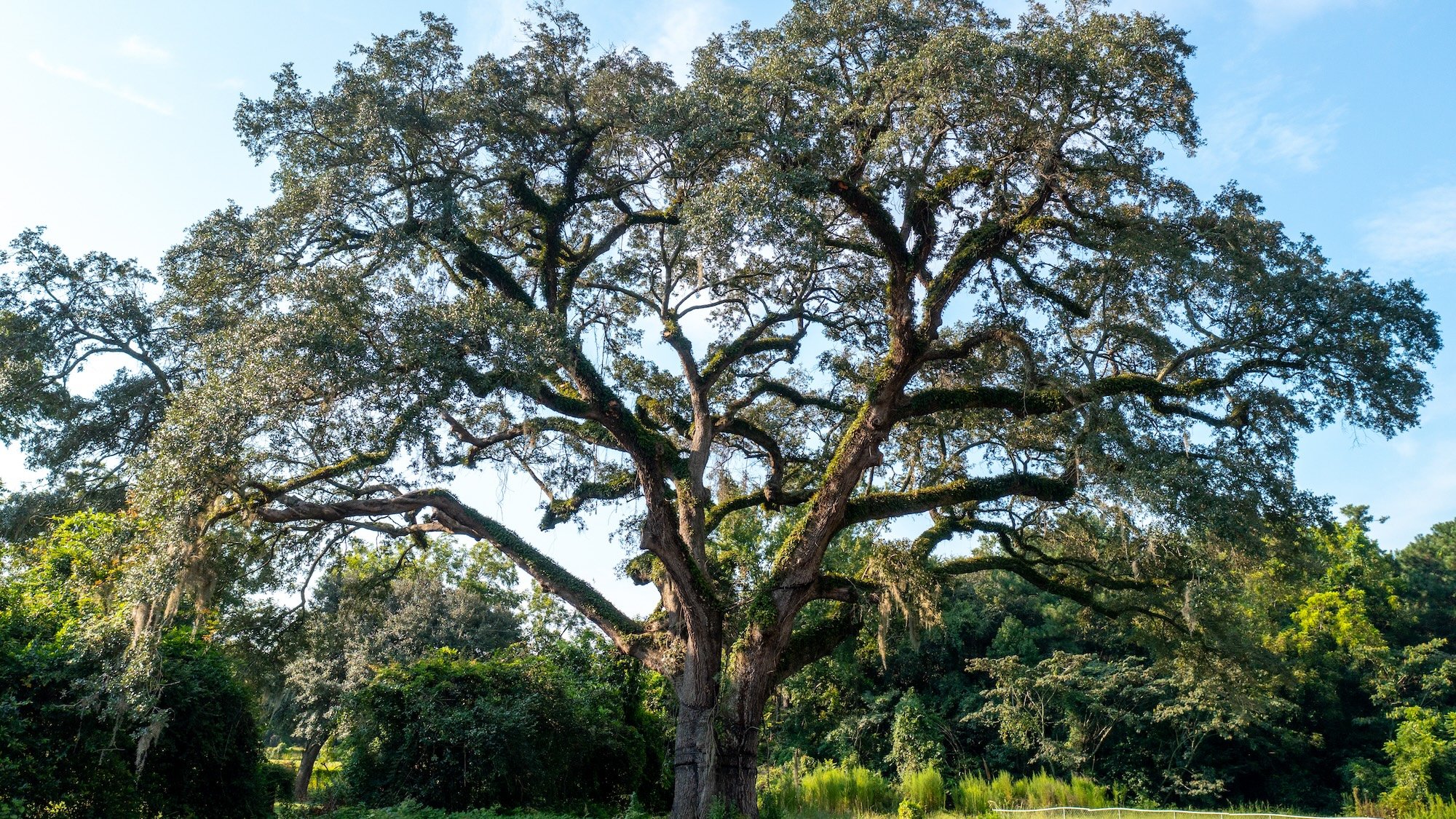
A centuries’ old “witness tree” that survived not only the Revolutionary War but a direct hit from lightning is facing yet another existential threat. Ironically, the famous oak in Eutaw Springs, South Carolina, is struggling to survive due to the strategies conservationists first used when attempting to preserve it decades ago.
The nearly 300-year-old tree was already nearing its semicentennial on September 8, 1781, when around 2,000 British and 2,500 American troops met at the Battle of Eutaw Springs. Believed to be the American Revolution’s last open-field engagement, the vicious combat was later remembered by colonial Maj. Gen. Nathanael Greene as “by far, the hottest action I ever saw, and the most bloody for the numbers engaged.” Records indicate 1,461 troops were killed, wounded, captured, or missing by the end of the conflict—although both sides claimed victory.
“That tree probably took a few lead balls itself,” arborist Aron Landsaw recently said in an Associated Press profile.
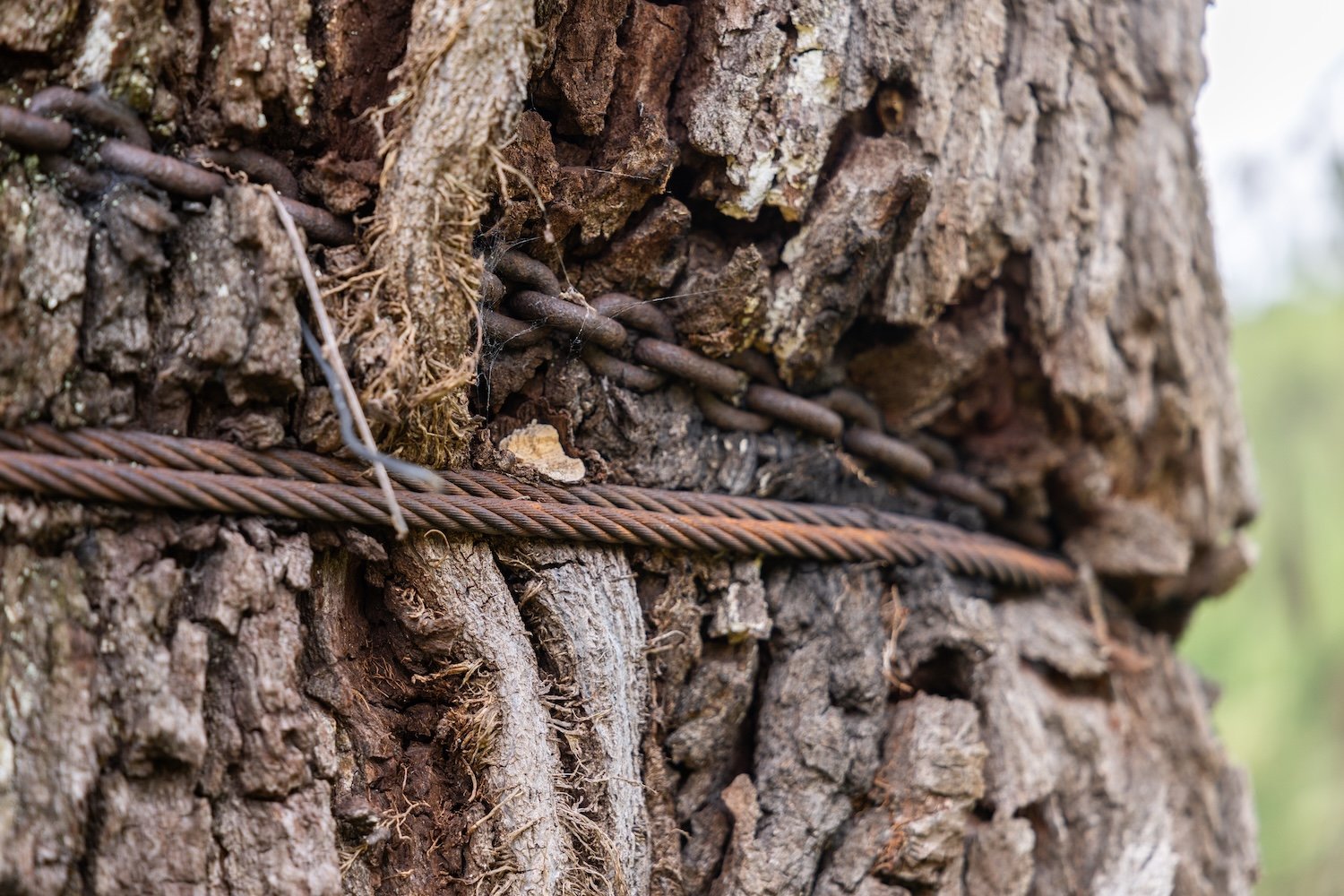
Landsaw and other conservationists are working to preserve the 45-foot-tall tree from succumbing to lingering injuries. About 50 years ago, lightning struck its base and almost split the oak in half. In an attempt to save the tree, workers at the time wrapped its splintered branches in a series of steel chains and cables. Although the strategy successfully granted the oak a reprieve, it grew so much over the last five decades that those metal lashes are cutting into the tree itself. In some areas, the cabling is now completely encased in bark.
“The chains and cables are actually choking it out. It can’t nutrients up from the soil,” explained Landsaw.
As part of the nation’s 250th anniversary, South Carolina partnered with the American Battlefield Trust and New York state-based arborists to once again bring the oak tree back from the brink of death. This time, the strategy is more high-tech than metal chains. Using specialized equipment to generate supersonic air, workers have essentially loosened all the heavily compacted earth around the tree’s roots. From there, they added a nutrient-rich kelp concoction into the dirt to further bolster the oak’s health.
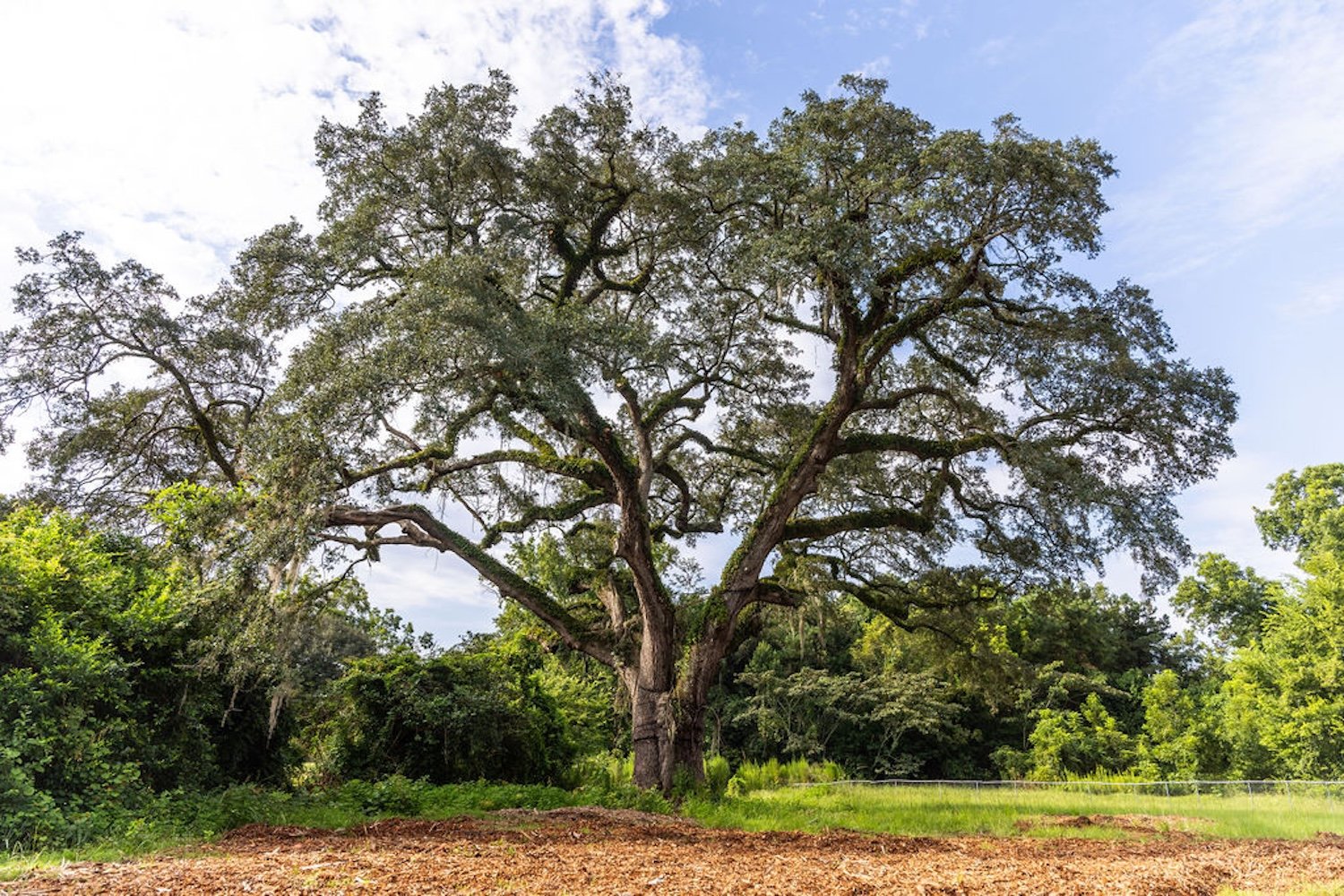
Other additions were tapped directly into the tree’s primary branches. These small, strategically placed lightning rods embedded into the oak are strung together with copper cables that all connect to a primary grounded copper rod located about 10 feet away from the tree. The odd-looking accessories are intended to prevent a repeat of the incident from 50 years ago.
“If lightning does hit it, it’ll run down the copper cables and dissipate into the ground,” said Landsaw.
The last phase will involve connecting a new set of reinforcement cables into the branches before carefully getting rid of the old chainwork. The replacement cables will all connect in the center so that the tree will remain flexible during wind gusts. No tree lives forever, but with the extra TLC and a little luck, the historic oak could easily bear witness to another 100 years of history.
KioskNews shows a cleaned-up reading view extracted from the publisher’s page — the original always lives on their site, not ours.