6 Thriller Books That Are Perfectly Written


Sign in to your Collider account
There is a difference between a thriller that keeps you reading and one that changes how you read. The first kind uses pace and plot. Those are competent tools, and they work. On the flip side, the second kind does something harder. Basically, it makes you trust the wrong narrator, or root for the wrong person, or fall into such complete absorption that you look up and it's two in the morning and you genuinely cannot explain to yourself how you got there.
Well, these six books belong in that rare second category. Every single title on this list earns its spot by manipulating your expectations, and absolutely none of them pull off that mind-bending effect by accident. Let's dig in.
6 'The Talented Mr. Ripley' (1955)

Tom Ripley begins The Talented Mr. Ripley as the kind of person a room forgets. Invisible, small, constitutionally harmless. That is, right up until Dickie Greenleaf's father ships him to Italy to retrieve his wayward son, and Tom steps into the sunlight of the Amalfi coast and something inside him shifts. Not slowly. All at once.
The real genius of the novel is how it chains your perspective entirely to his. The scene where Tom tries on Dickie's expensive clothes and mimics his voice into the mirror is completely unforgettable because of how painfully human the moment actually feels. In fact, that raw envy is deeply recognizable. The plot weaves a tense thriller together with an uncomfortable dive into class and identity to uncover a truth far worse than any actual murder. The fake life fits perfectly.
5 'The Silence of the Lambs' (1988)

The modern psychological thriller has one address. It is a dungeon in Baltimore, a glass cell, a sliding food tray, and a man who can smell your fear before you've cleared the corridor. Make no mistake, The Silence of the Lambs is the book that built the blueprint, and Harris built it so well that every crime novel published in the thirty-plus years since has been, consciously or not, measuring itself against it.
But the real magic happens when Clarice Starling, a character utterly beyond her time, descends to meet Dr. Hannibal Lecter completely on professional terms, standing rigidly straight, refusing to let him see her shiver. What the book understands, and what every imitator misses, is that the serial killer hunt is the hook but Clarice's own unprocessed trauma is the anchor. Because of this, Lecter bypasses physical violence entirely, choosing to terrify her by knowing exactly which psychological wound to press.
4 'The Spy Who Came in from the Cold' (1963)
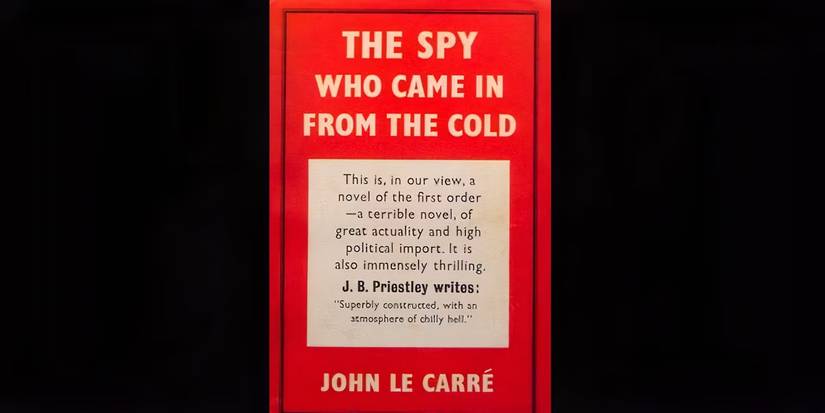
Alec Leamas is not James Bond. He is not even close. This novel centers entirely on a burnt-out intelligence officer in a cheap coat, drinking himself to pieces in London, watching his last asset get shot at the Berlin checkpoint, and you understand immediately that this is the real business. The work is unglamorous, expendable, and brutally dispensable.
The fake defection is assembled piece by piece through the alcohol-soaked decline, the dead-end job, and the deliberate humiliation. It is all a performance Leamas commits to so completely it starts erasing him. And honestly, this is where the book pulls off its sickest trick. The East German tribunal reveals the lie beneath the mission, and what Leamas discovers is that his own side is just as rotten as the enemy's. John le Carré published this back in 1963, but that exact vibe is why it perfectly captures the definitive moral exhaustion of a Cold War era where the good guys and bad guys are exactly the same. It believes in absolutely nothing.
3 'A Simple Plan' (1993)

Everything starts quietly. Two brothers and a friend find a crashed plane in the snow. Inside is $4.4 million in a duffel bag, frozen and heavy. They make one choice to keep it, and Scott Smith spends the rest of the novel showing you what that choice costs, hour by hour, decision by decision, in excruciating clinical detail.
The horror of A Simple Plan isn't the violence. Sure, the violence arrives inevitably, but that's not the point. The point is the speed at which Hank Mitchell, decent, cautious, the smart brother, finds himself doing unimaginable things and constructing perfectly rational explanations for each one. The real takeaway here is that moral collapse doesn't announce itself. Actually, It starts with shifty eyes and frantic kitchen whispers and snowballs into something that destroys a man so thoroughly he barely notices it happening.
2 'Gone Girl' (2012)
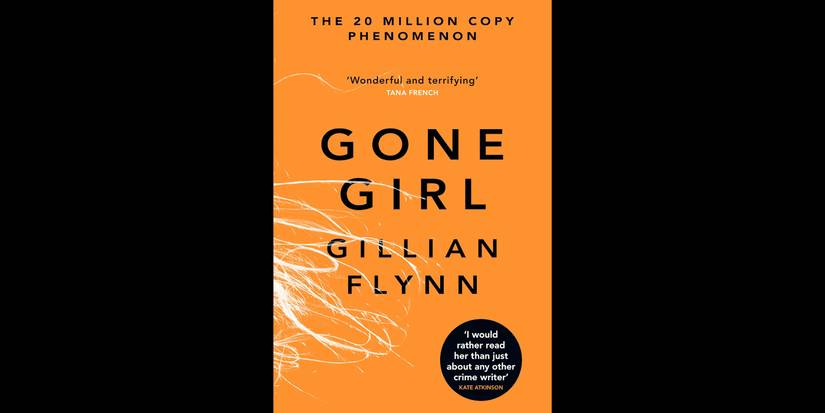
Gone Girl arrives as a missing-wife thriller and then, precisely at the midpoint, flawlessly detonates that entire premise and becomes something else. The classic setup exists purely to be dismantled. Because at the end of the day, Flynn's thriller understands that the real subject was marriage itself, not a bad marriage, but the specific, corrosive performance of marriage, the way two people can spend years constructing versions of themselves for each other until neither one is real anymore.
The slow-play of unreliable narration is what makes it so vicious. Amy's diary entries are so convincing that they basically hardwire you to take her side before yanking the ground out. Looking back, the curated scavenger hunt envelopes and Nick's inappropriate smirk caught by news cameras prove that every detail was engineered in advance, and you only realize it after the trap has already closed. It completely destroys your trust. You will never read another thriller the exact same way again.
1 'The Day of the Jackal' (1971)

The Day of the Jackal doesn't give the Jackal a backstory. There is no childhood trauma, no motivation beyond the contract, and no vulnerability to exploit. Instead, he is a pure professional. He assembles stolen passports, forges identities, and commissions a custom sniper rifle disguised precisely as a pair of metal crutches, while the text details every single step of the preparation with the same granular, almost procedural calm. The real suspense comes strictly from the dark, hypnotic process of watching the entire plot come together.
Over on the good guys' side, Deputy Commissioner Claude Lebel is dismantling the French bureaucracy with blunt instruments and sweat, closing the distance millimeter by millimeter. Somehow, the book walks the tightrope flawlessly. It pits cold clinical mechanics on one side against desperate police work on the other, with both converging on a single moment in Paris. You will literally find yourself sweating right alongside the detective by the time they reach the last page. It is that intense.
Collider Exclusive · Villain Personality Quiz Which Criminal Mastermind Would Be Your Nemesis? Lecter · Joker · Moriarty · Chigurh
Four of the finest criminal minds ever put on screen. One of them would look at you and see something worth their time. Eight questions decide which one comes for you, why they picked you, and what they would want when they arrived.
🍷Lecter
🃏Joker
♟️Moriarty
🪙Chigurh
01
What would a criminal mastermind notice about you first? Great villains choose their opponents carefully. Something about you got their attention.
02
How do they make first contact? The introduction tells you everything about what is coming next.
03
What do you actually believe about right and wrong? Every nemesis is really an argument about the thing you believe most.
04
What finally gets under your skin? Everybody has a pressure point. Finding yours is the whole plan.
05
They have made their move. How do you fight back? This is the part of the film where the audience finds out who you are.
06
What would they use against you? A good villain never brings a weapon you have not already handed them.
07
What do they actually want from you? The money is never the point. Something else always is.
08
How does it end between the two of you? Eight questions in, this is the one that decides who comes for you.
The Case File Is Complete Your Nemesis Is…
Four criminal masterminds. One of them was always going to be yours. Here is who comes for you, why they picked you out of everyone available, and what they want from the encounter.
Hannibal Lecter
Your nemesis does not want to beat you. He wants to know you completely, and he is patient enough to wait for it. The frightening part is how good the conversation is.
- Lecter is the most dangerous kind of opponent: the one who finds you interesting. He never raises his voice, because he has never needed to.
- You keep a great deal to yourself and you are careful about what you show. That reserve is exactly the door he would knock on.
- The films understood something other thrillers missed. The horror is not the violence. It is being perfectly understood by the wrong person.
- He would be unfailingly polite about all of it. That is the worst part.
The Joker
Your nemesis is not after money, territory or revenge. He is after a demonstration, and you are the person he has chosen to prove his point on.
- The Joker only picks opponents who believe in something. Your decency is not a defence against him. It is the entire reason he showed up.
- He has no plan you can predict and nothing you can take away, which removes every tool you would normally reach for.
- His whole argument is that you are one bad day away from being him, and you would spend the rest of your life proving him wrong.
- He would call it a magic trick. You would call it the worst night of your life.
Moriarty
Your nemesis respects you, which sounds flattering until you work out what it means. He chose you because nobody else was worth his time.
- Moriarty is the original criminal mastermind, the template every later one borrows from: a mind the equal of the hero's, pointed the wrong way.
- You enjoy being the cleverest person in the room. He is counting on exactly that, and he has already built the room.
- This is the rare nemesis who would be genuinely disappointed if you lost badly. He needs the game to be worth playing.
- It ends the way these things always end. Two people, one problem, and only one way down.
Anton Chigurh
Your nemesis has no personal interest in you whatsoever, and that is precisely what makes him unsurvivable. You are not a rival. You are a stop on the way.
- Chigurh does not negotiate, gloat or explain. He arrives, he asks one question, and the answer was decided long before you opened your mouth.
- You trust yourself to handle things. He is the one problem in the world that has no interest in how capable you are.
- No Country for Old Men rewrote the screen villain by removing the thing audiences quietly rely on: the sense that talking might work.
- Call it. He will wait.
KioskNews shows a cleaned-up reading view extracted from the publisher’s page — the original always lives on their site, not ours.