Pest attack dims start of sugar milling season
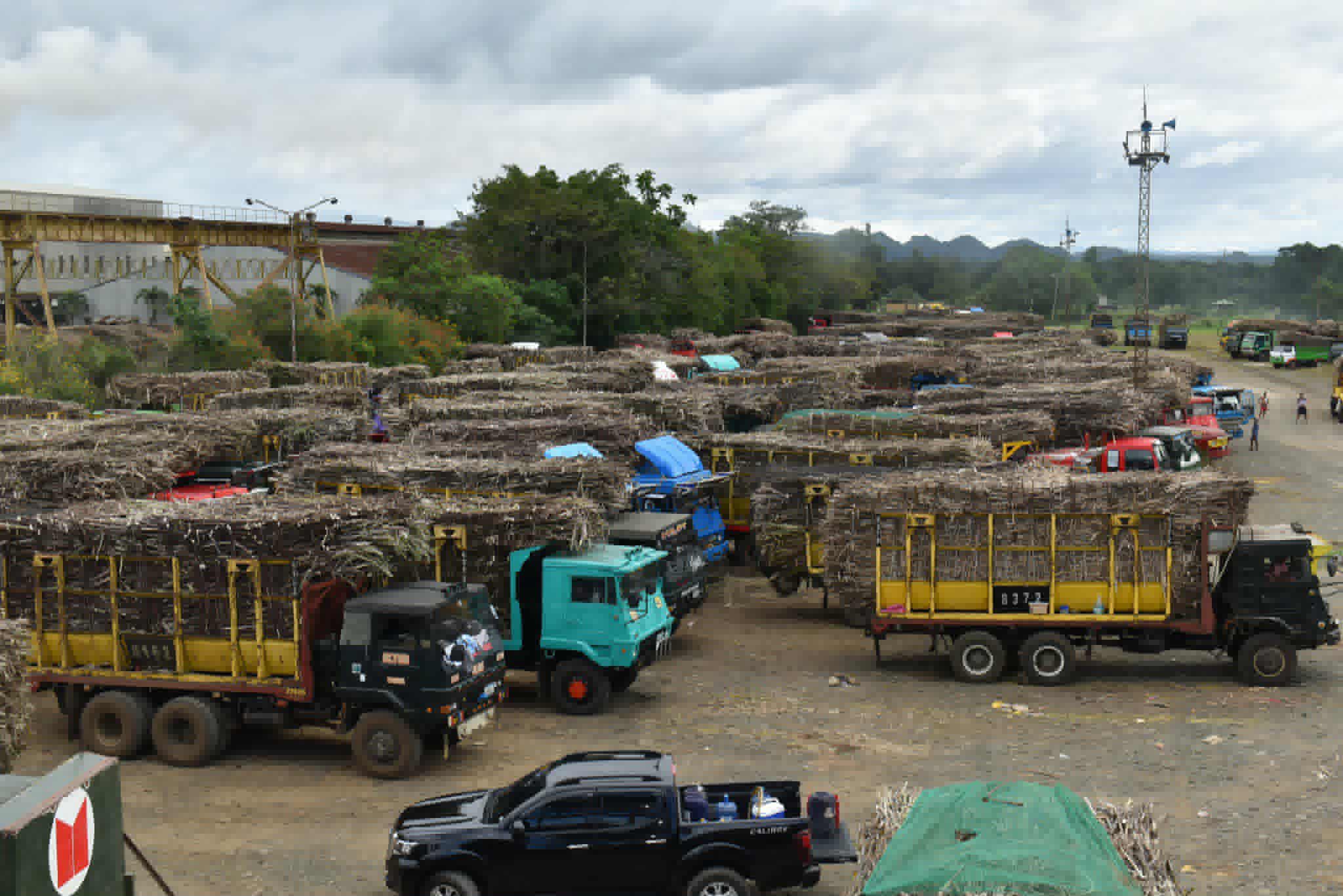

BACOLOD CITY, NEGROS OCCIDENTAL, Philippines — The devastating impact of the red-striped soft-scale insect (RSSI) cast a long shadow over the country’s sugar industry as the sugarcane milling season begins.
Several sugar centrals on Negros Island began milling operations on Monday amid wide expectations the fields may not turn out a bumper harvest due to the persistent pest infestation.
The Sugar Regulatory Administration (SRA) earlier worried that the RSSI problem—which is heavily felt in Negros—could bring down the country’s sugar output by up to 150,000 metric tons.
Article continues after this advertisement
READ: Aid to RSSI-hit sugarcane workers to hit P1.9B by yearend, says DSWD
FEATURED STORIES
NEWSINFO
NEWSINFO
NEWSINFO
First detected in Pampanga province, RSSI damages sugarcane and aids the growth of black sooty mold. If left uncontrolled, the pest could reduce sugar content in infested sugarcane by as much as 50 percent.
As of Sept. 1, the SRA counted some 134,386.10 hectares to be affected by RSSI, representing some 32 percent of the country’s sugarcane plantations.
Worst hit is Negros Occidental province, the country’s sugar bowl, with 95,140.92 ha affected, accounting for 71 percent of the nationwide total. Another 19,444 ha were affected in Negros Oriental province.
The SRA said 16,890.74 ha of sugarcane farms in other parts of Western Visayas were also infested with RSSI.
Article continues after this advertisement
Due to the projected slump in sugar production, the National Congress of Unions in the Sugar Industry of the Philippines (Nacusip) and the Agrarian Reform Beneficiaries Council (ARB Council) are calling on the SRA to classify the entire output in the current milling season as only intended for the domestic market.
Exclusive allocation
In a joint position paper submitted to the agency, labor and agrarian leaders highlighted mounting production shortfalls driven by severe pest infestations and unpredictable weather patterns.
Article continues after this advertisement
Nacusip president Roland dela Cruz said in a statement on Wednesday that an exclusive domestic allocation is critical to protect local farmers, mill workers, and consumers from severe price volatility and premature market flooding from foreign imports.
The urgent call for protection comes as SRA projections estimate raw sugar production for crop year 2026-2027 at just 1.662 million MT, falling far short of the expected domestic demand of 2 million MT, he said.
Industry leaders warn that the continuing spread of RSSI, combined with erratic rainfall, dry spells, and financing constraints among smallholder farmers, creates a precarious supply environment.
Under these conditions, setting aside any portion of local production for export or alternative allocations would artificially shrink local supplies, inflate consumer prices, and destabilize the domestic market, Dela Cruz said.
Beyond stabilizing market supply, union leaders emphasize that a total “B” classification (for domestic consumption) serves as an essential safety net for the country’s rural workforce, he added.
The country’s sugar industry directly supports more than 700,000 plantation workers, mill employees, sugarcane cutters, and agrarian reform beneficiaries who produce over 80 percent of the nation’s sugar output, he pointed out.
Premature imports
Dela Cruz said that given the projected production shortfall vis-a-vis demand, the SRA must urgently secure the sugar output for the current crop year for domestic consumption to prevent premature imports.
In past crop years, premature or excessive sugar imports severely depressed mill-gate prices, eroding farm-gate earnings, stalling milling operations, and forcing widespread job cuts across sugar-producing regions, he noted.
Dela Cruz said that classifying all locally produced sugar for domestic consumption acts as a vital protective shield for the sugarcane farming sector by safeguarding the livelihoods of farmworkers while ensuring national food security.
Apart from the classification, the SRA must also enforce strict supply monitoring and prioritize local yields before considering any secondary importation programs, he added.
Your subscription could not be saved. Please try again.
Your subscription has been successful.
The groups demanded the direct inclusion of representatives of labor and agrarian reform beneficiaries in all future policy consultations to ensure full transparency with regulatory actions. /cb
KioskNews shows a cleaned-up reading view extracted from the publisher’s page — the original always lives on their site, not ours.