Chip, snip, repeat: Perak eyes microchips for dogs and a map of its stray feeders
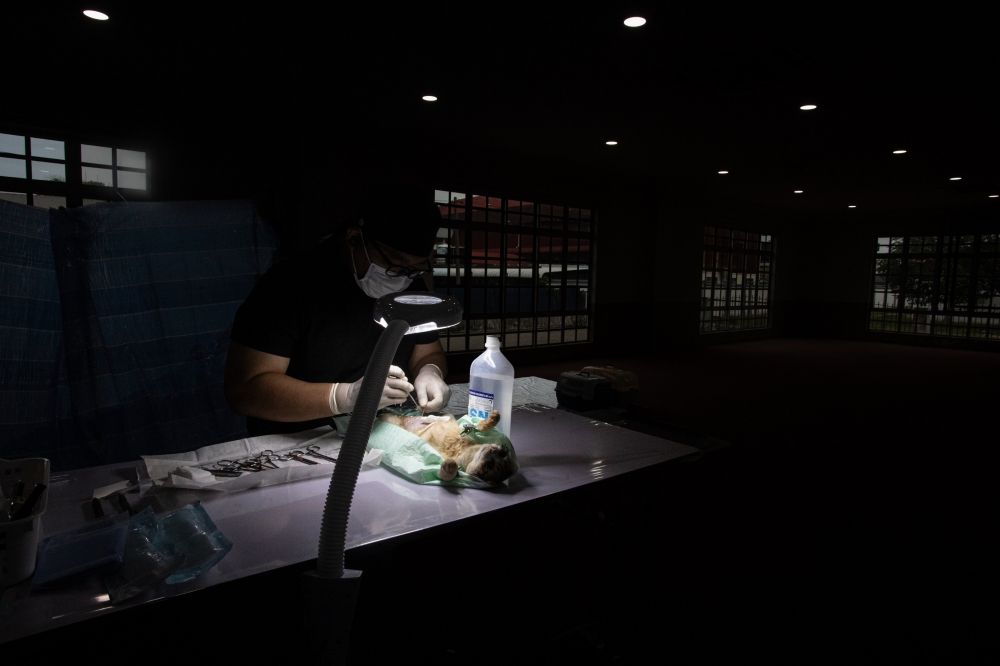
IPOH, Oct 23 — The issue of stray animals in the country has sparked growing public concern, particularly in recent times, with a series of incidents involving public safety, including the threat of disease, being reported.
Stakeholders say resorting to the capture and culling of stray animals is not a sustainable solution, calling instead for a more humane, long-term approach involving all relevant parties.
They said this should include raising awareness among pet owners and the public, with animal welfare at its core.
Animal welfare is also recognised as one of the approaches under the Ihsan (compassion) principle of the Malaysia Madani concept.
Subsidised sterilisation under Perak Pawsitive
The main reason for the growing stray animal population is not simply their natural reproductive instinct, but also the irresponsible behaviour of owners who fail to sterilise their cats and dogs and allow them to roam freely on the streets.
Some owners also abandon their pets for various reasons, including being unable to afford their upkeep as the number of animals in their care increases.
Studies and data from leading international animal welfare organisations, including the American Society for the Prevention of Cruelty to Animals and the International Animal Protection and Welfare Alliance indicate that an unsterilised female cat or dog can produce between 12 and 18 offspring a year.
Without sterilisation, their descendants could contribute to a population of up to 12,000 animals within five years.
Consequently, international bodies, including the World Organisation for Animal Health, recognise sterilisation as one of the most effective measures to address the growing population of pets and stray animals.
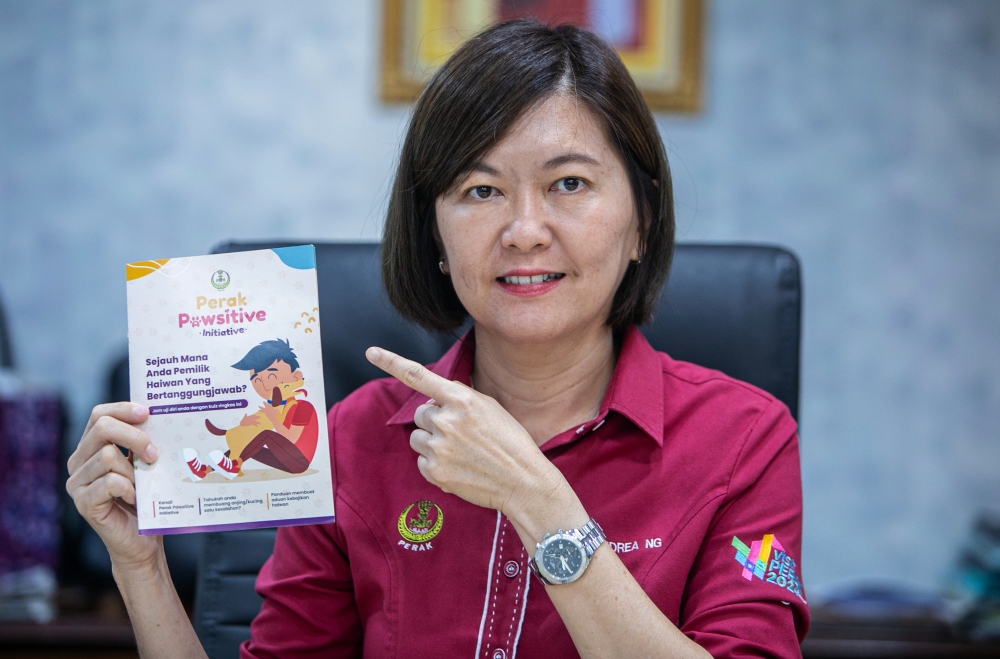
Perak Housing and Local Government Committee chairman Sandrea Ng Shy Ching shows a Perak Pawsitive Initiative leaflet at the Perak Darul Ridzuan Building in Ipoh recently. — Bernama pic
In response to calls from stakeholders, the Perak state government has taken proactive steps through a preventive sterilisation programme implemented in strategic collaboration with non-governmental organisations under the Perak Pawsitive Initiative, also known as Perak Pawsitive.
State Housing and Local Government Committee chairman Sandrea Ng Shy Ching said 14 programme sessions had been conducted since the initiative was introduced in 2024, resulting in the sterilisation of 2,402 dogs and cats to date.
“The programme involves cross-sector collaboration with government agencies and NGOs comprising animal lovers, and has now attracted participation from the private sector.
“It began with an allocation of RM150,000, which was subsequently doubled to RM300,000 this year following encouraging public response and the urgent needs on the ground,” she told Bernama.
She said the funds were used to implement subsidised sterilisation campaigns, prioritising dogs and selected cats, as well as educational programmes and the publication of a responsible pet ownership booklet, which must be distributed when owners apply for or renew their animal licences.
Under the subsidised programme, the Perak government provides a subsidy of RM80 for sterilising male and female dogs and RM40 for cats of either sex.
The regular fees are RM180 for dogs and RM120 for cats.
Currently, four veterinary clinics are collaborating with Perak Pawsitive, with each two-day programme session targeting 50 dogs and 70 cats for sterilisation.
Sandrea said the initiative also promotes pet adoption through the message ‘Adopt for Life, Never Abandon’, while seeking to raise public awareness of responsible pet ownership and address the root causes of stray animal problems.
Microchipping to identify pet owners
Apart from sterilisation, another measure being planned under the initiative is an identification system using microchips.
Sandrea said the microchips, which store information about owners and the animals’ vaccination and sterilisation status, would be implanted in pet dogs and linked to the licensing systems of local authorities.
“Microchipping is important in our efforts to address irresponsible ownership practices, including the failure to sterilise animals.
“We want to reduce unplanned breeding so that pets do not produce unwanted generations.
“If owners abandon their dogs, we can trace them through the microchips and take action against those responsible.
“We see microchipping as another measure that complements what we are already doing,” she said, adding that the chips would be implanted when owners applied for dog licences from local authorities.
However, she said the proposal was still at the feasibility study stage.
The state government was also considering harmonising dog licensing requirements across all 15 local authorities, while assessing the availability of veterinary services and the cost implications for the public.
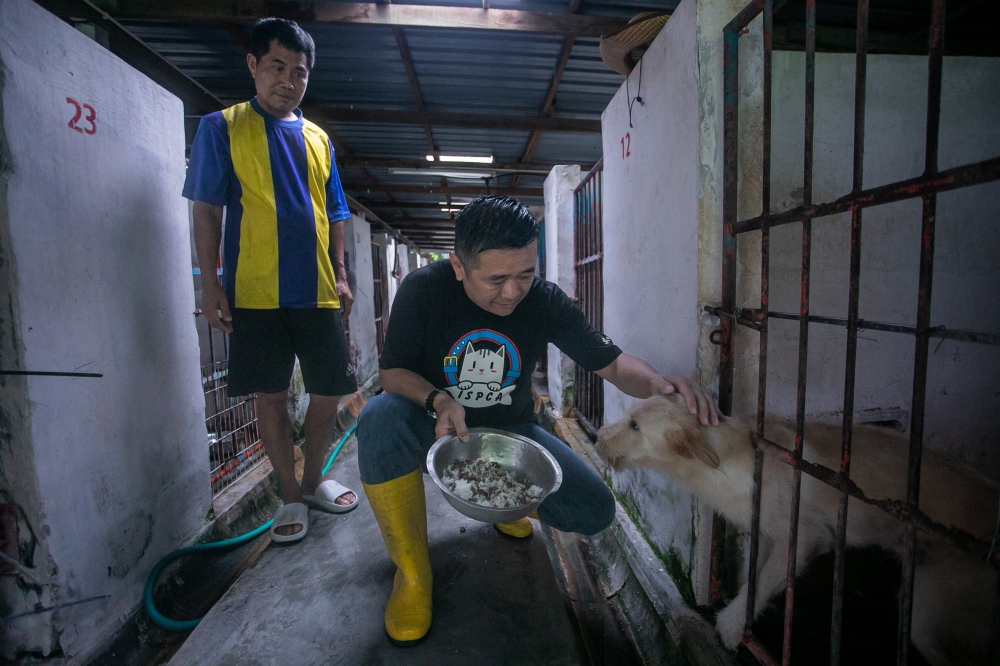
Ipoh Society for the Prevention of Cruelty to Animals chairman Ricky Soong (right) feeds a dog at the ISPCA shelter. — Bernama pic
Sandrea said a pilot project to map people who feed stray animals, known as feeder mapping, was also being implemented through the Ipoh City Council to establish a more accurate picture of the feeding community and the stray animal population in Perak.
“The state government is implementing this initiative through https://pawsitive.my/.
“To make the mapping exercise successful, we need to identify and register the feeders.
“This will also help empower the feeder community.
“We understand that those feeding stray animals are animal lovers who do so out of compassion.
“However, this can sometimes lead to problems involving cleanliness and complaints from the public.
“By bringing them together, registering them and providing training and briefings, we hope to ensure they become responsible feeders who help address the problem rather than create issues related to cleanliness,” she said.
She expressed hope that the registered feeder community would assist the state government in gathering data on stray animals on the ground.
She added that the state government was also considering offering suitable sites to relevant NGOs to establish animal shelters at nominal rental rates.
NGO concerns and proposals for #ProjekTogetherBoleh and #ExecuteTNVRM
While the subsidised sterilisation programme is seen as a positive first step, animal welfare advocates say it must be expanded to cover stray animals through cooperation with NGOs and independent stray animal activists.
Ipoh Society for the Prevention of Cruelty to Animals (ISPCA) chairman Ricky Soong said the campaign should be intensified to curb the growing population of animals at risk of becoming strays.
“Without sterilisation, animal populations can multiply rapidly within just a few years.
“As a result, these animals eventually end up abandoned in residential areas, construction sites and factories,” he said.
He said ISPCA alone cared for more than 300 dogs, incurring thousands of ringgit in monthly expenses, excluding medical treatment, vaccination, health screening and redemption fees when animals are caught by local authorities.
He said the need to pay redemption fees for impounded animals had placed the organisation under severe financial strain, as its operations depended on public donations.
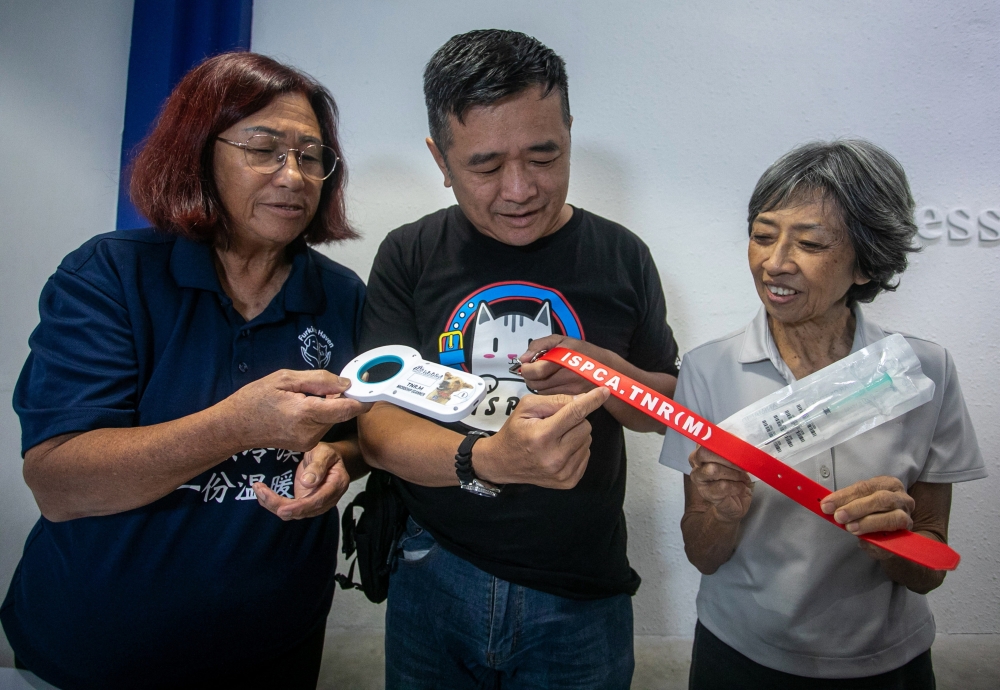
(From left) Furkids Haven chairman Irene Boey, ISPCA chairman Ricky Soong and independent feeder Peggy Vong show the equipment used for procedures on stray animals in Ipoh. — Bernama pic
Furkids Haven chairman Irene Boey said that between July 2025 and July this year, cumulative figures compiled from several NGOs and independent feeders showed that RM103,900 had been spent on redemption fees paid to local authorities.
“Statistics show that from August 1 to the middle of this month, the number of dogs caught in Ipoh alone had reached 360.
“Of these, 12 had to be put to sleep because of the tight three-day deadline, as well as a lack of funds and shelter space to redeem them,” she said.
In view of the situation, ExecuteAWA national humanitarian movement founder Sue Ann Kong proposed #ProjekTogetherBoleh, described as Malaysia’s first national preventive framework specifically designed to manage stray animal populations in a comprehensive and strategic manner.
She said the framework focused on science-based data collection and preventive measures to address the stray animal issue.
“The culling of stray animals has been proven ineffective from a scientific perspective because of the vacuum effect.
“When local authorities capture and cull animals in a particular area, the area becomes temporarily vacant.
“However, because food sources and shelter remain available, new groups of stray animals move into the same area.
“This is a natural ecological phenomenon that causes the cycle of animal overpopulation to continue without resolution,” Sue Ann explained.
She said #ProjekTogetherBoleh proposed the implementation of #ExecuteTNVRM as a comprehensive solution.
The approach goes beyond conventional sterilisation and incorporates several critical components: ‘T’ for Trap, involving the humane capture of stray animals; ‘N’ for Neuter, to effectively control reproduction; ‘V’ for Vaccinate, including rabies vaccination and parasite control; ‘R’ for Rehome, Reclaim or Release; and ‘M’ for Microchipping and Manage.
Sue Ann said ExecuteAWA had developed a specialised statistical model using reverse engineering, taking into account realistic variables such as mortality, reproduction and population decline rates.
“Through this data modelling, the impact of implementing #ProjekTogetherBoleh can be measured clearly.
“For example, a study model for Langkawi estimated that the population of stray dogs, which stood at about 3,900 in 2024, could surge to 46,000 within 10 years without structured reproductive control.
“If #ProjekTogetherBoleh were implemented systematically, with a targeted sterilisation rate of 70 per cent, the population could potentially decline to just 235 within the same period, at an effectiveness rate of up to 94 per cent,” she said.
She said the #ProjekTogetherBoleh initiative had been implemented since November 2025 in collaboration with the Rembau District Council in Negeri Sembilan and continued through the PTB 3.0 series in Seremban.
ExecuteAWA stressed that successfully addressing the issue required firm commitment and cooperation from all stakeholders, including ministries, local authorities, local NGOs and the wider community.
“We hope to work with more state governments, including Perak.
“We need to move away from reactive measures towards preventive action,” she said.
Sterilisation must meet medical and animal welfare standards
From a scientific and medical perspective, sterilisation procedures, involving the removal of the testes in males or ovaries in females, are recognised as effective in preventing uncontrolled reproduction.
Universiti Pendidikan Sultan Idris Faculty of Technical and Vocational head of the Department of Agricultural Science Dr Fazhana Ismail said the procedure could also reduce animals’ tendency to roam in search of mates due to hormonal urges.
However, she stressed that sterilisation must comply with strict animal welfare guidelines.
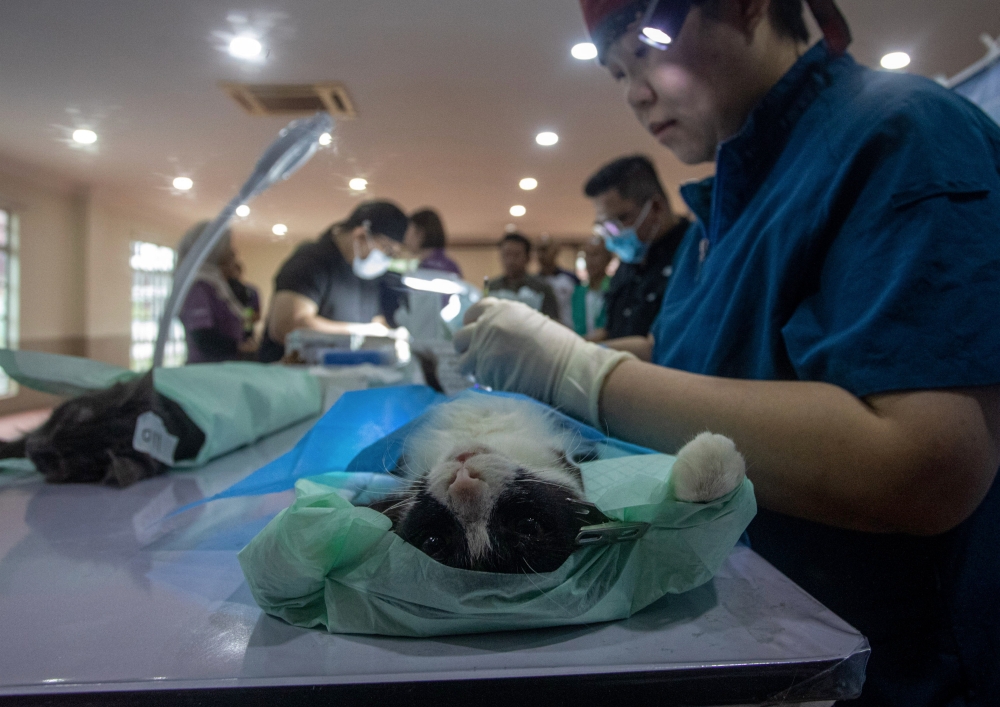
Animals are sterilised under the Perak Pawsitive Initiative’s cat and dog sterilisation awareness campaign at the Teluk Intan Municipal Council rest house hall. — Bernama pic
Surgical procedures must be performed by registered veterinary practitioners, while the use of anaesthesia and pain relief is essential to prevent unnecessary suffering.
“Animals must also receive proper post-operative care until they have fully recovered.
“Nevertheless, sterilisation is not a magic solution that instantly makes every animal tame.
“Rather, it is a long-term biological intervention and one of the most ethical ways to stop unwanted breeding cycles,” she said.
She said the approach pioneered by the Perak state government through Perak Pawsitive, supported by the science-based framework advocated by NGOs such as ExecuteAWA, could pave the way for more humane population control efforts.
At the same time, she said vaccination also deserved attention, particularly for rabies control, in accordance with risk assessments and veterinary authorities’ directives.
“The World Health Organisation (WHO) states that maintaining vaccination coverage at 70 per cent of the dog population is effective in controlling rabies.
“This figure relates to disease control, not sterilisation targets or a guarantee that dog attacks will decline.
“Pet adoption programmes can be expanded through cooperation between local authorities, veterinary clinics and animal welfare organisations.
“Animals should undergo health and behavioural assessments before being placed with new owners.
“Adopters must also understand their responsibilities and have the means to care for the animals,” she said. — Bernama
KioskNews shows a cleaned-up reading view extracted from the publisher’s page — the original always lives on their site, not ours.