When a forest guard’s wisdom meets the algorithm
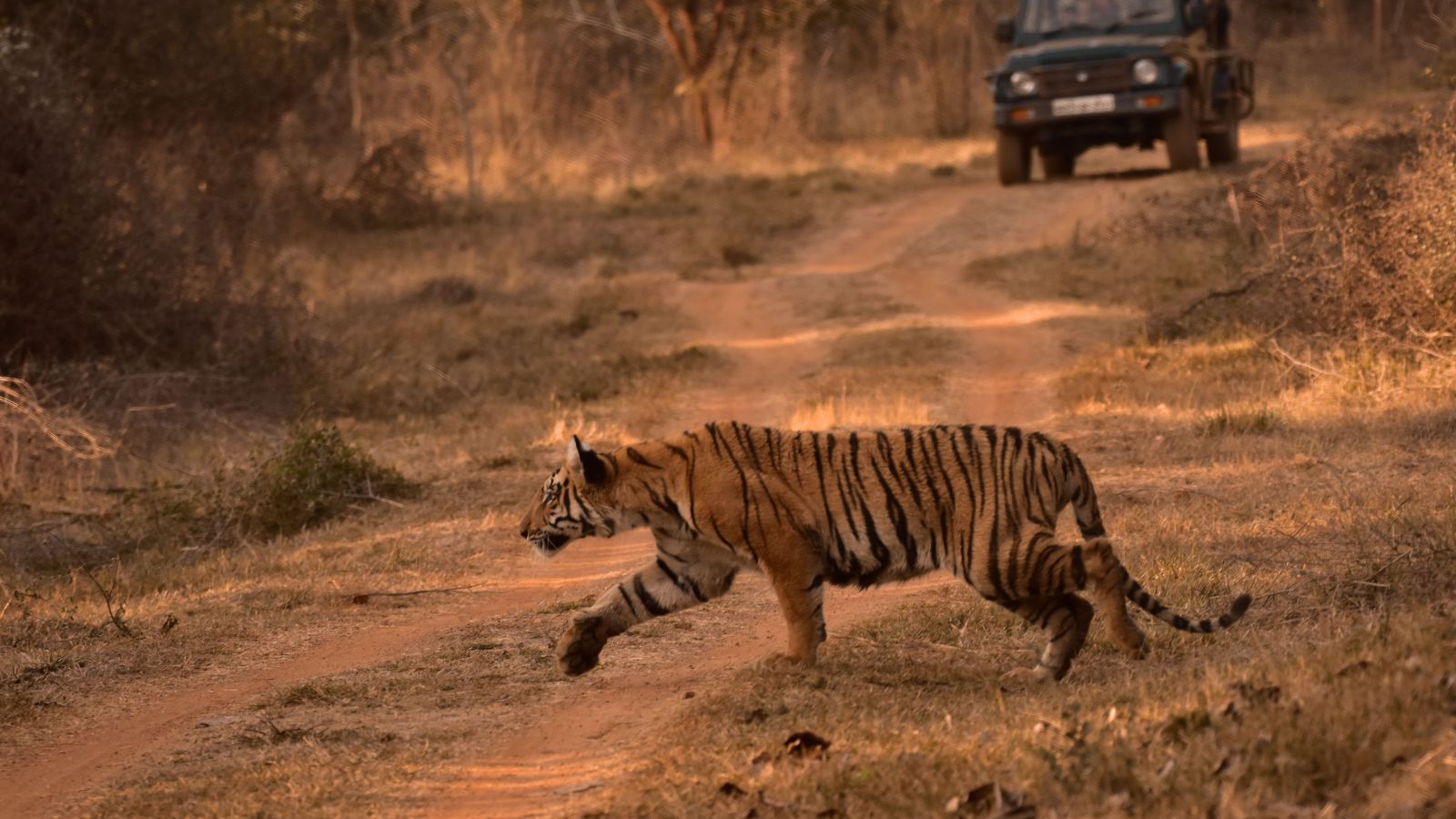
The forest guard remains the protected area's eyes and ears. AI can serve as the analytical engine that continuously learns, integrates information, and forecasts change.
Beyond monitoring tigers and detecting wildlife crime, AI’s potentially greater contribution may lie in landscapes surrounding protected areas, where the future of tiger conservation is inseparable from the wellbeing of communities.(Photo: Pexels)
3 min readNov 6, 2026 06:23 AM IST First published on: Nov 6, 2026 at 06:23 AM IST
When Project Tiger started in 1973, its greatest asset was the forest guard who knew where the tigress had crossed the nullah, where poachers might enter and which village was becoming restless. That accumulated experience remains the most valuable database in tiger conservation. Today, AI allows us to preserve, organise and amplify that wisdom. Imagine a young range officer joining a reserve 10 years from now. Instead of spending years learning solely by trial and error, the officer could inherit decades of field intelligence: Patterns of tiger dispersal, seasonal conflict hotspots, effective patrol responses, successful restoration interventions, recurring crime tactics and lessons from previous officers. Forest departments often lose invaluable knowledge when experienced officers retire or are transferred. A well-designed AI-assisted system can help retain and build on that collective experience.
Much of the global discussion on AI in conservation centres on image recognition, drones and species identification. Important as these are, they raise a broader question: How can AI help a field director make a better decision tomorrow? Answering this requires combining a director’s experience with AI to anticipate changes. Expanding infrastructure, increasing human presence, sophisticated crime networks, cyber-enabled illegal trade, emerging diseases and a rapidly changing climate have made conservation more complex than it was a few decades ago. The future lies in anticipatory governance.
AI offers an opportunity to support this transition. However, no algorithm can substitute for the instinct of a forest guard or the wisdom of a field director. AI should function as an intelligent assistant, analysing vast quantities of information and presenting timely insights to support better field decisions. In many ways, intelligent decision-support tools have entered wildlife management. Automated stripe-matching during India’s All India Tiger Estimation, e-surveillance systems, satellite-based fire alerts, GPS-based patrolling and digital monitoring platforms are familiar examples. The next step is to integrate them through a dashboard that converts scattered information into meaningful intelligence for field officers.
Beyond monitoring tigers and detecting wildlife crime, AI’s potentially greater contribution may lie in landscapes surrounding protected areas, where the future of tiger conservation is inseparable from the wellbeing of communities. Here, AI can help identify livelihood opportunities suited to local skills, natural resources and markets; improve access to government schemes; and identify villages where conservation-linked employment or community stewardship could yield greatest benefits. Agricultural fields and other suitable land around tiger landscapes could increasingly become part of decentralised renewable energy (RE) systems. Analysis of energy availability, irrigation demand, cropping patterns, and household requirements could help RE projects support livelihoods. In landscapes used by wildlife, such analysis could also help identify cropping patterns that inadvertently attract wildlife.
The forest guard remains the protected area’s eyes and ears. AI can serve as the analytical engine that continuously learns, integrates information, and forecasts change. Together, they can form a partnership far more effective than either working alone.
KioskNews shows a cleaned-up reading view extracted from the publisher’s page — the original always lives on their site, not ours.