China ‘robot trainers’ fold clothes, wash dishes 200 times a day for up to US$900 a month
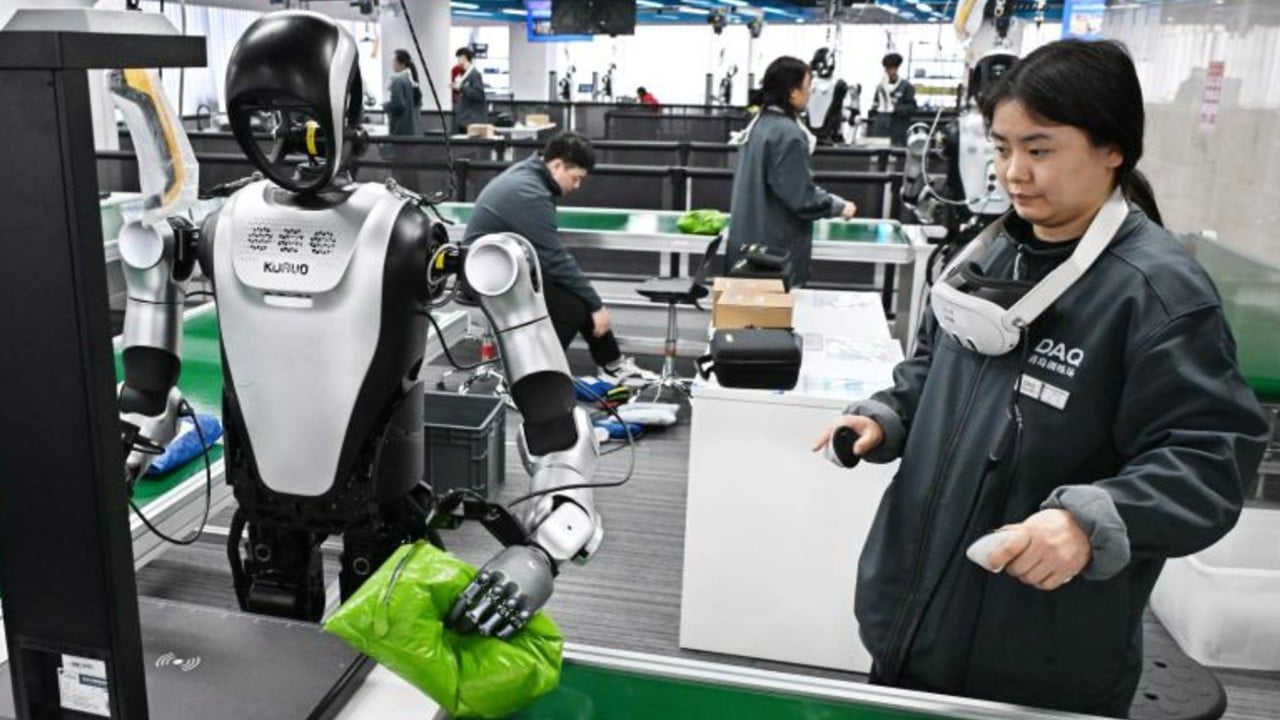
Across China, a new breed of freelance “robot trainers” are wearing motion-capture gear to turn everyday household chores – picking up cups, opening bottle caps and washing dishes – into data that will teach tomorrow’s machines.
The data is later converted into training sets to help robots work in settings ranging from kitchens and factories to supermarkets.
Such roles are increasingly advertised on mainland social media and job platforms. They reportedly pay trainers between 4,000 yuan and 6,000 yuan (US$600 and US$900) a month and attract unemployed workers and young people seeking flexible jobs.
Liu Yun, 40, entered the field after losing her job in the automotive industry and struggling to find new work because of her age.
At a Beijing studio, she wore a sensor bracelet and finger-mounted chips, following instructions on a computer screen as she repeated movements such as moving cups and scrubbing surfaces.
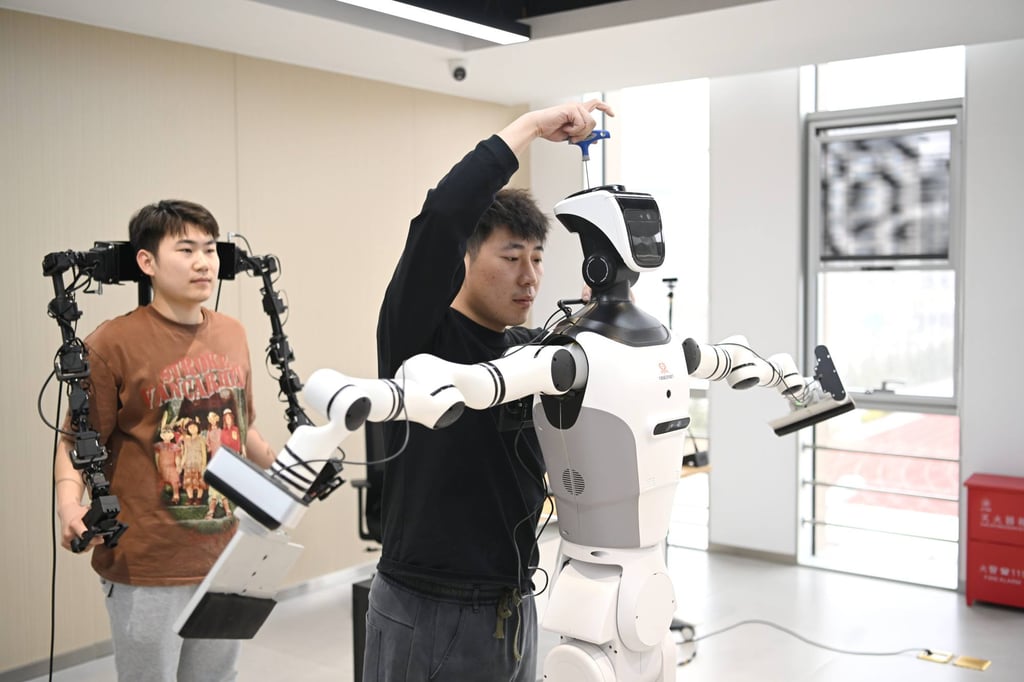
“Rather than training robots, it feels more like teaching a two-year-old child,” Liu told Jizhou Studio, a mainland media outlet.
Her every movement was monitored. Large screens ranked workers by productivity and accuracy. The daily quota was 160 samples, while top performers completed more than 260.
For Liu, the repetitive work quickly became exhausting. Washing dishes and wiping tables 200 times a day was already her limit.
Sun, 22, a student from Shanxi province in northern China, took the job during his summer break while looking for an internship. His assignments included folding clothes, sweeping floors, and recording standardised movements for robot training.
The work paid 120 yuan (US$18) for a day shift and 135 yuan for a night shift, but turnover was high, with many workers leaving after just a few weeks. Sun found the income insufficient to make up for the physical and mental strain of repetitive work.
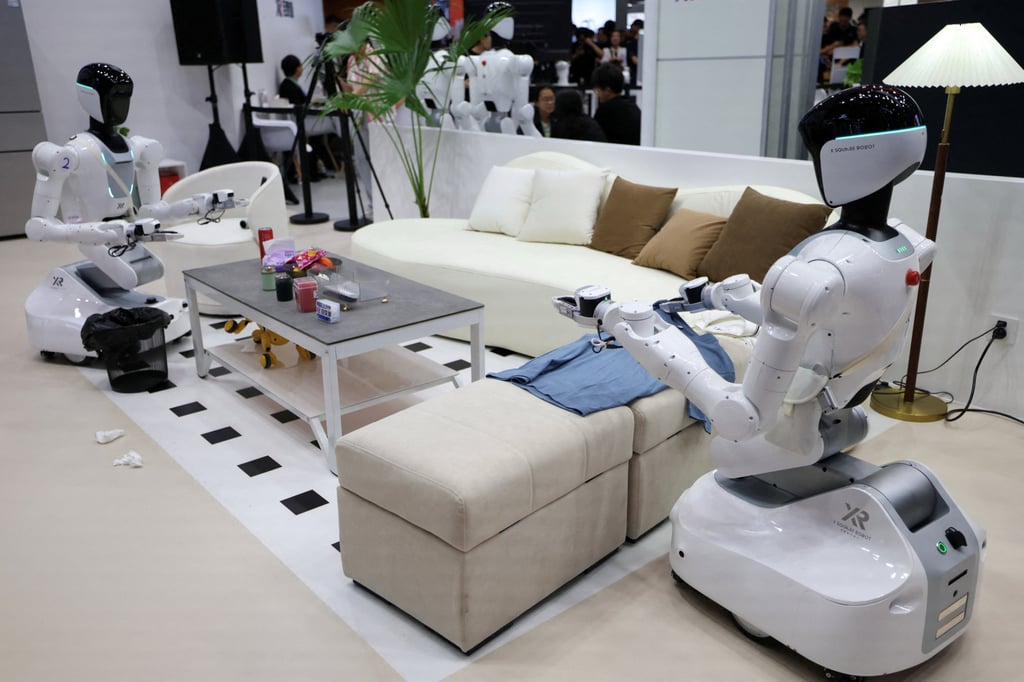
For others, the job offers flexibility. Guo Hongjuan, from Jiangsu province in eastern China, works from home for about six hours a day, collecting data through tasks such as arranging books, wiping tables and moving objects. She earns around 4,000 yuan a month and says the arrangement allows her to work while caring for her child.
The collection of human labour data is also moving beyond household tasks.
In August, Shenzhen-based technology company Physen AI partnered with a sanitation company to equip street cleaners with data-collection devices.
As the workers swept roads and responded to disruptions, such as passing electric bicycles, their movements were captured to help robots better understand real-world environments.

The rise of robot trainers has drawn mixed reactions online. Some users have jokingly called it a “cyber assembly line”, while others describe it as “home-based migrant labour”.
One middle-aged worker shared that after three months of low-paid robot-training work, he had at least learned how to do household chores.
Another online user noted: “It is deeply ironic. Humans are teaching robots to work, yet those machines will one day replace the very workers who trained them.”
KioskNews shows a cleaned-up reading view extracted from the publisher’s page — the original always lives on their site, not ours.