Decoding MLC poll results: BJP wins 13 seats, Samajwadi Party gains, Congress and Jan Suraaj win 1 each
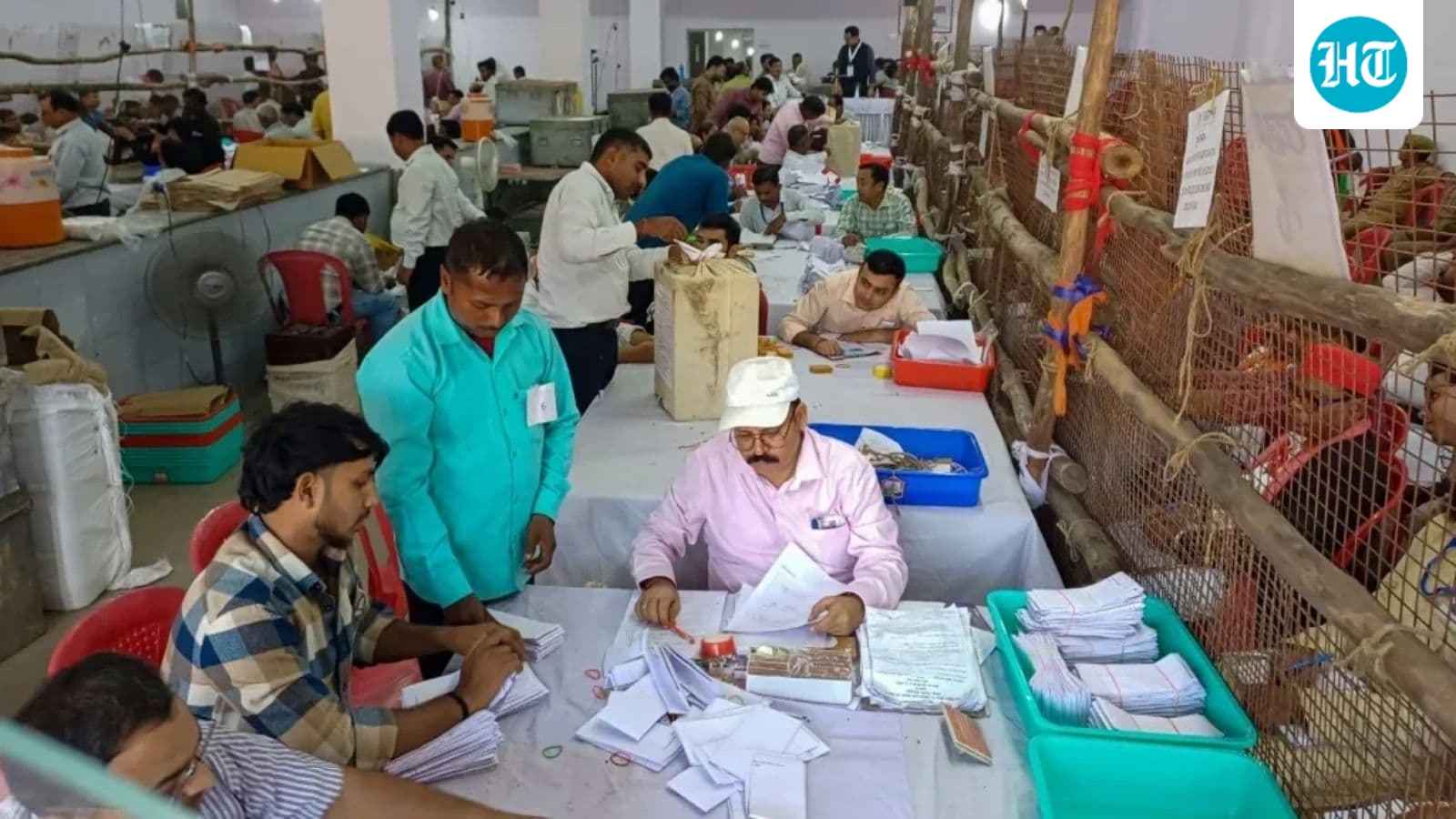
The Bharatiya Janata Party (BJP) on Wednesday won 13 of the 28 legislative council seats that went to the polls across four states and the Congress won one as the Samajwadi Party made gains in poll-bound Uttar Pradesh and the Jan Suraaj Party opened its account in Bihar’s upper House.
All legislative council seats that went to the polls in this round belonged to either the graduate or teacher constituencies. The polls were held on October 23 through ballot papers but the counting process stretched over almost two days, marked by chaos, allegations and protest.
“MLC elections in 28 seats across 4 big states - Uttar Pradesh, Maharashtra, Bihar and Karnataka. Elections held using ballot papers. Guess how many seats Congress won?” Prime Minister Narendra Modi said on X earlier in the day, using an emoji.
Inside UP MLC polls
To be sure, the low number of voters for legislative council seats, does not make the results a reliable indicator of which way the political wind is blowing, but, like all elections, the outcomes do reflect, at least to some extent, the prevailing sentiment.
In Uttar Pradesh – where 11 seats were on offer across Varanasi, Lucknow, Jhansi, Agra, Gorakhpur, Meerut, Bareilly, Moradabad and Faizabad – the BJP retained its tally of six seats. Its principal challenger, the SP, won five seats, a gain of two.
In 2020, the BJP won six seats, the SP three and independents two – one of whom shifted allegiance to the BJP later.
The BJP did well in western UP, retaining the Meerut graduate and teacher seats, the Bareilly-Moradabad teacher seat, the Lucknow teacher seat, the Agra graduate seat and the Gorakhpur-Faizabad teacher seat by a narrow margin of 307 votes.
However, the party was embarrassed as the SP retained both the graduate and teacher seats in Varanasi, represented in the Lok Sabha by Modi. The SP also bagged the Agra teacher seat, the Allahabad-Jhansi graduate seat and the Lucknow graduate seat.
Assembly polls are due in UP next year. The BJP hopes to return to power in the state for a third consecutive time. In the 100-member Uttar Pradesh legislative council, the BJP has 79 seats and SP 10.
“The BJP is in a bad state, frustrated by the defeat in the Varanasi MLC elections. The Lucknow folks aren’t picking up calls from the Delhi folks. The truth is that the BJP has been completely wiped out in the UP MLC elections,” SP chief Akhilesh Yadav said on X.
Congress draws blank in Karnataka
In Karnataka, the Congress drew a blank as the Janata Dal (Secular) wrested the Bengaluru teacher seat from the ruling Congress in an embarrassment for chief minister DK Shivakumar. The BJP retained all three seats, winning North-East teacher, South-East graduate and West graduate constituencies, defeating Congress candidates.
Karnataka’s 75-member legislative council has 38 Congress members, 24 BJP members, six JD(S) members, one independent member, and chairman Saleem Ahmed. Five seats earmarked for government nominations are vacant, and the Congress is expected to increase its strength when the vacancies are filled.
Karnataka BJP chief BY Vijayendra called the results a rejection of the Congress, linking it to the mood ahead of the 2028 assembly elections. Union minister HD Kumaraswamy said the NDA’s victory sent a clear message ahead of the 2028 elections.
“The voters have given us a message. We will examine it thoroughly, study where things went wrong and take steps to correct them,” Shivakumar told reporters.
Jan Suraaj gains in Bihar
In Bihar, where eight seats went to the polls, the BJP won three seats, the Janata Dal (United) won one, the Rashtriya Janata Dal won one, the Jan Suraaj won one, and independents won two.
The seats were spread across five districts — Patna, Muzaffarpur, Darbhanga, Purnea and Saran.
In 2020, the NDA had won four seats and the Opposition Congress and CPI one each. This time, the BJP won three of the four seats it contested and JD(U) won one of the four seats.
The BJP’s most significant victories came in Tirhut (Muzaffarpur), which was held by the CPI’s Sanjay Kumar Singh.
The most significant setback for the BJP was in the Patna teacher seat, where Nawal Kishore Yadav, who had won the seat for five consecutive terms, lost to RJD’s Sanjeev Kumar.
Also Read I UP MLC election results: BJP suffers setback in strongholds Varanasi and Lucknow, SP gets shot in the arm
Jan Suraaj Party’s Suresh Prasad Rai defeated Congress MLC Madan Mohan Jha by 324 votes in the Darbhanga teacher seat. In August, the party chief, Prashant Kishor, won a legislative assembly bypoll from Bankipur, opening its account in the Lower House.
In the Patna graduate seat, JD(U)’s Neeraj Kumar defeated RJD’s Dilip Kumar in a seat marked by internal JD(U) dissent, after Mokama lawmaker Anant Kumar Singh campaigned against Neeraj Kumar and backed Jan Suraaj pick Anuj Singh. The party suspended gangster-turned-politician Anant Singh for six years over alleged anti-party activities.
“Money power and muscle power have lost; the strength of party workers and public support has won,” Neeraj Kumar said, crediting minister Nishant Kumar, the son of Nitish Kumar.
In Bihar, the 75-member legislative council has 26 BJP members, 20 JD(U), 16 RJD, HAM(S) 1, Lok Janshakti Party( Ram Vilas) 1, Rashtriya Lok Janshakti Party 1, CPI-ML(Liberation) 1, Rashtriya Lok Morcha 1 and Independent 7.
Mahayuti, MVA grab 2 seats each in Maharashtra
In Maharashtra, where five seats went to the polls, the ruling Mahayuti won two and the opposition Maharashtra Vikas Aghadi (MVA) won two and was leading on another. The seats were spread across Nagpur, Pune, Amravati, Kolhapur, Sangli, Chhatrapati Sambhajinagar, among other districts.
The BJP won the Pune teacher constituency, the Shiv Sena won the Amravati teacher seat, and the Nationalist Congress Party won none.
The Nationalist Congress Party (Sharadchandra Pawar) won the Pune graduate seat and was leading on Aurangabad. The Congress won the Nagpur graduate seat while the Shiv Sena (UBT) drew a blank .
In the Nagpur graduate seat, Congress candidate and sitting MLC Abhijit Wanjari defeated BJP’s Sudhakar Kohale in a surprise nail-biting result in chief minister Devendra Fadnavis’s home district.
As the winning quota for the seat was set at 75,438 votes, and Kohale failed to reach the target in the first round, second preference votes were counted on Wednesday evening. Eventually, Wanjari won with the help of second preference votes from those who had chosen Karale as their first preference.
All five constituencies witnessed rebellions within both the Mahayuti and the MVA, affecting the prospects of their official candidates. In the Pune teacher constituency, BJP’s Kaustubh Gawade secured victory but his margin of 6,770 was due to a strong showing by Sachin Sanap, an independent candidate backed by the Shiv Sena who secured 16,347 votes.
In the Amravati teacher constituency, BJP MP Anil Bonde’s sister, Sangeeta Shinde, and Shiv Sena leader Shrikant Deshpande contested against the Mahayuti’s candidate Kiran Sarnaik, who eventually won.
“Today’s council results are a clear and significant warning. To regain the people’s trust, reset the party’s priorities and bring about organisational reforms, an immediate and rigorous self-examination is necessary. It is time to introspect and fix the organisational structure,” NCP working president Praful Patel said on X.
A legislative council functions like the Rajya Sabha in the lawmaking process. Only those aged over 30 are eligible to contest legislative council polls, while the age limit for Lok Sabha and assembly poll nominees is 25. Members of legislative councils (MLCs) are chosen for six-year terms and one-third retire every two years.
Only six states in India have bicameral legislatures.
The legislative council polls are held through preferential voting. Electorates comprising members of municipalities, district boards and local bodies elect one-third of MLCs. Voters residing in a state for at least three years and graduates of any university nationally or with equivalent qualifications elect one-12th of the MLCs. Electorates comprising people with at least three years of teaching experience in a state at the secondary school level and above choose one-12th of the candidates. The governor nominates the rest from people with expertise in areas like literature, science, and social service.
KioskNews shows a cleaned-up reading view extracted from the publisher’s page — the original always lives on their site, not ours.