The 9 Greatest Fiction Books Written by Screenwriters

Diego Pineda has been a devout storyteller his whole life. He has self-published a fantasy novel and a book of short stories, and is actively working on publishing his second novel.
A lifelong fan of watching movies and talking about them endlessly, he writes reviews and analyses on his Instagram page dedicated to cinema, and occasionally on his blog. His favorite filmmakers are Andrei Tarkovsky and Charlie Chaplin. He loves modern Mexican cinema and thinks it's tragically underappreciated.
Other interests of Diego's include reading, gaming, roller coasters, writing reviews on his Letterboxd account (username: DPP_reviews), and going down rabbit holes of whatever topic he's interested in at any given point.
Each type of writer has a unique set of strengths, screenwriters included. The fact that they have to stick to the strict constraints of the film industry and make writing that is visual first and foremost makes it so that, throughout history, when screenwriters have dared to become novelists, it has resulted in some of the most interesting books the world has ever seen. Whether they were novelists first and screenwriters second or the other way around, authors like Alex Garland and Mario Puzo have given us some fascinating literary works throughout the years.
From well-known foundational works of their respective genre, such as Jurassic Park, to criminally underappreciated extravaganzas like Antkind, the greatest fiction books written by screenwriters over the years have all proven that this is a group of authors that have plenty of things of value to say on the printed page. Both for those intimately familiar with their cinematic work and for those who have never seen a single film they've written, these books are essential reading.
'The Beach' (1996)

Alex Garland rose to prominence when he penned Danny Boyle's 28 Days Later, and subsequently made the jump to the director's chair with 2014's Ex Machina. As if that weren't enough, he also wrote, directed, and executive-produced Devs, one of those miniseries that are perfect from beginning to end. It was actually a novel that put his name on the map, however, and that was the adventure thriller The Beach, which Danny Boyle later adapted into a film.
Hugely intelligent and as perfectly paced as fans of Garland's cinematic work might expect, it's a psychologically complex cultural critique about the unattainability of perfection and disillusionment with modernity. It's a defining piece of '90s British literature much akin in tone and narrative to Lord of the Flies, one whose sharp prose should satisfy even those who don't care for—or are perhaps not even familiar with—Garland's movies.
'The Last Days of Night' (2016)

Graham Moore has written for two TV shows, two short films, and two movies, having gone on to win several awards (including an Oscar) for the first feature film he ever wrote, The Imitation Game. His debut novel was 2010's The Sherlockian, but it's his sophomore book, The Last Days of Night, that easily stands out as his magnum opus. It's one of the best historical fiction novels of the 2010s, all about the bitter rivalry between George Westinghouse and Thomas Edison.It's a fast-paced legal thriller perfect for people who love period pieces about lifelong rivals, much like something like The Prestige. From the pacing to the punchy dialogue to the vividly cinematic way Moore writes characters' actions, you can really tell that this exceptional novel is the work of a screenwriter in full control of his entire writing craft.
'Antkind' (2020)

For years, Charlie Kaufman has arguably been the greatest screenwriter working in mainstream Hollywood today, the mind behind several of the best screenplays in film history. From his incredible debut, Being John Malkovich, to the script that earned him an Oscar, Eternal Sunshine of the Spotless Mind, Kaufman's work is characterized by absurdist humor, idiosyncratic surrealism, and delectably postmodern meta-narratives. Frustrated with the commercial limitations of the film industry, Kaufman desperately wanted to write something with total and unrestrained artistic freedom. Enter Antkind.
Crafted by Kaufman specifically to be entirely unfilmable, Antkind is a novel that's hard to describe in any sort of way. It's hard to condense its chaotic plot into a single comprehensive premise, hard to apply genre labels to it, and hard to describe what makes it so brilliant. It's a towering, sprawling, absolutely hilarious fever dream of pure creativity whose nearly 800 pages are all filled with wild moments of surrealism, scathing pieces of cultural critique, and meta elements bound to make any cinephile laugh out loud.
'I Am Pilgrim' (2013)

The English-born Australian author Terry Hayes began his career as a journalist in Sydney. His first approach with the film industry came when he wrote the novelization of George Miller's Mad Max, one of the most revolutionary low-budget action flicks of all time. The director and writer got on so well that Miller hired Hayes to work on the script for Mad Max 2: The Road Warrior, and from there, Hayes went on to have a successful screenwriting career that also includes films like The Year My Voice Broke and Vertical Limit. He wouldn't write his first original novel until 2013, with I Am Pilgrim.
This mystery thriller is one of the most widely celebrated debut novels of the 2010s, and for good reason. It's a masterclass in narrative momentum that could have only possibly come from the mind of a screenwriter like Hayes, an incredibly ambitious spy epic that's such a page-turner that it's genuinely tough to put down. Every page of the novel catapults the narrative forward in ways that never cease to be exciting.
'City of Thieves' (2008)

David Benioff is undeniably best-known for co-creating HBO's Game of Thrones with D. B. Weiss, a career move that (for better or for worse) would go on to completely define his career forever. Before Game of Thrones, though, he earned praise and awards for his screenplays for movies like The Kite Runner and 25th Hour, the latter based on his own debut novel. His third (and, as of now, latest) novel is the historical fiction gem City of Thieves, one of those great books that are real page-turners.
The book was a critical and commercial success immediately upon publication, and even went on to serve as a strong inspiration for the iconic The Last of Us video game. Set during the 1942 Siege of Leningrad, this modern World War II classic is surprisingly nuanced and complex for a novel that's not even 300 pages long, a length that only adds to its brutality. It's tightly plotted, full of sharp dialogue and memorable character arcs, and great in how it balances its dark tone with moments of dark humor to make the whole thing hard to put down.
'Gone Girl' (2012)
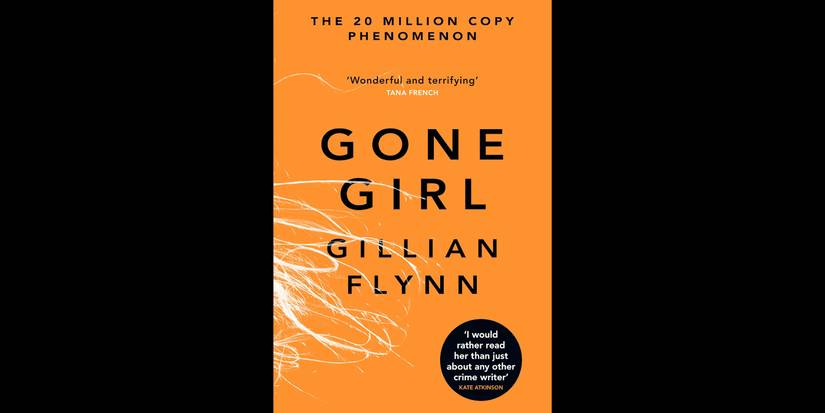
Gillian Flynn has thus far published three novels and one short story, and it's her third novel, Gone Girl, that made an unprecedented splash in the realm of the domestic thriller genre. One of the most perfectly written thriller books of the 21st century, it was unlike anything else mystery book fans had seen before. It was so massively successful that it spawned not only a 2014 David Fincher film adaptation, but also a wave of twisty psychological thrillers with unreliable narrators.
Flynn penned the screenplay for Fincher's movie herself, as well as another movie and two TV shows (including Sharp Objects, based on her debut novel). It's an addictive, brilliantly subversive piece of mystery literature whose midpoint twist makes it the sort of book you crave a re-read of immediately after finishing it. You can tell that Flynn was destined to write screenplays, too, because the book is filled with the kind of visual language and zero-fluff pacing that any screenwriter needs to be skilled at.
'Jurassic Park' (1990)

Michael Crichton received an MD from Harvard Medical School, but instead of practicing medicine, he opted to focus on writing. He published over two dozen novels throughout his lifetime, including some of the greatest science fiction books the world has ever seen. Case in point: Jurassic Park, one of the most essential sci-fi books for beginners.
Five years after publishing his first novel, Crichton made his first incursion into the world of writing for television; and two years after that, he wrote his first movie screenplay. It would be Jurassic Park and its 1993 Steven Spielberg film adaptation, however, that would cement Crichton as a culturally omnipresent powerhouse. With a perfect blend between hard sci-fi and dinosaur-centric horror, it's undoubtedly one of the best sci-fi novels of the '90s.
'The Godfather' (1969)

Mario Puzo wrote crime novels about the Italian-American mafia and the Sicilian mafia, and it was the enormous cultural and commercial success of The Godfather that made his name huge in mainstream pop culture. The novel was still a 60-page manuscript when Puzo sold the film rights to Paramount, and seeing as it remained the best-selling published work in history for several years, the deal clearly worked out just fine. After all, Francis Ford Coppola's Oscar-winning movie is one of the most perfect movie adaptations of all time, praised by many as the single greatest film of all time.
While the book may not be quite as great as its adaptation, it's still one of the greatest crime epics that the printed page has ever seen. It's a fast-paced, pulpy crowd-pleaser that delivers entirely different kinds of genre thrills from what Coppola's movie has to offer. Puzo's cinematic instincts remain evident throughout the whole novel, and as such, it should come as no surprise that he went on to have a successful career as a screenwriter after penning the movie adaptation.
'The Princess Bride' (1973)

William Goldman was a novelist first, later wrote his first stage play, and later wrote his first movie screenplay. Today, there are many who would confidently call him one of the greatest screenwriters in the history of Hollywood, and for good reason. But as incredible as classics written by Goldman like Misery and Butch Cassidy and the Sundance Kid are, the author's most universally loved work is a fantasy romance novel whose full title is The Princess Bride: S. Morgenstern's Classic Tale of True Love and High Adventure, The "Good Parts" Version.
Far more than just one of the best books about revenge, Princess Bride is a razor-sharp, family-friendly masterpiece that anyone who loves reading fantasy, adventure, and romance novels should find nothing but delight in. Goldman was already an elite screenwriter by the time he wrote Princess Bride, and this exquisitely meta, brilliantly genre-bending, beautifully romantic masterpiece is all the better because of its author's vastly diverse experience.
KioskNews shows a cleaned-up reading view extracted from the publisher’s page — the original always lives on their site, not ours.