Drought exposes Bronze Age villages in shrinking reservoir
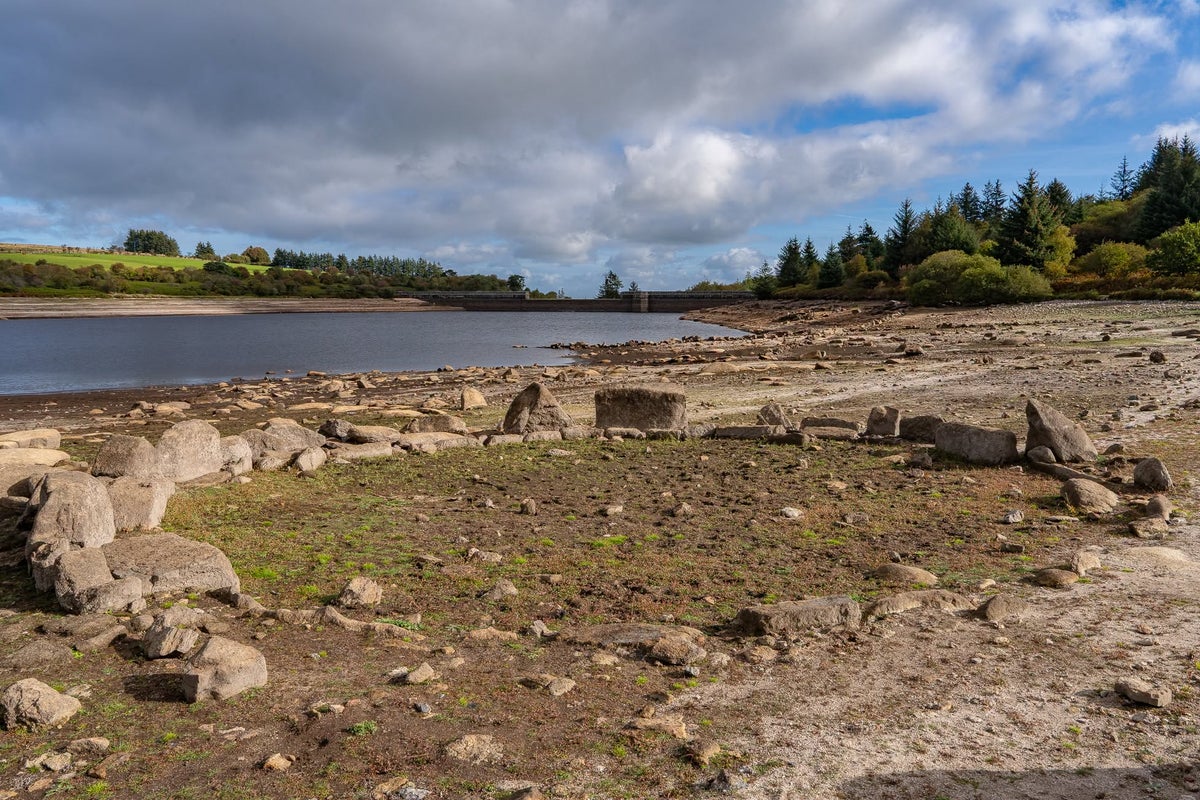
The remains of prehistoric villages have been uncovered in Devon, after a summer of heatwaves has caused the water levels in a reservoir to drop.
Remains of Bronze Age stone huts have been found at Fernworthy Reservoir, including eight roundhouses which date back to 4,000 years ago.
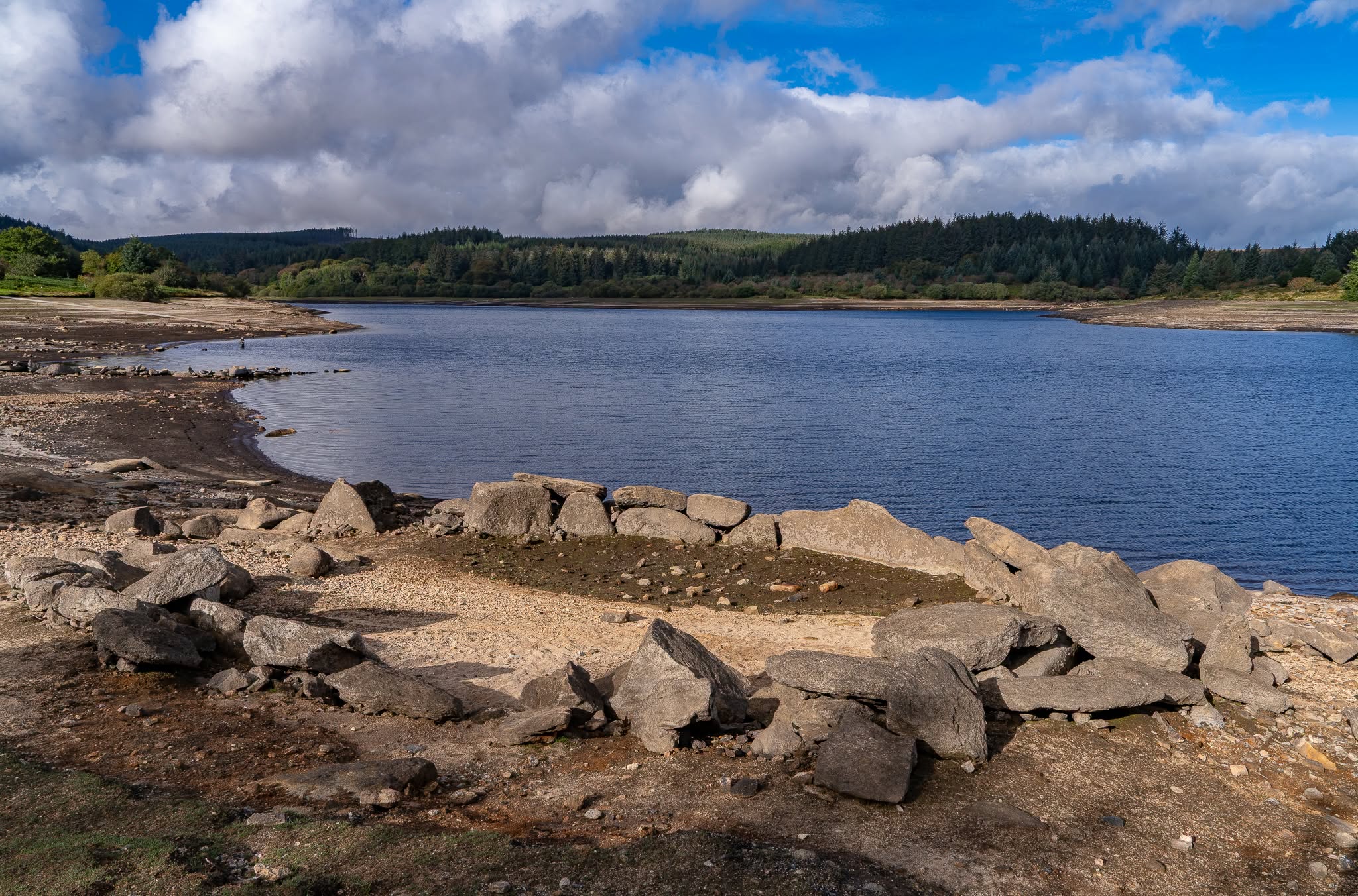
Pictures shared on social media show stones lying on parched soil in wide circles, after the water levels dropped to 30 per cent as a result of high temperatures.
Archaeologists have uncovered evidence to show humans have lived in the area since at least 2300BC and a number of stone circles and burial cairns can be visited in the surrounding countryside.
It is believed that many of the settlements were abandoned around 1000BC, but human activity continued with researchers discovering coins from 1540.
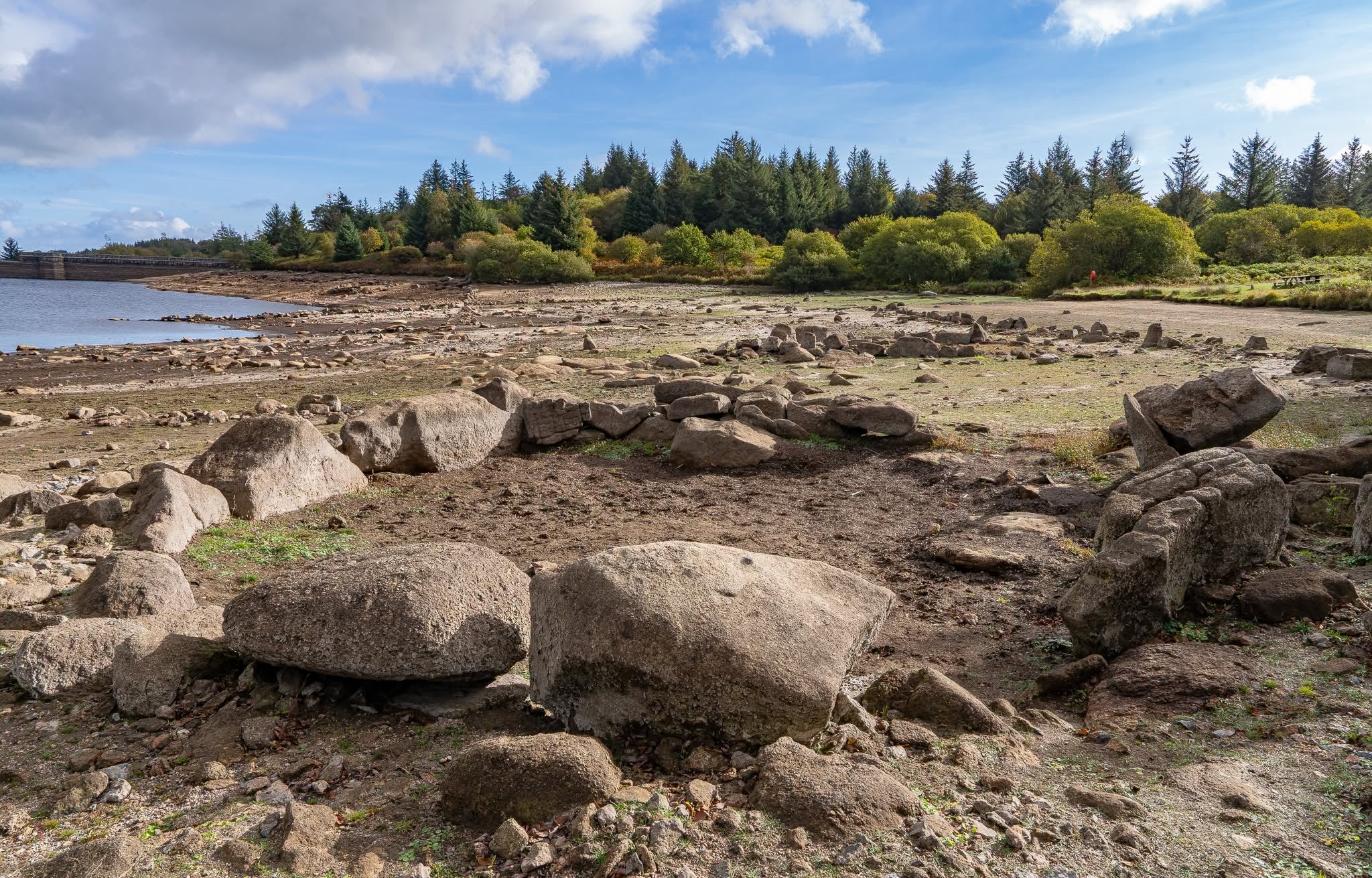
Ahead of the reservoir being flooded, archaeologists discovered Bronze Age flints and pottery, as well as finds dating to the Tudor period, when tin miners operated in the region.
The reservoir was constructed between 1936 and 1942 in the Dartmoor National Park, and supplies water to the areas of Torquay to Totnes and also Brixham.
Reservoir levels across the country are about 20 per cent lower than they should be for the time of year.
Twelve out of the 31 reservoirs or reservoir groups the Environment Agency monitors are currently less than half full, while eight are classed as exceptionally low.
Groundwater levels also continue to recede, with officials saying it will take months of sustained wet weather to see them fully recharged.
Research from the Environment Agency, which was presented at the meeting, showed the country will need 120 per cent of typical rainfall over the next seven months for all areas to be considered out of drought.
While the outlook for wetter weather in autumn is set to bring some relief to most drought-hit areas, Devon and Cornwall, and East Anglia are expected to still be in drought by the start of April 2027 in the most likely weather scenario, according to the analysis.
Five heatwaves hit the UK over the course of summer, with temperatures consistently breaking records and causing wildfires and drought, with the south of England particularly affected.
KioskNews shows a cleaned-up reading view extracted from the publisher’s page — the original always lives on their site, not ours.