10 Greatest Vampire Movies of the Last 50 Years, Ranked

William likes watching movies and writing about those movies. Anything else is minutae.
Sign in to your Collider account
Vampires have been a part of cinema from nearly the beginning, since at least the appropriately titled silent film The Vampire. Since then, they've been romanticized, clad in leather, waged war on werewolves, covered in sparkles and been used as an allegory for everything under the sun. Bloodsucking cinema represents a pretty healthy cross-section of genres, with the only prerequisite a decent set of fangs.
Just in the last fifty years, vampire movies have undergone a tremendous evolution. After the classic gothic era, which was dominated by one particular vampire who holds the title of Count, there have been all kinds of unique interpretations of vamps, with every decade adding something new to their lore. Not every vampire movie has been successful, with some of them disappearing as quickly as their villains do in the sun, but some of them remain eternal. These are the ten greatest vampire movies from the last fifty years.
10 'Def by Temptation' (1990)

While much of vampire cinema has been dominated by pasty, white Europeans, there have been some very notable exceptions starring Black actors and made by Black filmmakers. The most notorious of these are the Blacula films, which sank their teeth into blaxploitation, but there's also been cult classics like Ganja & Hess, the genuinely underrated Vampire in Brooklyn and, of course, the most badass vampire hunter of all time, Blade. Lesser known, but no less effective, is the 1990 film Def by Temptation, a low-budget horror comedy which examines themes of faith, masculinity and sexuality from a Black perspective. It was the only film written and directed by James Bond III, and while it undeniably bears the limits of its budget, it's also an insightful and colorful take on fanged killers.
Set in New York City in 1990, the film follows a succubus (Cynthia Bond) preying on Black men in the same neighborhood where young Joel (Bond III) has come to visit his friend K (Kadeem Hardison). Joel is suffering from a crisis of faith, which is tested further by the succubus' temptation. Def by Temptation engages directly with issues facing young Black men in the early 90s, from toxic masculinity, homophobia and the devastating effects of the AIDs crisis. With a strong supporting cast that includes Bill Nunn and Samuel L. Jackson, and with vibrant cinematography by future horror director Ernest Dickerson, the film is a vital entry in Black horror history, but it remains frustratingly obscure due to its limited release. It was distributed by the schlock shock purveyors at Troma Entertainment, since most mainstream outlets had no interest in it, but its definitely worth digging up.
9 'Fright Night' (1985)

Perhaps because they were so associated with gothic castles and European settings for so long, one of the biggest trends in vampire movies from the last fifty years has been the distinct environments where their bloodsuckers nest. Salem's Lot put them in small town America, The Lost Boys put them in a coastal California town and made them teenagers and Lifeforce shot them into space. Vampires are surprisingly adaptable, and in the 80s one of them came to the suburbs in Tom Holland's Fright Night. Following in the footsteps of meta monster movies like The Howling and An American Werewolf in London, it features a protagonist who's well aware of the vampire lore and pop culture, and has to put it to good use when one of the creatures of the night moves next door.
Charley Brewster (William Ragsdale) enjoys spending his nights making out with his girlfriend and watching vampire movies on a late night horror show hosted by Peter Vincent (Roddy McDowall). Named for horror icons Peter Cushing and Vincent Price, the character represents a relic of the Hammer Horror days, but that's enough for Charley to enlist him as a fearless vampire killer when he suspects his new suave neighbor Jerry Dandridge (Chris Sarandon) is a killer vampire. Fright Night has fun performances, just the right level of camp, continues the long legacy of queer subtext in vampire media, and even inspired a half-decent remake.
8 'Martin' (1977)

George A. Romero is better known for his contributions to zombie cinema, but he also took aim at their fanglorious cousins in his subversive film Martin. Martin doesn't have fangs, uses drugs to sedate his victims and razorblades to draw their blood. The character more resembles a serial killer and sexual predator with a predilection for drinking blood than he does a true member of the undead. It's one of the most strange and original additions to the lexicon of bloodsuckers, benefiting from Romero's sharpened sense of social satire. It removes any trace of gothic ambience and replaces it with a mundane atmosphere. Alternately awkward, funny and unsettling, Martin is a singular vampire film from a master of horror.
Martin (John Amplas) is introduced on a train, where he attacks, assaults and drinks the blood of a female passenger. Later, he goes to live with his elderly cousin, who is well aware of Martin's nocturnal activities and treats him like a true Nosferatu, while his granddaughter thinks Martin needs psychiatric treatment. Shot on a low budget in Pittsburgh, the film is rough around the edges, with sometimes awkward or stilted performances, but Romero manages to draw you in with its strangeness and some striking imagery. Just as with his zombie films, Romero uses vampirism to examine societal ills like addiction and mental health, and manages to draw a bizarre sympathy for its violent monster.
7 'Bram Stoker's Dracula' (1992)

While the world's most famous vampire started to feature less and less in films that sought to bring vampires into the 20th and 21st century, the last fifty years have had a number of new takes on Dracula. Actors as varied as Frank Langella to Nicolas Cage to Gerard Butler have given their takes on the Count, but none had as much impact as Gary Oldman in Bram Stoker's Dracula. If the faces of Bela Lugosi and Christopher Lee are chiseled into the Mt. Rushmore of Dracula performances, then Oldman's visage is right there next to them. The film that surrounds is also an equally iconic take on the classic story. Epic and campy in equal measure, Francis Ford Coppola's film has a grandeur to it that few other Dracula movies do. Accomplished using old-fashioned visual effects techniques, Bram Stoker's Dracula is a visually arresting gothic romance.
Despite its title, the film takes many liberties with the original text. It begins with the least convincing Englishman, Jonathan Harker (Keanu Reeves) journeying to the castle of Count Dracula (Oldman), where his host becomes obsessed with Harker's fiancee, Mina (Winona Ryder), whom he believes to be the reincarnation of his beloved wife. From Transylvania to London, the film is a wild visual ride filled with plenty of gore and some truly audacious effects. It may not be the most faithful adaptation of Stoker's novel, but it's definitely one of the most entertaining.
6 'Shadow of the Vampire' (2000)

One of the most iconic interpretations of Count Dracula is one that's also forged its own legacy. F.W. Murnau's Nosferatu was an unofficial, unauthorized adaptation of Stoker's novel, and its Dracula stand-in, Count Orlok, as played by Max Schreck, has become recognized as his own distinct vampiric entity. His appearance, with his bald head, rat-like features, and long claws has inspired many other vampires, and the film itself spawned several official remakes. The most unique film to have been inspired by Lang's film is the metatextual Shadow of the Vampire, a fictionalized account of the making of Nosferatu in which Schreck is a real vampire.
The inspiration for the film came from a longstanding urban legend that was based on misreported information that Schreck's past was a mystery and there was no recorded information about the actor. In the film, Schreck (Willem Dafoe) is recruited by Murnau (John Malkovich) to play the vampire in his film, but the director keeps his true nature a secret from the rest of the cast and crew. As crew members begin to go missing and Schreck becomes more unhinged, the obsessed Murnau refuses to stop filming. The film serves as both its own vampire horror film and as a critique of obsessive creatives who will stop at nothing to make art. Shadow of the Vampire is a brilliant homage to Murnau and Schreck that creates its own twisted narrative around them with two incredible performances by Malkovich and Dafoe.
Collider Exclusive · 8 Questions · 2 Minutes What Is Your Biggest Horror Nightmare? Elm Street · Chucky · Scream · The Conjuring
Four horror franchises. Four completely different ways of scaring you. One waits until you fall asleep. One makes sure nobody believes you. One is already in your group of friends. And one is in the house with your family. Answer eight quick questions about how you actually watch horror, and find out which nightmare was built for you.
😴Elm Street(Freddy Krueger)
🧸Chucky(Child's Play)
📞Scream(Ghostface)
🕯️The Conjuring(The Warren Files)
01
Which horror scene makes you cover your eyes? Four classic images. One of them is worse than the others for you.
02
You are home alone and you hear a noise. First thought? Everybody has one. It arrives before you have decided anything.
03
Which horror movie rule would you break first? Everybody thinks they would survive. Almost nobody actually does.
04
Something genuinely frightening happens. What do you do? Not in a film. In your actual living room, tonight.
05
How do you actually watch a horror film? Be honest about this one. Nobody is checking.
06
Somebody offers you serious money. Which do you still refuse? The amount does not matter. There is one on this list you are not doing.
07
Which feeling stays with you a week after the film? Good horror does not stop when the credits do.
08
Something wakes you at 3am. What is the worst possibility? Eight questions in, this is the one that decides your nightmare.
The Lights Just Went Out Your Nightmare Is…
Four franchises, four completely different ways of getting underneath your skin. This is the one built out of your particular fear, why it works so well on you, and what it would leave behind.
Elm Street
Your nightmare does not wait outside the door. It waits for you to close your eyes, which you are going to have to do eventually, because nobody has ever won that particular argument.
- Freddy is horror's cruellest idea: a threat that lives in the one place you cannot guard, cannot lock, and cannot avoid forever.
- You are the one who is fine during the film and wide awake at two in the morning. Your own head is where this does its damage.
- These films understood exhaustion as a horror engine. The kids on Elm Street do not lose because they are weak. They lose because they are tired.
- You can lock every door in the house. You still have to sleep.
Chucky
Your nightmare is not really the doll. It is the face of the person you tell, and the way they decide, very kindly, that you have imagined all of it.
- Chucky works precisely because he is absurd. That is the trap: the more accurately you describe him, the less anybody is going to believe you.
- You are the one shouting at the screen because the characters are not listening. You know that feeling from real life too.
- The franchise is at its best when the adults in the room are the real obstacle, and you have met those adults.
- By the time somebody finally believes you, you will have handled most of it on your own.
Scream
Your nightmare has your number, knows your name, and has almost certainly been inside your house before. The worst part is that you already know them.
- Scream is the only one of these where the killer takes the mask off and turns out to be somebody who was at the party.
- You are the person who calls the twist out loud before it lands. You watch people the same way you watch films.
- The franchise made the rules of horror part of the plot, which means the survivors are the ones paying attention. You would be paying attention.
- Everybody is a suspect, including the person who just offered to walk you home.
The Conjuring
Your nightmare is not really about you. It is about the people asleep down the hall, and the feeling that whatever is here is not interested in leaving.
- The Conjuring films are domestic horror. The house, the family, the perfectly ordinary room that quietly stops feeling ordinary.
- Your instinct is to get everybody into one room. Your fear is protective rather than personal, which is rarer than it sounds.
- This is the one franchise where belief is the weapon. The people who come through it are the ones who are not alone and refuse to be.
- Whatever is here did not come for you. It came for the household, and you are the one standing in the hallway.
5 'What We Do in the Shadows' (2014)

Comedy is frequently employed in many vampire movies, whether as a digestif to settle the stomach after all the unrelenting horror, or as the main course. Vampire comedies often poke fun at the many tropes and archetypes of the subgenre, whether it be in parodies like Dracula: Dead and Loving It or the absolutely hilarious mockumentary What We Do in the Shadows. Co-written and directed by Jemaine Clement and Taika Waititi, the film follows four vampire roommates in New Zealand as they live the life of the undead. It's been overshadowed by the television series it spawned, but this original vampire comedy still has a lot of bite to it and plenty of referential jokes for horror fans to dine out on.
Each of the film's vampires is analogous to another fictional vampire, with visual references to everything from Nosferatu to Interview with the Vampire thrown in the mix. The mockumentary style of the film offers plenty of fresh meat in terms of comedic potential, and the cast, which includes Waititi and Clement, all sink their teeth in. What We Do in the Shadows does for horror and vampires what This is Spinal Tap did for heavy metal, offering a bloody, witty take on the undead that's immortally funny.
4 'A Girl Walks Home Alone at Night' (2014)
.jpg?q=49&fit=crop&w=825&dpr=2)
Equal parts Nosferatu and Spaghetti Western, Ana Lily Amirpour's genre-bending A Girl Walk Home Alone at Night is one of the most fiercely original vampire films of the 21st century. It subverts genre expectations in surprising ways while still offering what many vampire film fans come to expect. Set in a fictional Iranian city, but shot in California with black and white cinematography, it's a heightened and hyper-stylized film that emphasizes mood and atmosphere over narrative. That might not be to everyone's tastes, but A Girl Walks Home Alone at Night is still wonderful to savor.
In Bad City, the Girl (Sheila Vand) is a skaterboarding vampire who preys on evil men. She's also hopelessly lonely, which leads her to make a connection with the similarly hopeless Arash (Arash Marandi). The movie is a culture clash between its Iranian setting, genre influences and vampire lore, and there are all sorts of allegorical rabbit holes you can fall down in different interpretations of the film. Those might be more indicative of how different individuals respond to the film and connect with different aspects of it, but there's simply a lot the movie gives you to chew on without overemphasizing one ingredient over another.
3 'Near Dark' (1987)

If we're talking vampire Westerns, we can't ignore the American additions to that hyperspecific subgenre. That the two go together so well shouldn't be surprising given the fact that the Dracula novel features a cowboy character as one of the party responsible for killing Drac himself. From that kernel of an idea, a dozen odd films have sprouted, from the absurd Billy the Kid Versus Dracula to the postmodern From Dusk Till Dawn to the post-postmodern John Carpenter's Vampires. They've been silly and serious and both at the same time, but they've never been better than Kathryn Bigelow's Near Dark. A grungier, more violent alternative to the glossier vampire movies of the 80s, it's a nasty piece of work.
The film follows Caleb (Adrian Pasdar), who falls for Mae (Jenny Wright), who turns out to be a vampire and brings Caleb into her underworld as part of her bloodsucker family. That family includes Lance Henriksen, Bill Paxton and Jeanette Goldstein, all of them reuniting from Aliens the previous year. They each add a wonderful energy to the film, which is matched by Bigelow's controlled direction, the moody cinematography by Adam Greenberg, and the hypnotic Tangerine Dream score. Near Dark is Bigelow's only horror film, but it's an obvious forebear for the intensity she would bring to action films like Point Break and The Hurt Locker.
2 'Sinners' (2025)

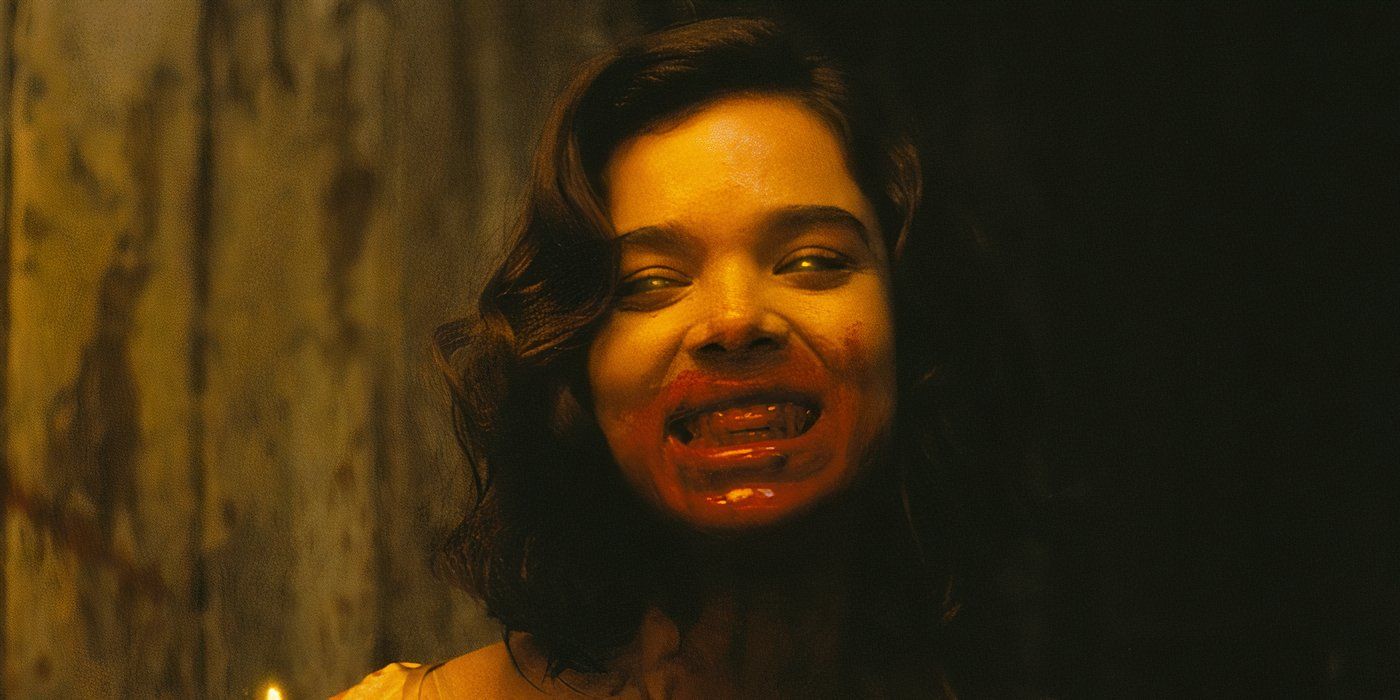
Many genre films, like Near Dark, were a clear influence on Ryan Coogler, who cashed in the check he wrote with franchise films like Creed and Black Panther to make what is both a highly personal film and a wild genre flick. Sinners is a period piece, vampire action movie set in the Jim Crow South, shot on IMAX and 65mm, that was designed to be, and ultimately was, a blockbuster. It also won several Academy Awards, including one for Michael B. Jordan, making him one of about eight actors who have received the award for a horror movie. Sinners is exactly the kind of bold passion project that rarely gets produced in Hollywood at its level anymore, and hopefully Coogler will return to this territory again once he's done in Wakanda.
Jordan plays twin criminals Smoke and Stack, who have returned to their hometown in the Mississippi Delta to open a juke joint for the Black population. That celebration draws the attention of Irish vampire Remmick (Jack O'Connell), who sees more potential in the musical powers of the twin's cousin Sammie (Miles Caton). There are so many great elements and details in Sinners, from its incorporation of folklore and the history of blues music to its siege thriller final act. If all those elements don't exactly congeal perfectly, it doesn't really matter, because Sinners is a bloody miracle.
1 'Let the Right One In' (2008)
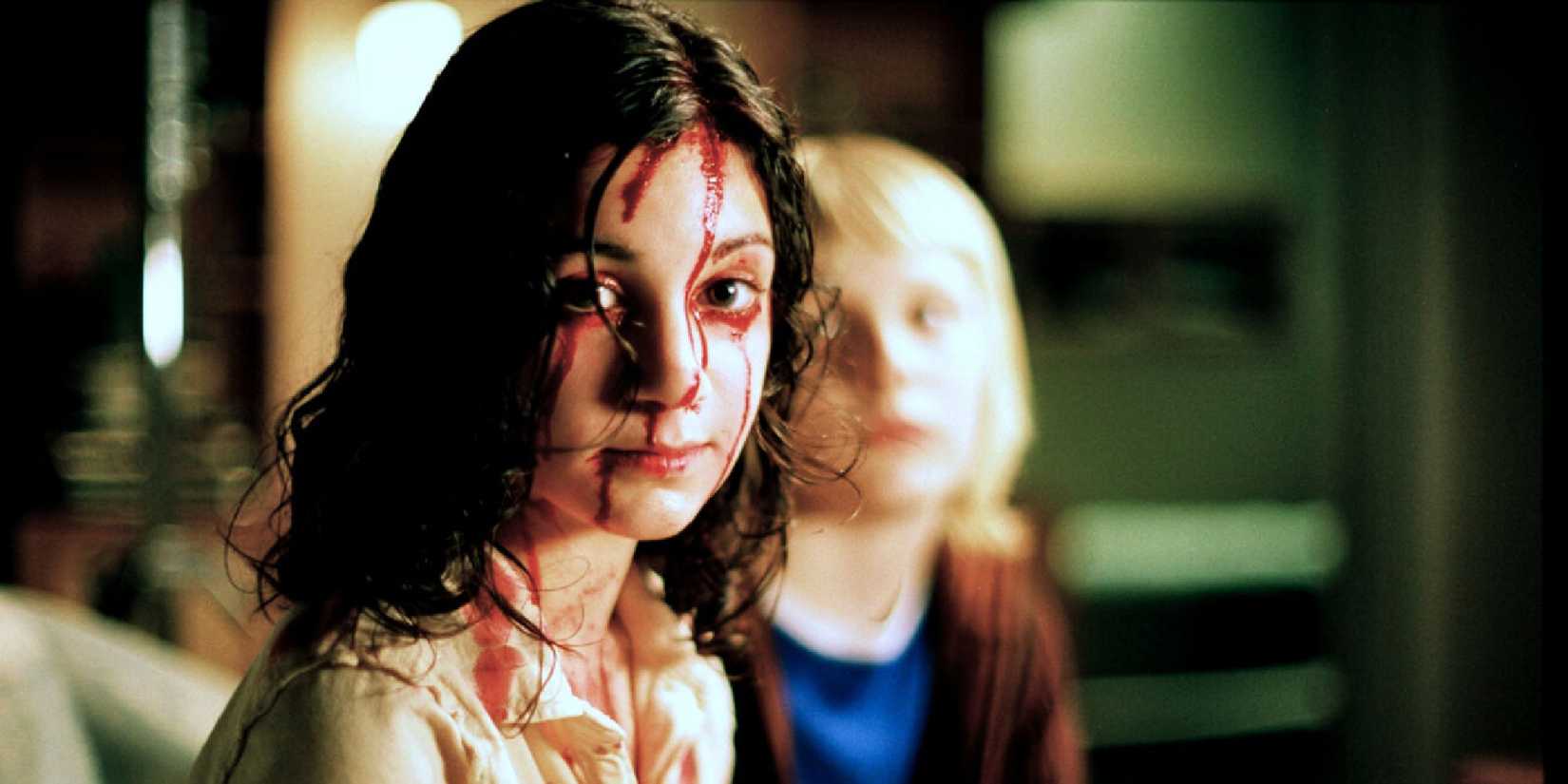
One of the most invigorating vampire movies since the genre began, Let the Right One In is a strange, oddly moving, oddly unsettling tale of two children becoming friends that also just happens to be a vampire movie. It's not that Tomas Alfredson's film, which was adapted from John Ajvide Lindqvist's novel by the author himself, doesn't engage with vampire lore. The title in and of itself is a reference to vampiric rules, but it's how those elements are in service of the relationship of the characters instead of the other way around. It's a cold, beautiful film, and the best vampire movie of the last fifty years.
Set in a Swedish suburb, the film follows young Oskar (Kåre Hedebrant), a bullied child who meets the mysterious Eli (Lina Leandersson), who it turns out engages in some specific nocturnal eating habits. While the film tones down some of the more explicit elements of the novel, as well as its gender-identity content, it's still an emotionally affecting experience on its own terms. Let the Right One In wasn't the first film to take vampires seriously or treat the genre as art, but it was a dose of fresh creative blood for it to go along with the bleeding heart of Twilight.
KioskNews shows a cleaned-up reading view extracted from the publisher’s page — the original always lives on their site, not ours.