Hong Kong semi-private schools admit 20 more non-local students under expansion scheme
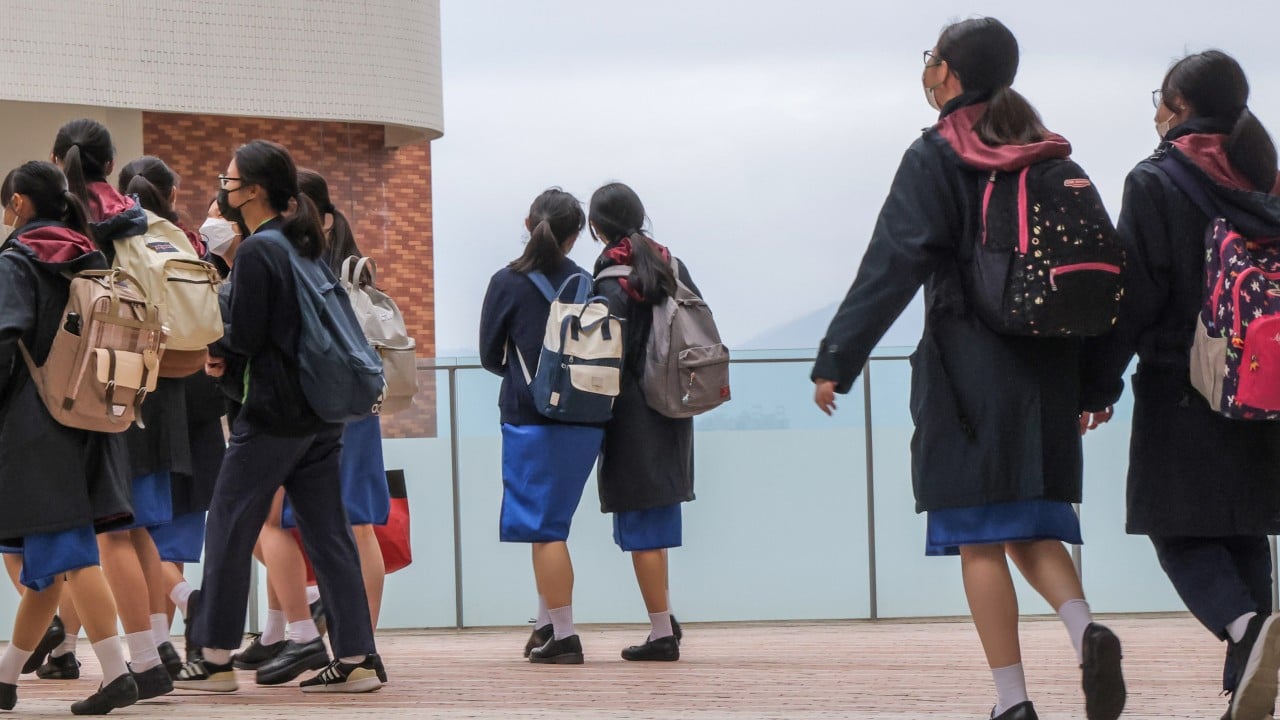
Around 20 more non-local students have been admitted to Hong Kong semi-private schools under a government scheme to boost the city’s status as an international education hub, with a school head urging authorities to do more to promote the initiative to prospective pupils.
Education authorities said on Wednesday that the non-local students holding student visas this year came from countries including Thailand, South Korea, Singapore, the United States and several European nations.
Ida Lee Bik-sai, deputy secretary for education, wrote on the bureau’s blog that a total of 170 non-local pupils holding student visas had enrolled in Direct Subsidy Scheme schools on a self-financing basis, up 13 per cent from last year. The schools cover both primary and secondary levels.
The figures imply that there were about 150 such non-local students in the last school year, before the roll-out of the new expansion scheme, which drew around 20 more pupils this year.
“This school year, non-local students holding student visas come from a wide range of countries, including Thailand, South Korea, Singapore, European countries and the US,” Lee said, describing the pilot scheme as having had a “good start”.
She added that besides the seven DSS schools that had admitted non-local students for two consecutive years, seven more DSS schools had admitted overseas students this school year.
Under the expansion scheme introduced in last year’s policy address, DSS schools that were already admitting non-local students with student visas could apply for dedicated additional places to take in more such students.
DSS schools in Hong Kong are allowed to offer non-local curricula, such as the International Baccalaureate and international A-levels.
Non-local students do not receive government subsidies, unlike local students, and their intake will not affect local students’ chances of securing a place at those DSS schools, according to the policy.
Lee said a total of 48 DSS schools had been approved to add classes or places for non-local students on a self-financing basis under the scheme.
She added that the bureau would support the DSS sector in formulating a “Code of Practice for Operating Student Hostels”, setting standards for accommodation, hygiene, safety and warden arrangements in future.
Samuel Cheng Kin-tak, principal of United Christian College (Kowloon East), said his school had also admitted non-local students under the new scheme. Students must pay tuition fees of about HK$110,000 to HK$120,000 this year, as well as accommodation fees of about HK$52,000.
He said the additional 20 students were in line with expectations, as some overseas parents had said they did not know Hong Kong schools could admit non-local students.
He attributed this to a lack of promotion and financial support from the government.
Cheng said the government had “provided zero” support for promotion work, adding that DSS schools had to pay for and conduct their own promotion. His school, for example, had promoted the scheme in Thailand, Indonesia and Malaysia after the government announced the initiative.
“All schools promoting the ‘Study in Hong Kong’ campaign have no difficulty admitting students, and our waiting lists are very long. We do it because we support the government’s policy,” he said.
“But we also hope the government will support us financially in our promotion work, or our school managers will question why we have to pay for it.”
He suggested that the government establish official scholarships during the scheme’s initial launch phase, rather than relying solely on private donations driven by the Direct Subsidy Scheme Schools Council.
He noted that other countries used government resources to fund scholarships for international students, which offered larger financial awards and sent a stronger official signal that attracting non-local students was government policy.
He said some non-local students were eyeing Hong Kong’s universities and even hoped to work in the city in future, but the school had rejected some applicants because of their poor English proficiency.
KioskNews shows a cleaned-up reading view extracted from the publisher’s page — the original always lives on their site, not ours.