Free Primary Healthcare targets most deprived districts – GHS Director General
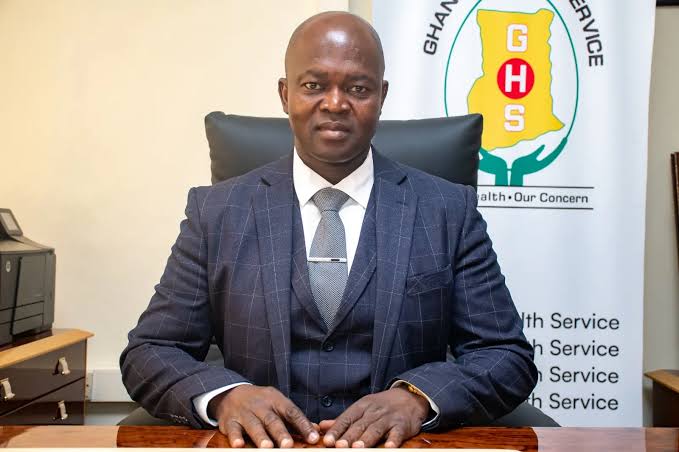
The Director-General (DG) of the Ghana Health Service (GHS), Dr Samuel Kaba Akoriyea, says the selection of districts for the Free Primary HealthCare (FPHC) programme is based on levels of deprivation, access to health services and not political considerations.
He explained that the selection took into account several indicators, including the availability of hospitals, maternal mortality, school enrolment and the distance residents had to travel to access healthcare.
“This was not by chance or by political means,” Dr Akoriyea said when he addressed the 33rd Annual General Conference of District Directors of Health Group (DDH-G), Ghana, held in Bolgatanga.
It was on the theme: “From Policy to Practice: The DDHS Driving Free Primary Health Care in Ghana.”
Dr Akoriyea noted that the GHS had already identified deprived districts through established assessments and cited the Afram Plains as an example of an area where geographical barriers could make access to healthcare particularly difficult.
“If someone falls sick, without the possibility of a boat, the person cannot come to the mainland. That is number one priority,” he said and explained that such communities should be at the centre of efforts to provide FPHC.
Dr Akoriyea challenged the perception that health outcomes were determined by the severity of diseases, saying access to adequate healthcare facilities and personnel was a major factor.
He recalled an observation that a person who contracts malaria in northern Ghana was more likely to die than someone with malaria in Accra, and rejected the explanation as inadequate, arguing that differences in health infrastructure and personnel better explained the disparity.
“Up north, we do not have many private and government hospitals, doctors and nurses. So if we get complicated malaria, we will surely die,” he noted.
He urged health managers at all levels to work collectively to ensure the FPHC policy succeeded, and said its implementation was a shared responsibility.
Dr Akoriyea said the existing GHS structure would be used to implement the programme rather than creating new administrative positions.
“We are not changing any structure within the Ghana Health Service to meet the Free Primary Health Care,” he stated.
He further called on district directors to identify the most capable officers to coordinate implementation at the local level, saying the emphasis should be on competence rather than job titles.
“It's not about the category. It's about the human being who can get the job done,” he said.
The DG also placed responsibility on community health nurses and community health officers, who he described as the frontline workers who interact directly with citizens.
He cautioned senior managers against taking over the duties of frontline health workers, saying their role should be to support them.
“Our job is to support them, not to do what they are good at doing,” he said.
Dr Akoriyea expressed confidence that the programme would succeed if health workers remained committed to their respective responsibilities.
“I do believe deep down in my heart that each one of us, if we really are determined to get this thing done, it will be done,” he said.
He added that successful implementation would not only improve healthcare delivery but also create a legacy for current health-sector workers and future generations.
DISCLAIMER: The Views, Comments, Opinions, Contributions and Statements made by Readers and Contributors on this platform do not necessarily represent the views or policy of Multimedia Group Limited.
Tags:
DISCLAIMER: The Views, Comments, Opinions, Contributions and Statements made by Readers and Contributors on this platform do not necessarily represent the views or policy of Multimedia Group Limited.
KioskNews shows a cleaned-up reading view extracted from the publisher’s page — the original always lives on their site, not ours.